
Plant Selection
Emerald Green vs. Green Giant: Which Arborvitae?

Green Giant and Emerald Green are both forms of Thuja, but they solve different problems. Choose Green Giant for a tall, fast privacy screen, 30 to 40 feet tall and growing up to 3 feet a year. Choose Emerald Green for a compact, formal hedge that tops out at 12 to 15 feet and grows a slower 6 to 9 inches a year.
- Green Giant arborvitae grows 30 to 40 feet tall and 12 to 20 feet wide; Emerald Green stays 12 to 15 feet tall and 3 to 4 feet wide.
- Green Giant grows up to 3 feet a year; Emerald Green grows a slower 6 to 9 inches a year.
- Space Green Giant 5 to 6 feet apart; space Emerald Green 3 to 4 feet apart for a solid hedge.
- Green Giant thrives in USDA zones 5-8; Emerald Green handles colder zones 3-7.
- Deer browse Emerald Green heavily; Green Giant is more deer-resistant but not deer-proof.
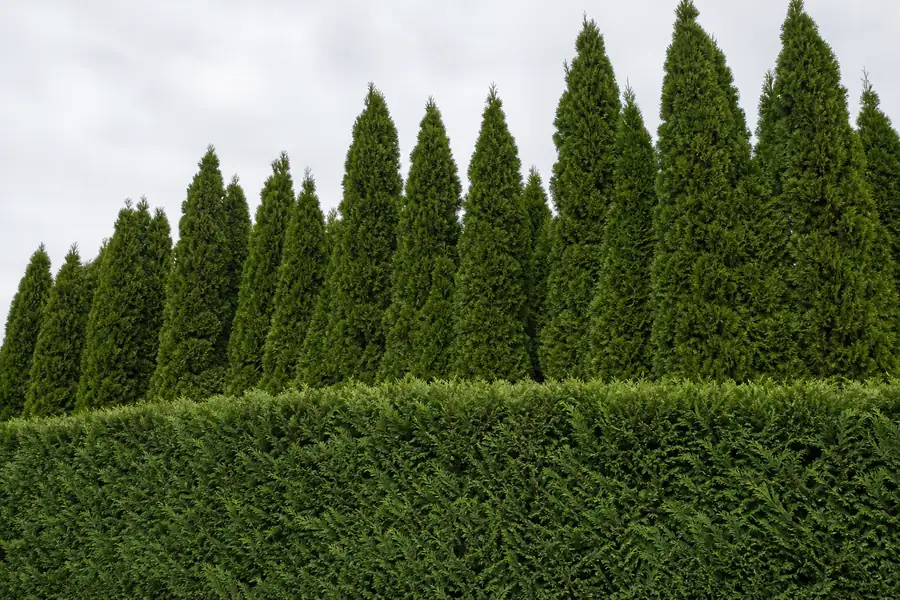
Size at Maturity: Emerald Green vs Green Giant
Green Giant arborvitae reaches 30 to 40 feet tall and 12 to 20 feet wide at maturity, a full-size shade tree in its own right. Emerald Green arborvitae stays much smaller, topping out around 12 to 15 feet tall and only 3 to 4 feet wide. That width difference matters as much as the height: Green Giant needs room to spread, while Emerald Green keeps a narrow, columnar shape that fits against a fence or property line without crowding it.
Growth Rate: Emerald Green vs Green Giant
Green Giant is one of the fastest-growing evergreens sold for home landscapes, adding up to 3 feet of height a year once established. Emerald Green grows far slower, typically 6 to 9 inches a year. Homeowners who expect Emerald Green to fill in a screen in a season or two are usually disappointed: extension research on Thuja cultivars consistently ranks Emerald Green as a slow grower, not a quick fix. If speed is the priority, Green Giant closes the gap in a fraction of the time.
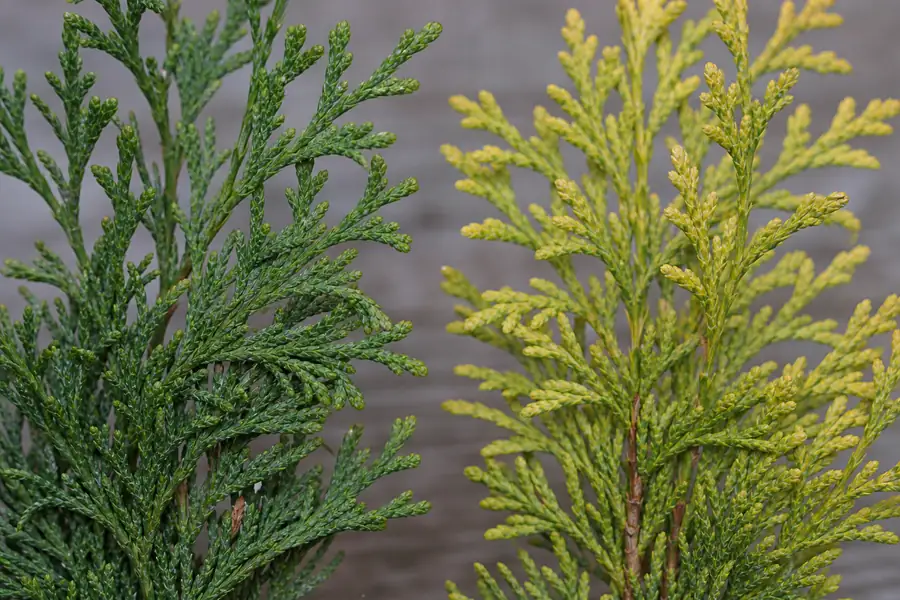
Spacing for Emerald Green vs Green Giant
Space Green Giant arborvitae 5 to 6 feet apart in a single row to form a solid screen without wasting yard space on an oversized gap. Space Emerald Green 3 to 4 feet apart, since its narrower mature width lets you pack plants tighter for a dense, formal hedge. Getting spacing wrong in either direction causes problems: too close and Green Giant's 12 to 20 foot mature width crowds roots and starves lower branches of light; too far apart and Emerald Green leaves gaps a deer can walk through.
Hardiness Zones and Sun for Emerald Green vs Green Giant
Green Giant arborvitae is rated for USDA zones 5 through 8, while Emerald Green handles a colder range, zones 3 through 7. That makes Emerald Green the better pick for northern yards where winter lows regularly drop below -20°F. Both cultivars want full sun to light shade, at least 4 to 6 hours of direct light a day, to keep their foliage dense from top to bottom. Run your ZIP code through Arbor Buddy's zone lookup before you decide, since microclimates and elevation can shift which cultivar actually survives your winters.
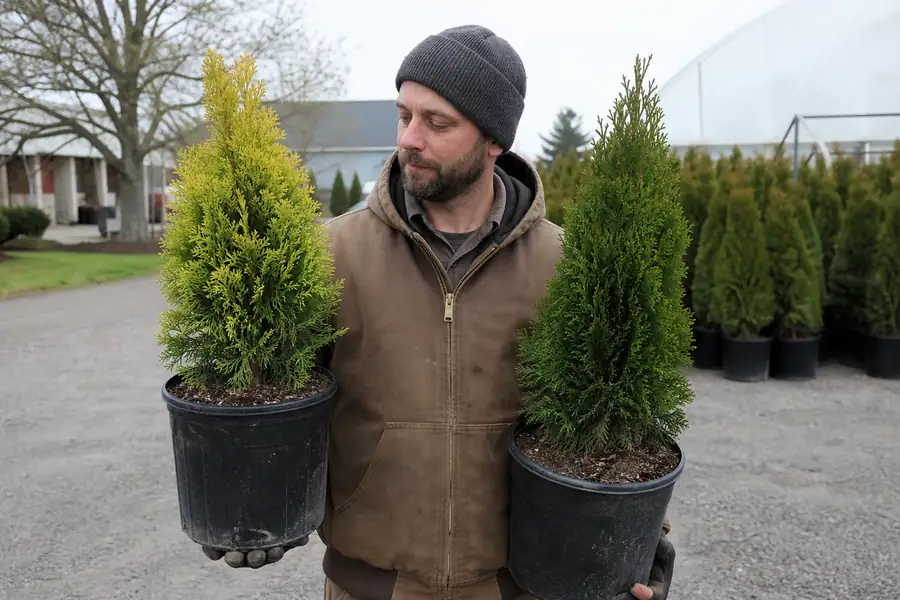
Deer and Other Problems: Emerald Green vs Green Giant
Deer treat Emerald Green arborvitae like a salad bar, and in areas with heavy deer pressure, young plants can be stripped bare in a single winter. Green Giant is more deer-resistant thanks to its coarser, less palatable foliage, but no arborvitae is completely deer-proof. Both cultivars resist the bagworm and canker problems that plague Leyland cypress, which is part of why they've replaced Leyland as the go-to privacy screen in most regions. If deer are a known issue on your property, read up on protecting trees from deer before you plant either cultivar, and budget for fencing or repellent through the first few winters.
Which Arborvitae Should You Pick: Emerald Green or Green Giant
Pick Green Giant if you have a bigger lot and want a tall, fast screen that blocks a second-story view within a few years. Pick Emerald Green if you're working with a narrow side yard, a cold winter zone, or want a clipped, formal hedge rather than a loose screen. Neither choice is wrong, but picking based on your available width and patience, not just the price tag, saves you from a replant in five years. You can compare our arborvitae varieties alongside other evergreens to see which fits your yard's dimensions and zone before you order.
Emerald Green vs Green Giant Comparison Table
| Feature | Emerald Green | Green Giant |
|---|---|---|
| Mature height | 12-15 ft | 30-40 ft |
| Mature width | 3-4 ft | 12-20 ft |
| Growth rate | 6-9 in/year | Up to 3 ft/year |
| Spacing | 3-4 ft apart | 5-6 ft apart |
| USDA zones | 3-7 | 5-8 |
| Deer resistance | Low | Moderate |
| Best use | Formal hedge, tight space | Fast, tall privacy screen |
FAQs
Which arborvitae grows faster, Emerald Green or Green Giant?
Green Giant grows much faster, adding up to 3 feet of height a year once established, compared to Emerald Green's 6 to 9 inches a year. If you need a privacy screen in 3 to 5 years rather than 10, Green Giant gets there first.
How far apart should I plant Emerald Green vs Green Giant?
Space Green Giant 5 to 6 feet apart since it spreads 12 to 20 feet wide at maturity. Space Emerald Green 3 to 4 feet apart, since it stays a narrow 3 to 4 feet wide and needs tighter spacing to close gaps in a hedge.
Do deer eat Emerald Green or Green Giant arborvitae?
Deer eat Emerald Green readily and can strip young plants in a single winter in areas with heavy browse pressure. Green Giant is more deer-resistant because of its coarser foliage, but it is not deer-proof, so fencing or repellent still helps in high-pressure areas.
Which arborvitae is better for a small yard?
Emerald Green is the better fit for a small yard, since it stays a narrow 3 to 4 feet wide and 12 to 15 feet tall at maturity. Green Giant needs 12 to 20 feet of width to spread into, which overwhelms most small lots within a decade.
Which arborvitae is hardier in cold climates?
Emerald Green is hardier in cold climates, rated for USDA zones 3 through 7, compared to Green Giant's zones 5 through 8. Gardeners in the coldest northern zones should lean toward Emerald Green or confirm their zone with a hardiness lookup before ordering either cultivar.