
First-Year Care
Protecting Young Trees from Deer, Rabbits and Rodents

Quick answer: Physical barriers beat sprays. Deer need a tree tube or welded-wire cage around the trunk and canopy. Rabbits need a buried cylinder of quarter-inch hardware cloth around the trunk. Voles need mulch pulled back from the bark and a mesh guard. Repellents help between fixes, but none is foolproof on its own.
Fresh gnaw marks or a stripped patch of bark on a young tree almost always points to one of three culprits: deer, rabbits, or voles. Knowing how to protect trees from deer and these smaller browsers comes down to matching the right barrier to the right pest and getting it installed before that animal's busiest season starts. This guide breaks the threats apart so you can act on the damage you're actually seeing, and it builds on the basics covered in our newly planted tree care guide.
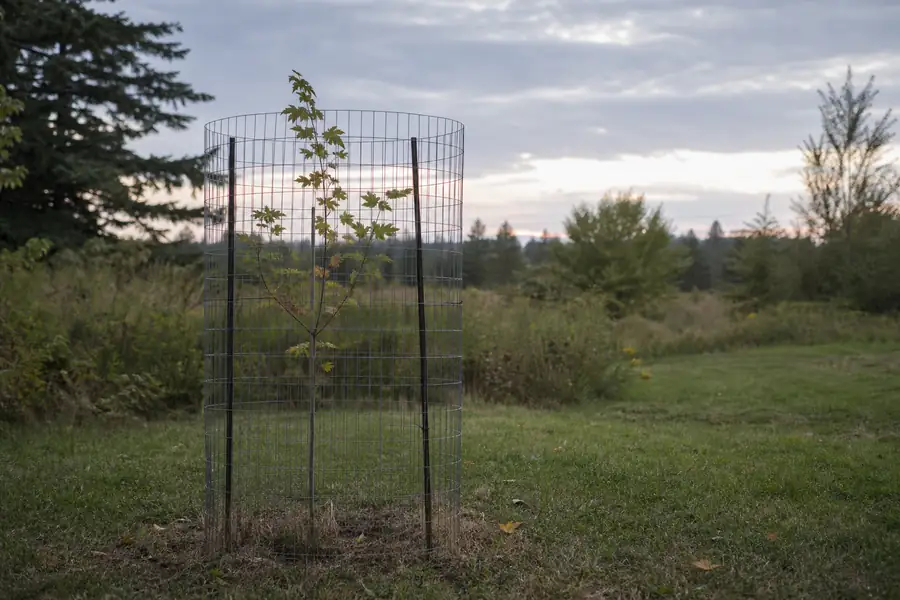
How to Protect Trees from Deer
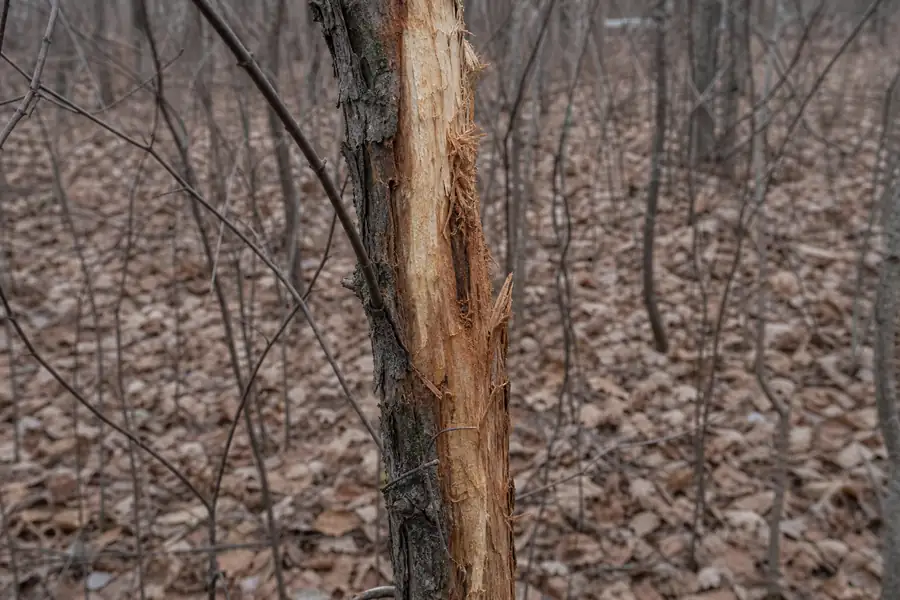
Deer damage young trees two ways: steady browsing on foliage and buds year round, and buck rub that strips bark in fall. Buck rub happens when a male deer scrapes his antlers against a trunk to mark territory or shed velvet, usually from September through November, and it can girdle a thin-barked young tree in minutes.
A tree tube (a rigid plastic sleeve that slides over the trunk) or a solid trunk guard stops buck rub outright. For browsing on branches and foliage, surround the tree with a welded-wire cage 4 to 5 feet tall and wide enough that deer can't reach through it to the canopy. Arborvitae, including popular picks like Emerald Green Arborvitae, rank among deer's favorite meals, so newly planted evergreen privacy screens deserve a cage even in yards that rarely see deer otherwise.
Repellents can supplement a cage, but they work best rotated between scent-based and taste-based products so deer don't get used to one smell.
Rabbit Damage: Stopping Bark Gnawing at the Base
Rabbits gnaw bark at the base of young trees in winter, when snow covers their usual food and tender bark becomes an easy meal. The damage shows up as clean, angled chew marks low on the trunk, often right at the old snow line.
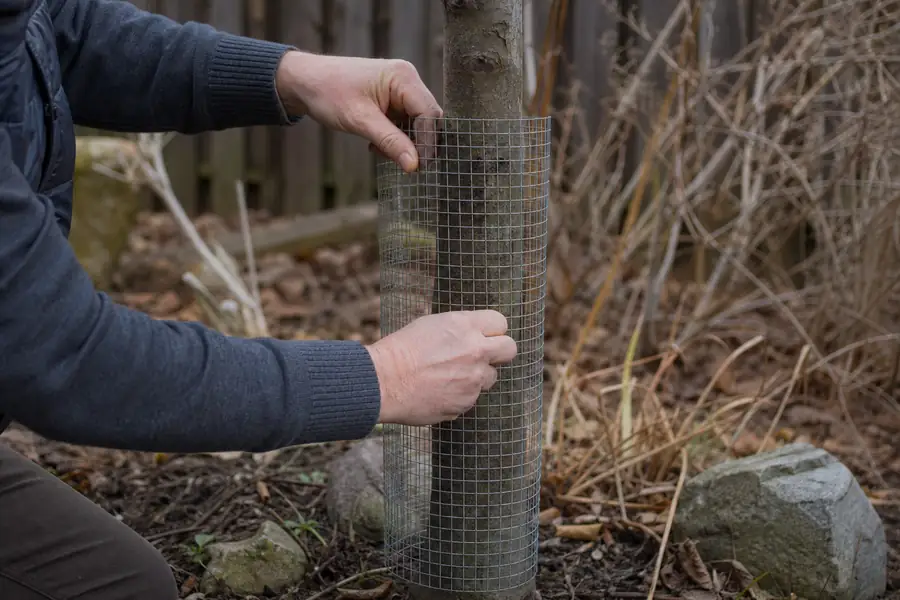
Ring the trunk with quarter-inch hardware cloth cut into an 18 to 24 inch tall cylinder. Sink the bottom edge an inch or two into the soil so rabbits can't push under it, and leave a gap between the mesh and the bark so the guard doesn't rub the trunk as it sways in the wind. One cylinder, left on through winter and pulled before the trunk outgrows it, handles most rabbit pressure without any spray.
Voles and Mice: Preventing Girdling Under Mulch
Voles and mice girdle bark at the soil line, often working unseen under mulch or snow cover, and girdling cuts off the flow of water and nutrients between roots and canopy. By the time the damage shows above ground, the ring of missing bark can already circle the trunk.
Keep mulch pulled 3 to 6 inches off the trunk rather than piled against it. A mulch volcano (mulch heaped high against the bark) does the opposite of protect: it keeps the bark moist and hidden, which is exactly the cover voles want. Our guide on how to mulch around a tree covers the right depth and shape. Pair a proper mulch ring with a mesh trunk guard and cut back tall grass near the trunk, since grass gives voles cover to travel and feed unseen.
Choosing and Using Trunk Guards
Spiral guards and mesh guards both protect bark from deer rub, rabbit gnawing, and mower or trimmer nicks, but the wrong fit causes its own damage. A guard wrapped too tight restricts the trunk's natural taper and can girdle the tree just as surely as an animal would.
Check guards twice a year. Loosen or size up spiral wraps as the trunk thickens, and never leave a guard on so long that bark grows around it. Remove guards entirely once the tree's bark has thickened enough to resist rub and gnawing on its own, typically after two to three growing seasons.
Repellents That Help (and Their Limits)
Scent and taste repellents reduce browsing, but no repellent is deer-proof, and extension horticulturists generally treat them as a supplement to fencing rather than a replacement for it. Deer and rabbits adjust to a single product fast, so rotate between a scent-based repellent and a taste-based one through the season.
Reapply after rain or irrigation washes a repellent off, and again whenever the tree pushes new growth that hasn't been treated yet. On a young tree worth protecting, a physical barrier still does the real work; repellents just buy a little extra margin between applications.
When to Install Guards and Cages
Install trunk guards and deer cages before fall, since buck rub season runs roughly September through November and rabbit and vole pressure builds as soon as the first hard frost cuts off other food. Waiting until damage appears means the tree has already lost bark it can't easily regrow.
If a guard, cage, or hardware cloth cylinder goes up at planting time and stays through the first two winters, most young trees clear the danger window with healthy bark intact. On the rare tree that doesn't make it despite protection, replacements are handled by Arbor Buddy's one-year guarantee, so a single bad winter doesn't have to mean starting over.
FAQs
What keeps deer from eating young trees?
A welded-wire cage 4 to 5 feet tall around the trunk and lower canopy is the most reliable deterrent, since it physically blocks deer from reaching the bark and foliage. Rotating scent and taste repellents on top of a cage adds extra protection, but fencing or caging is what actually stops the damage.
How do I stop rabbits gnawing bark?
Wrap the trunk in a cylinder of quarter-inch hardware cloth, 18 to 24 inches tall, sunk an inch or two into the soil and held slightly off the bark. This blocks rabbits from reaching the trunk even when snow raises their feeding height.
Do repellents work?
Repellents reduce browsing but don't eliminate it, and rain or new growth can undo their effect within days. They work best as a backup to a physical barrier like a tree tube, cage, or hardware cloth guard, not as a stand-alone fix.
When should I install guards?
Install trunk guards, cages, and hardware cloth before fall, ideally at planting time, since buck rub starts in September and rabbit and vole damage picks up with the first hard frost. Getting protection in place early beats trying to repair stripped bark later.
Can mulch attract voles?
Yes, a mulch volcano piled against the trunk gives voles cover to gnaw bark undetected through winter. Keeping mulch pulled 3 to 6 inches off the trunk in a flat ring removes that shelter while still protecting the root zone.