
Planting & Care
Green Giant Arborvitae Spacing: How Far Apart to Plant Privacy Trees

Quick answer: Space Thuja Green Giant arborvitae 5 to 6 feet on center for a fast, solid privacy screen, or 8 to 10 feet if you want each tree to keep its own distinct, full shape. Emerald Green arborvitae goes tighter, at 3 to 4 feet on center, for a narrow formal hedge. Wider spacing always fills in slower, but it keeps roots and canopies from fighting each other for years to come.
Planting too close is the single most common mistake homeowners make with a privacy hedge. It looks great the first summer, then the trees crowd each other, branches die back on the shaded sides, and the screen ends up patchier than if you had spaced it correctly from the start. Our full guide to privacy trees covers species selection in more depth; this one is about getting the distances right.
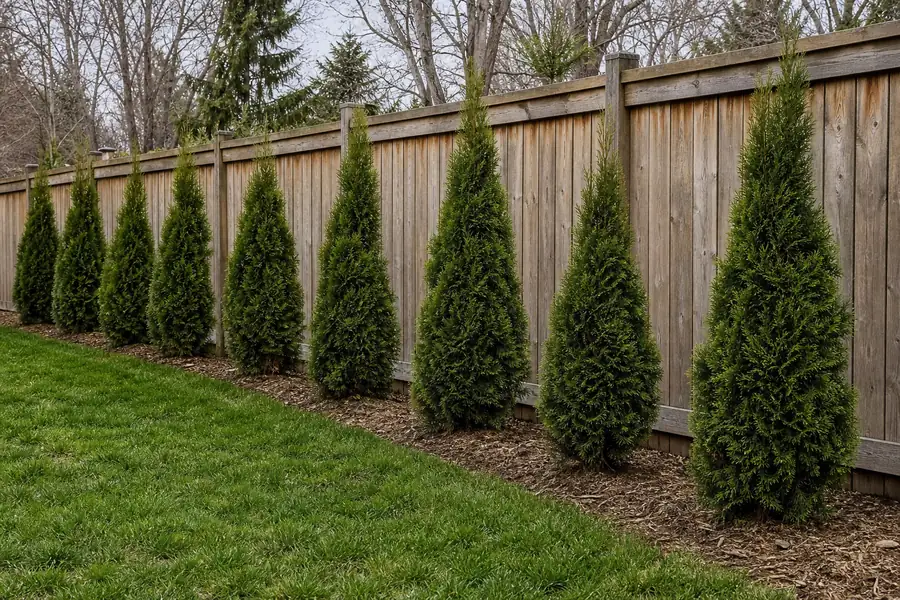
How to Measure Tree Spacing
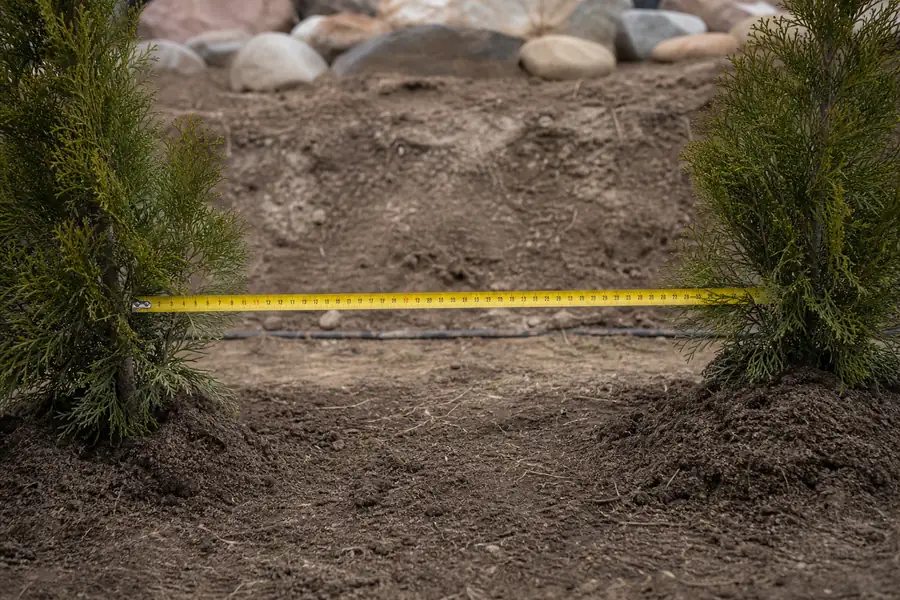
On-center spacing means measuring from the trunk of one tree to the trunk of the next, not the gap between root balls or pots. This is the standard measurement used in nursery and extension planting charts, so it's the number you want when you're laying out a hedge line with stakes or a garden hose.
Plan around a tree's mature width, not the size it arrives at your door. A Green Giant arborvitae ships at a few feet tall but spreads 12 to 20 feet wide at maturity. Most state extension offices recommend spacing by that mature spread, because tightly packed saplings look fine for a season or two before they start competing for root space, light, and airflow.
Green Giant Arborvitae Spacing
Thuja Green Giant arborvitae spacing runs 5 to 6 feet on center for a dense, continuous screen that closes gaps within a few growing seasons. If you'd rather see each tree as its own distinct pyramid shape instead of one solid wall, space them 8 to 10 feet on center and accept a slower-closing screen. Thuja Green Giant is one of the fastest-growing privacy evergreens sold, often adding 3 feet a year once established, which is exactly why tighter spacing works for this species without the overcrowding problems slower growers run into.
Skip the temptation to go closer than 5 feet just to speed things up. Green Giant's mature width means anything under that spacing sets up root competition and interior dieback within five to ten years, right when the hedge should be at its best.
Emerald Green Arborvitae Spacing
Emerald Green arborvitae spacing is tighter than Green Giant, at 3 to 4 feet on center, because this cultivar stays narrow, topping out around 3 to 4 feet wide at maturity. That narrow, columnar habit is exactly why it's popular for tight side yards and property lines where a 15-foot-wide Green Giant hedge simply won't fit.
Closer spacing, down near 3 feet, fills in faster and reads as a solid green wall sooner. But it also means roots graft and compete earlier, so give Emerald Green arborvitae at least 3 feet even in the tightest layouts, and lean toward 4 feet if your soil is heavy clay or drains poorly.
Spacing for Other Common Privacy Trees
Spacing needs change by species because mature width and growth habit vary widely across privacy trees. Nellie Stevens holly wants 5 to 6 feet on center, close to Green Giant, since it forms a dense, broad-leafed wall of similar width.
Leyland cypress is the one species people most often plant too tight. It needs 8 to 12 feet on center, and crowding it closer invites the fungal canker and root disease problems Leyland cypress is already prone to in humid climates. Leyland cypress grows fast enough that 10 feet still closes into a screen within a few years.
Italian cypress is the exception at the narrow end: 3 to 5 feet on center suits its slim, columnar form, and it's better used for a formal vertical accent line than a solid privacy wall.
Single Row vs. Staggered Double Row Spacing
A staggered double row gives a denser, gap-free screen than a single row planted at the same on-center distance. Set two rows 3 to 4 feet apart, offset the trees in a zig-zag pattern, and you close visual gaps faster because each tree in the back row fills the sightline between two trees up front.
A double row also gives you a buffer if one tree dies or struggles. In a single row, a dead tree leaves an obvious hole in the screen until a replacement catches up; in a staggered layout, neighboring trees on both sides help mask the gap while a new one establishes.
Distance From Fences and Property Lines
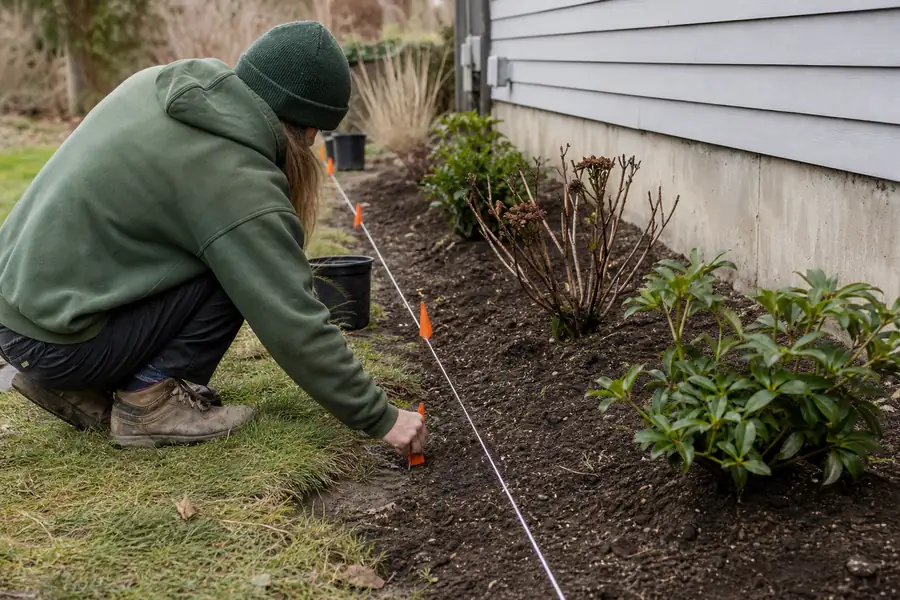
Plant privacy trees far enough from a fence or property line to fit their full mature width, not their current size. A tree planted tight against a fence has nowhere to spread on that side, so it either grows lopsided or pushes against the fence line as it matures.
As a rule of thumb, leave at least half the tree's mature width between the trunk and the fence, plus a couple of feet for walking room and future pruning access. For a Green Giant that tops out 15 feet wide, that means keeping the trunk roughly 8 feet off the fence line. Check local setback rules too, since some municipalities require a minimum distance from property lines regardless of species.
Privacy Tree Spacing Chart
Use this chart as a quick reference when laying out stakes before you dig. All figures are on-center spacing, trunk to trunk.
| Tree | On-center spacing | Mature width | Notes |
|---|---|---|---|
| Thuja Green Giant | 5-6 ft (solid screen); 8-10 ft (distinct trees) | 12-20 ft | Fast growth tolerates tighter spacing |
| Emerald Green arborvitae | 3-4 ft | 3-4 ft | Narrow habit, good for tight side yards |
| Nellie Stevens holly | 5-6 ft | 10-15 ft | Dense evergreen foliage |
| Leyland cypress | 8-12 ft | 15-25 ft | Tighter spacing raises disease risk |
| Italian cypress | 3-5 ft | 3-6 ft | Vertical accent, not a solid wall |
Whatever species you land on, double-check it against your USDA hardiness zone before you commit to a layout. Arbor Buddy's zone lookup and shop evergreen privacy trees selection both flag mature width and zone suitability up front, so the spacing numbers above hold true once the trees are in your yard, not just on paper.
FAQs
How far apart should I plant Green Giant arborvitae?
Space Thuja Green Giant arborvitae 5 to 6 feet apart on center for a fast, solid privacy screen. If you'd rather keep each tree looking like an individual pyramid shape, space them 8 to 10 feet apart instead and expect the screen to close in more slowly.
How far apart should I plant Emerald Green arborvitae?
Emerald Green arborvitae spaces 3 to 4 feet apart on center. Its narrow, columnar mature width of only 3 to 4 feet is what allows this tighter spacing without the root crowding that wider species run into.
Can I plant privacy trees closer together for faster coverage?
Planting closer than the recommended on-center spacing speeds up the look of a solid screen for a year or two, but it causes root competition, shaded-out interior branches, and dieback within five to ten years. It is the most common mistake homeowners make with a privacy hedge, and it usually costs more in the long run than planting correctly the first time.
How far should privacy trees be planted from a fence?
Leave at least half of the tree's mature width between the trunk and the fence line, plus a couple of extra feet for walking room and pruning access. For a wide-spreading tree like Green Giant arborvitae, that typically means keeping the trunk about 8 feet from the fence.
Should I plant a single row or a staggered double row for privacy?
A staggered double row, spaced 3 to 4 feet between rows, closes visual gaps faster and gives you a backup if one tree struggles or dies. A single row is simpler and takes less space, but any gap in it stays visible until a replacement tree catches up in size.