
Plant Selection
Privacy Shrubs and Hedges: When a Tree Is Too Big

Quick answer: When a full-size tree would overwhelm a yard, evergreen privacy shrubs like boxwood, holly, cherry laurel, and wax myrtle screen a patio, fence line, or side yard at heights from about 3 to 12 feet, and they stay far easier to control than a 40-foot canopy tree.
A tree planted for privacy often ends up too tall, too wide, or too much canopy to manage near a patio or property line. Shrubs and hedges solve the same screening problem at a scale you can prune from the ground, no ladder required. If you're still weighing a full tree against a shrub row, our guide to privacy trees breaks down when each makes sense.
- Evergreen shrubs hold their leaves year-round, so screening works in winter too.
- Match mature height to your sightline: shoulder-height privacy needs a 5-6 ft shrub, second-story privacy needs 12 ft or more.
- Space plants by mature width, not container size, or the hedge thins out in the middle within a few years.
- Check your USDA hardiness zone before buying; a shrub rated for zone 8 will struggle or die in zone 6.
- Privet grows fast and cheap but is invasive in many states, so weigh that tradeoff before you plant it.
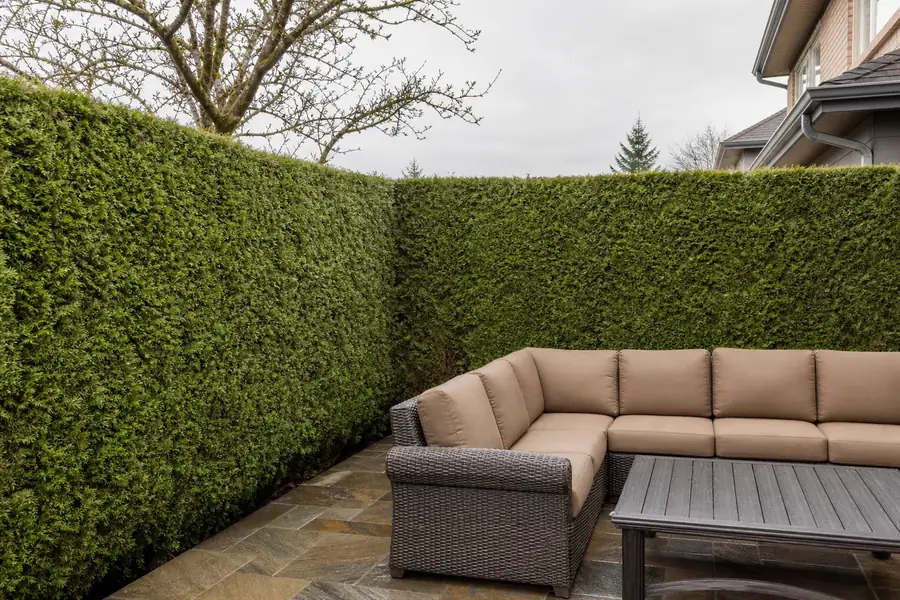
Boxwood: Slow, Formal, and Shade-Tolerant
Boxwood is a slow-growing evergreen shrub that tops out around 3 to 10 feet tall and wide, depending on the cultivar, and it thrives in USDA zones 5 to 9. It tolerates both full sun and considerable shade, which makes it one of the few privacy shrubs that works along a shaded fence line where many other screening plants thin out.
Because it grows slowly, boxwood holds a crisp, clipped shape with only one or two trims a year, which is why it's the classic formal hedge plant. The tradeoff is time: a boxwood hedge can take several years to close in, so it suits homeowners planning ahead rather than those who need a screen this season.
Cherry and Skip Laurel: Fast Broadleaf Screens
Cherry laurel and its compact cousin, skip laurel, grow into dense broadleaf evergreen hedges 10 to 18 feet tall in USDA zones 6 to 9. Both put on a foot or more of growth a year, so a new hedge closes gaps fast, often within two or three seasons.
They tolerate part shade better than boxwood or wax myrtle, making them a strong choice for a side yard that gets filtered sun rather than full afternoon exposure. Left untrimmed, cherry laurel can reach small-tree size, so plan on annual shearing if you want to keep it at shrub height.
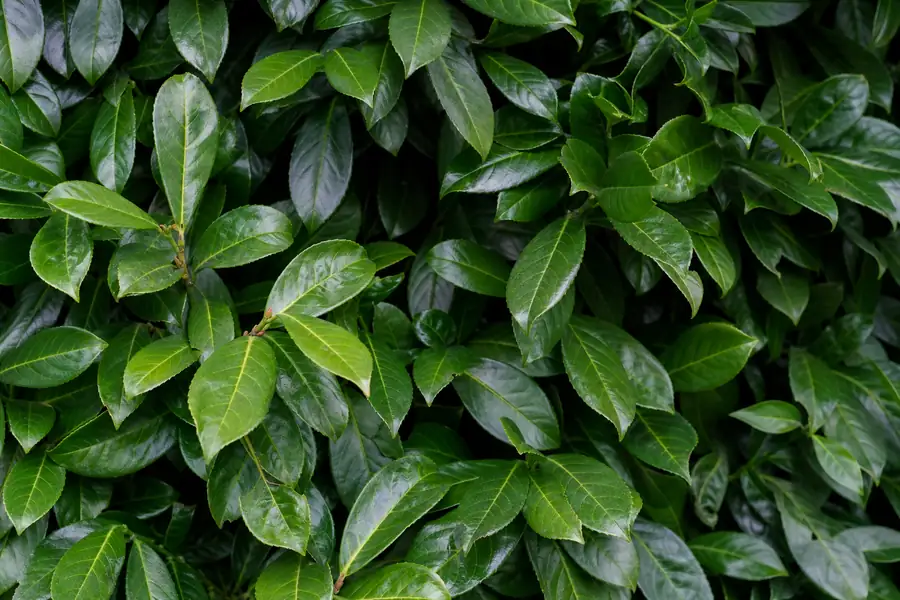
Holly: Dense, Deer-Tolerant, and Varied by Type
Holly covers a wide range of mature sizes, from 5-foot inkberry to 25-foot Nellie Stevens holly, across USDA zones 4 to 9 depending on the species. Japanese holly stays compact and takes shearing well for a low, formal hedge, while Nellie Stevens grows into a tall, dense screen fast enough to block a two-story sightline within a few years.
Most hollies resist deer browsing better than laurel or arborvitae, and the female plants produce red winter berries once a male pollinator is nearby. Because the size range is so wide, check the plant tag or a local extension guide for your specific cultivar before you plant, not just the genus name.
Wax Myrtle: Fast, Salt-Tolerant, Built for the South
Wax myrtle is a fast-growing evergreen shrub that reaches 10 to 20 feet tall in USDA zones 7 to 11, and it tolerates salt spray, wind, and poor soil better than most broadleaf screens. Southern and coastal homeowners favor it because it fills in quickly, often 3 feet of growth a year, and shrugs off heat and drought once established.
The foliage carries a light bayberry scent when crushed, and the small blue-gray berries feed songbirds through fall and winter. Wax myrtle suckers from the base, so plan on removing root sprouts each year to keep the hedge line clean.
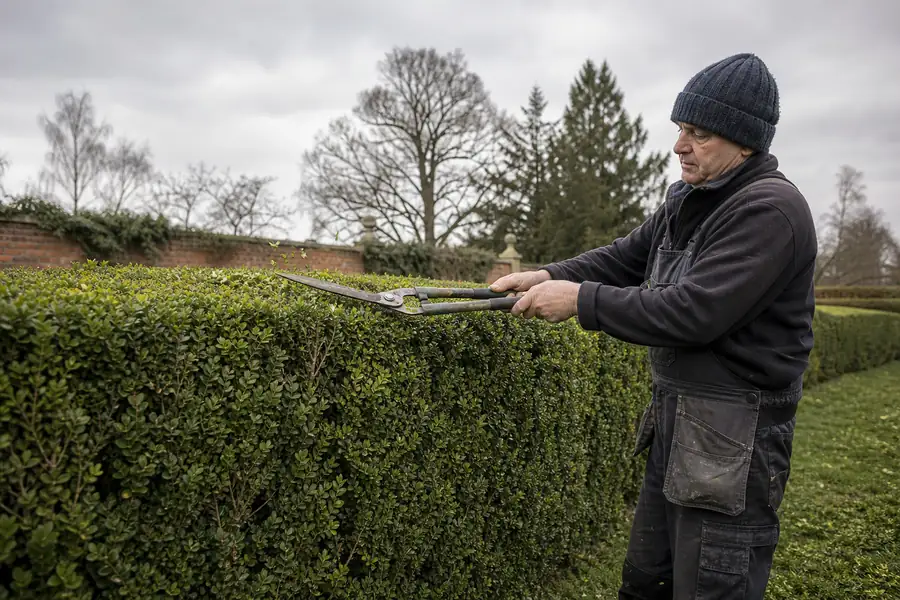
Viburnum and Other Evergreen Options
Several evergreen viburnum species screen 8 to 12 feet tall in USDA zones 5 to 8, adding something boxwood and holly don't: clusters of white spring flowers followed by fall berries. Leatherleaf viburnum and some evergreen elaeagnus take wind and poor soil in stride in that same size range.
None of these match holly's deer resistance, so check with a local extension office if deer pressure is heavy where you garden before committing a whole hedge line to viburnum.
A Word on Privet: Fast, Cheap, and Often Invasive
Privet grows into a dense hedge faster and cheaper than almost any other evergreen shrub, but it's classified as invasive in many states because birds spread its seed into woodlands and fence rows. Extension offices across the Southeast, mid-Atlantic, and Pacific Northwest list privet on regional invasive plant watch lists, and some states restrict its sale or planting.
If a nursery or neighbor offers you privet for a quick screen, consider a better-behaved substitute first. Skip laurel and wax myrtle grow nearly as fast without the spread risk, and boxwood or holly add the same dense structure without an invasive label. Fast is tempting, but a shrub that escapes the yard and crowds out native plants isn't actually low-maintenance in the long run.
Choosing and Spacing Privacy Shrubs by Mature Size
Pick privacy shrubs by matching mature height to the sightline you actually need to block, then space plants by mature width rather than the size they arrive in from the nursery. A shrub tagged 5 to 6 feet wide that's planted every 2 feet instead of every 4 will fight for root space and thin out in the middle within a few years.
For a narrow side yard where even a shrub row eats too much width, a slender evergreen tree can solve the same sightline problem on a smaller footprint than a sprawling shrub border. Use the table below to compare mature size, zone range, and leaf habit before you buy.
| Shrub | Mature H x W | USDA Zones | Evergreen or Deciduous |
|---|---|---|---|
| Boxwood | 3-10 ft x 3-10 ft | 5-9 | Evergreen |
| Cherry/skip laurel | 10-18 ft x 8-12 ft | 6-9 | Evergreen |
| Holly (varies by type) | 5-25 ft x 4-15 ft | 4-9 | Evergreen |
| Wax myrtle | 10-20 ft x 10-15 ft | 7-11 | Evergreen |
| Evergreen viburnum | 8-12 ft x 6-10 ft | 5-8 | Evergreen |
| Privet (caution advised) | 10-15 ft x 8-10 ft | 5-8 | Semi-evergreen |
Whatever height and zone fit your yard, you can shop privacy shrubs and hedges sized and rated for your climate rather than guessing from a plant tag at the garden center.
FAQs
What is the best privacy shrub?
There's no single best privacy shrub; the right pick depends on your sightline height, sun exposure, and USDA zone. Boxwood suits formal, shaded spots that can wait a few years to fill in, while cherry laurel or wax myrtle suit homeowners who want a fast, tall screen in warmer zones.
How tall do privacy shrubs get?
Most privacy shrubs mature between 3 and 20 feet tall, depending on the species and cultivar. Boxwood tops out around 10 feet, cherry laurel and wax myrtle can reach 18 to 20 feet, and some holly varieties grow even taller if left unpruned.
Which privacy shrubs grow in shade?
Boxwood and cherry laurel both tolerate significant shade and still form a dense screen, making them good choices for a fence line under tree canopy. Wax myrtle and most hollies prefer more sun and screen less densely in heavy shade.
Is privet a good hedge?
Privet grows fast and fills in a hedge quickly, but it's listed as invasive in many states because birds spread its seeds into natural areas. Most extension offices recommend a non-invasive alternative like skip laurel, boxwood, or holly for the same fast, dense screening effect.
How far apart should you plant a hedge?
Space hedge plants by their mature width, not their size at planting, usually leaving a gap equal to half to two-thirds of the mature spread between plants. A shrub that matures at 6 feet wide typically goes in every 3 to 4 feet to form a solid, unbroken screen without overcrowding.