

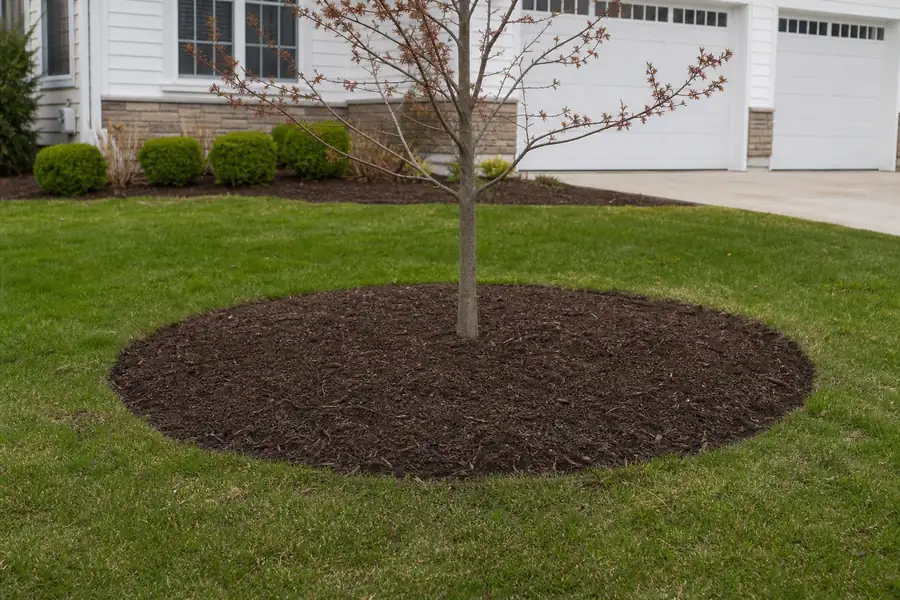
Quick answer: Spread mulch 2 to 4 inches deep in a ring at least 3 feet wide around the tree, and leave a 3 to 6 inch bare collar at the trunk so the root flare stays visible. Shape it like a donut, never a volcano.
Learning how to mulch around a tree correctly is less about which bag you buy and more about depth and where the mulch touches the bark. Most of the damage we see in yards comes from mulch piled straight up against the trunk, not from the wrong material. Get the shape right and the tree does the rest.
How to Mulch Around a Tree: Depth and Ring Width
Two to four inches of mulch is the correct depth for almost every tree, with the exact number depending on your soil. In heavy or wet clay, cap it at 2 inches, since clay already holds water and extra mulch keeps roots waterlogged. In fast-draining sandy soil, go 3 to 4 inches to slow moisture loss between waterings.
The ring itself should reach at least 3 feet out from the trunk on a newly planted tree. On an established tree, extending mulch out to the drip line (the edge where the outer branches end) is even better, if your lawn space allows it. Whatever the width, leave a 3 to 6 inch bare gap right at the trunk so the root flare, the point where the trunk widens and the first roots meet soil, stays visible and dry.
| Soil type | Mulch depth | Ring width |
|---|---|---|
| Heavy or wet clay | 2 inches | 3 ft minimum |
| Average garden soil | 2-3 inches | 3 ft, ideally to drip line |
| Fast-draining sand | 3-4 inches | 3 ft, ideally to drip line |
Why Mulch Volcanoes Kill Trees
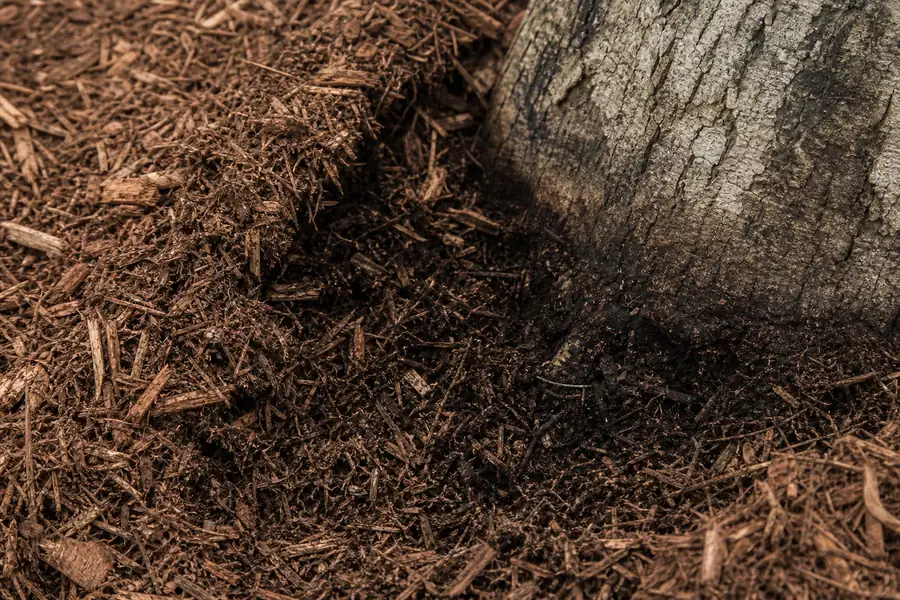
A mulch volcano, mulch piled high and tight against the trunk, kills trees slowly by keeping bark constantly wet, which leads to rot. Bark isn't built to sit in damp mulch the way roots are. Once it starts rotting at the base, the tree loses the ability to move water and sugar between roots and canopy.
Piled mulch also invites new roots to grow up into the pile instead of down into soil. These become girdling roots that wrap around the trunk as the tree grows and slowly choke it from the outside. Voles and other rodents nest in the warm, moist pile too, and they chew bark all winter without you seeing a thing. The decline looks a lot like a tree planted too deep: slow yellowing, thin canopy, no obvious cause until you pull the mulch back.
Here's the part nobody likes to admit: crews build volcanoes because a tight, tall cone looks tidy on the day of the job. It photographs well. It just isn't good for the tree, and it's fair to ask your landscaper to stop mounding mulch against the trunk and shape a flatter ring instead.
Best Mulch Materials for Trees, Ranked
Arborist wood chips and shredded hardwood mulch are the best choices for trees, because they break down slowly and feed soil life as they decompose. Pine straw is a solid regional pick in the South, where it's cheap, breathable, and holds up in heat. Dyed mulch colors get a lot of online worry, but the color has nothing to do with tree health. Depth and placement matter far more than dye.
Skip rock or gravel piled against a trunk. Rock stores heat, radiates it back onto bark, and adds nothing organic to the soil the way mulch does. Skip landscape fabric under the mulch too. It blocks the slow cycle of decomposing wood feeding the soil, and it tangles surface roots over time, making a future fix much harder.
How to Lay Mulch the Right Way
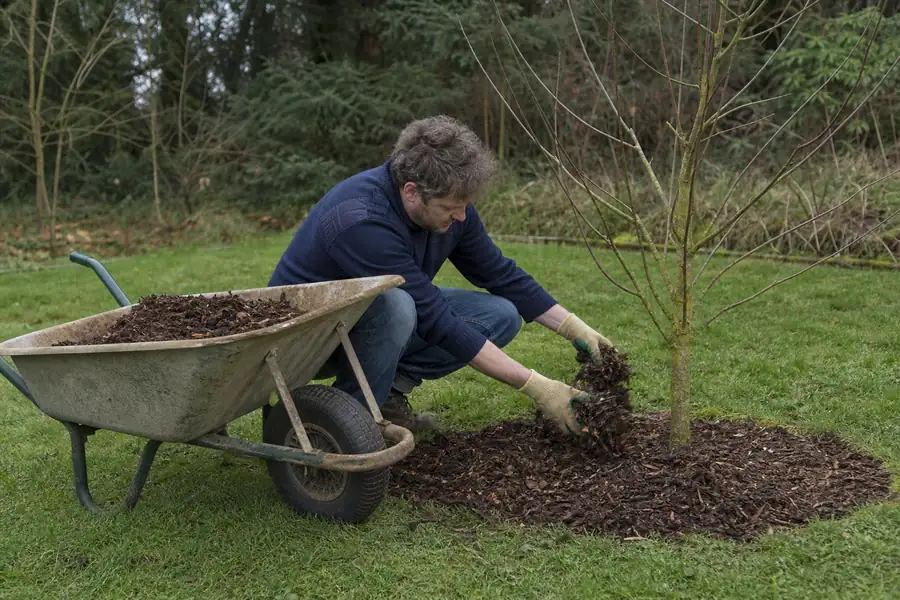
Strip grass out of the ring area first. Turf grass is an aggressive competitor for water and will outcompete a young tree's roots if left in place under a thin layer of mulch. Once the ring is clear, spread mulch evenly at your target depth and taper it down to nothing as you approach the trunk, so the bare collar stays clear rather than just thin.
Water once right after laying the mulch. This settles it in place and helps it start holding moisture the way it's supposed to, instead of blowing or washing away in the first storm.
The Yearly Mulch Refresh
Measure before you add anything. If 3 to 4 inches of mulch already remain from last year, rake the old layer to refresh its color and texture rather than dumping a new load on top. Total depth should never pass 4 inches, no matter how many seasons of top-ups have gone by.
This is where volcanoes usually start: a fresh 2 inches added every spring on top of mulch that never fully broke down. After a few years, the ring is a foot deep and creeping up the bark. Check depth with a trowel or your finger before you buy another bag.
How to Fix a Mulch Volcano Today
Pull the mulch back from the trunk by hand until you can see the root flare clearly. Work in a circle, not a straight cut, and don't be surprised if the flare has been buried for years under an inch or two of packed mulch and soil.
Spread the excess mulch outward to widen the ring instead of throwing it away. While the base is exposed, check for circling or girdling roots wrapped around the trunk. If you find thick roots crossing over each other right at the base, that's worth a call to an arborist before you re-cover the area.
Once your tree is settled and mulched right, the same zone-based thinking applies to any new tree you add to the yard. Arbor Buddy's ZIP-based growing zone lookup flags which species can actually handle your winters and summers before you plant, so you're not fixing a bigger mismatch than a mulch pile down the road.
FAQs
How deep should mulch be around a tree?
Two to four inches is the right depth for most trees. Use the lower end, around 2 inches, in heavy clay soil that already holds moisture, and the higher end, 3 to 4 inches, in fast-draining sandy soil.
Can mulch touch the trunk of a tree?
No. Leave a bare gap of 3 to 6 inches around the trunk so the root flare stays visible and dry. Mulch piled against bark traps moisture and leads to rot over time.
What is the best mulch for trees?
Arborist wood chips and shredded hardwood are the top choices because they break down slowly and feed the soil as they decompose. Pine straw works well as a regional alternative in southern climates.
How wide should a mulch ring be?
Three feet out from the trunk is the minimum for a newly planted tree. On established trees, extending the ring out to the drip line gives roots even more benefit if your lawn space allows it.
Do I need to add mulch every year?
Only if the existing layer has thinned below 2 to 4 inches. If mulch from last year is still holding at 3 to 4 inches, rake it to refresh it instead of adding a new layer, since total depth should never stack past 4 inches.