
Plant Selection
Leyland Cypress: Problems, Lifespan and Better Alternatives
Quick answer: Leyland cypress grows fast but is prone to Seiridium canker, bagworms, and toppling in storms, and most landscape specimens decline within 10 to 20 years instead of lasting decades. Green Giant arborvitae usually holds up better over the long run.
Nurseries love selling leyland cypress because it grows 3 to 4 feet a year and fills a privacy screen fast. That speed is exactly why it fails so often: the wood stays weak, the roots stay shallow, and the tree never builds the defenses a slower-growing evergreen develops.
What Is a Leyland Cypress?
Leyland cypress (xCupressocyparis leylandii) is a fast-growing hybrid evergreen that reaches 40 to 60 feet tall and 15 to 25 feet wide at maturity, and it's rated for USDA zones 6 through 10. It became a go-to choice for privacy trees because few evergreens pack on height as quickly, sometimes 3 to 4 feet a year in good conditions.
That growth rate is the whole sales pitch, and it's also the catch. Compared to other fast-growing privacy trees, leyland cypress trades long-term durability for short-term height, and the tradeoff shows up within the first decade.
The Disease Problem With Leyland Cypress
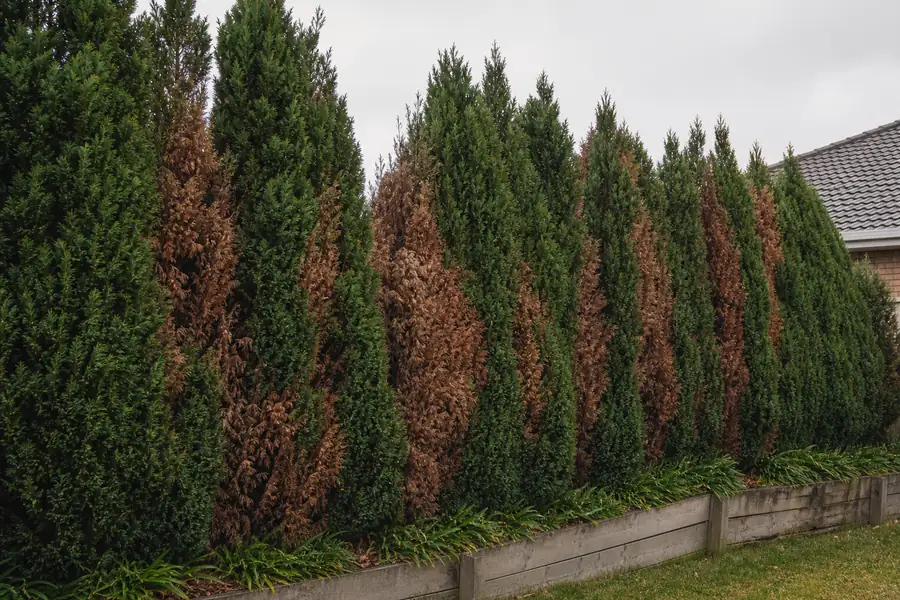
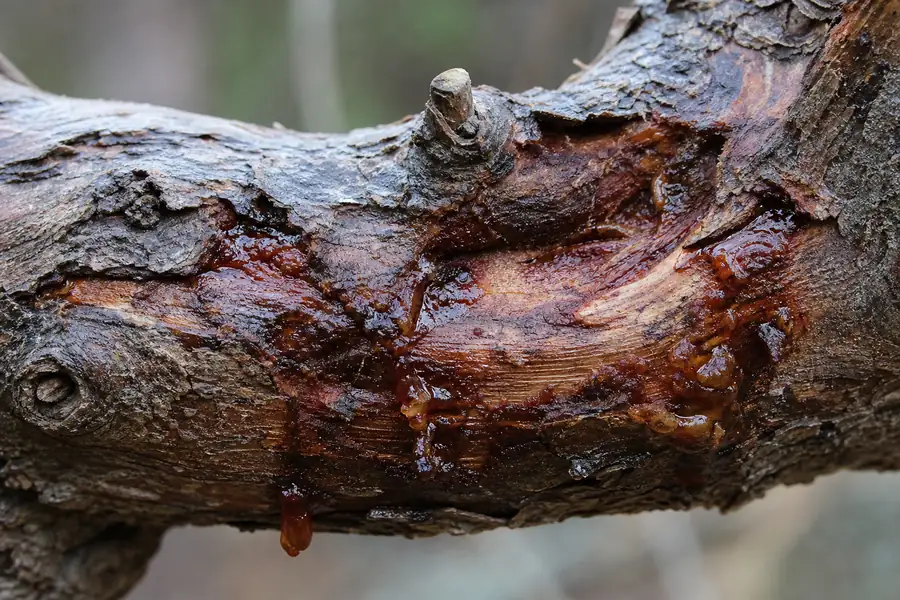
Leyland cypress is highly susceptible to Seiridium canker, a fungal disease that girdles branches and kills them from the point of infection outward. Botryosphaeria canker causes similar dieback, and both spread fastest on trees already stressed by drought or crowded planting. Extension plant pathologists have documented both diseases for decades as the leading cause of decline in mature leyland cypress stands.
Needle blight compounds the problem by thinning the interior of the canopy, so a hedge that looked full and green a few years ago starts showing bare, brown patches that never fill back in. Once canker sets into the main trunk, there's no spray or pruning cut that reverses it.
Pests and Roots: Why Leyland Cypress Topples
Bagworms can strip a leyland cypress of its needles by late summer, and a heavy infestation weakens the tree enough to invite canker the following year. The caterpillars build spindle-shaped cases that blend into the foliage, so homeowners often don't notice the damage until the branch tips are already bare.
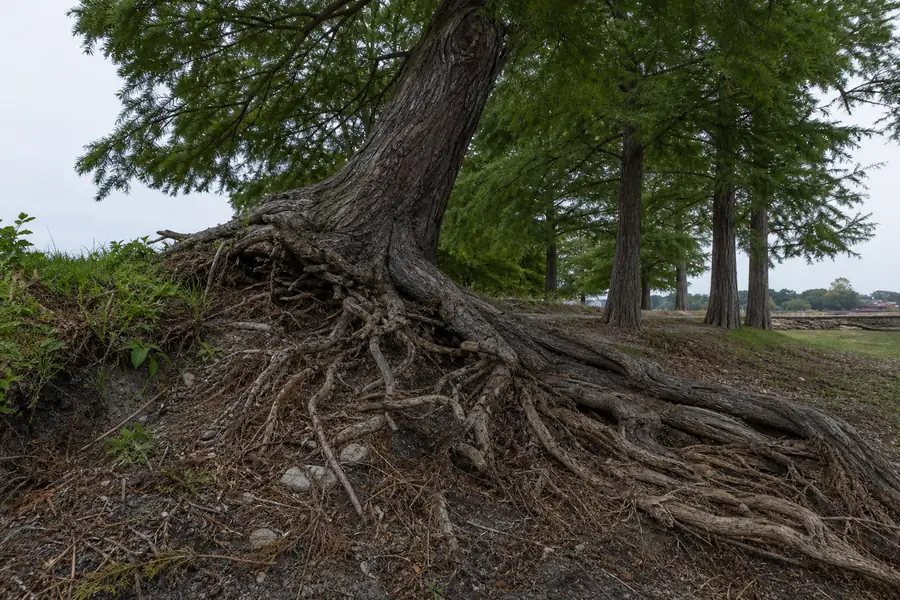
The bigger structural issue is underground. Leyland cypress grows a shallow, wide-spreading root system rather than a deep taproot, and that system struggles in heavy or poorly drained soil where root rot sets in. Combine a weak root base with the tree's tall, top-heavy canopy, and a strong storm is often enough to push a mature leyland cypress over, roots and all.
The Real Lifespan of a Leyland Cypress
Most leyland cypress trees planted in a yard decline within 10 to 20 years, far short of the 30-plus years many buyers expect from an evergreen screen. That number holds up across extension research on the species, which consistently flags canker and root failure, not old age, as the reason trees come down early.
Homeowners plant leyland cypress expecting a permanent hedge. What they usually get is a decade or two of good growth followed by a stretch of patchy dieback, and then a tree that needs to be removed and replaced anyway.
The Spacing Mistake That Shortens Leyland Cypress Lifespan
Planting leyland cypress 5 to 6 feet apart is the single most common mistake behind early decline, even though the species needs 8 to 12 feet between trees to mature properly. Nurseries and landscapers plant them tight because a close row looks like an instant privacy screen.
That tight spacing cuts off airflow between trees, and poor airflow is exactly what canker and needle blight need to spread from one tree to the next. A crowded row doesn't just look worse over time, it accelerates the disease cycle that was already working against the species.
Better Alternatives to Leyland Cypress
Green Giant arborvitae is usually the better long-term swap: it reaches 30 to 40 feet tall, holds up in zones 5 through 8, and shows far better resistance to the canker diseases that plague leyland cypress. Homeowners comparing the two often start with the Emerald Green vs Green Giant breakdown before deciding on a screening tree.
Cryptomeria Radicans (zones 5 to 9) tolerates tighter spacing without the same disease pressure, Nellie Stevens holly (zones 6 to 9) builds a denser, sturdier root system, and Eastern red cedar (zones 2 to 9) handles drought and wind far better than leyland cypress ever will.
| Problem | What Happens | Better Alternative |
|---|---|---|
| Canker and needle blight | Leyland cypress browns from the inside out and rarely recovers | Green Giant arborvitae resists most common canker diseases |
| Bagworm defoliation | Caterpillars strip needles by late summer, weakening the tree | Nellie Stevens holly's dense foliage is less attractive to bagworms |
| Shallow roots and toppling | Storm winds push over mature trees with weak root systems | Eastern red cedar develops a deeper, more wind-firm root base |
| Overcrowding at 5-6 ft spacing | Poor airflow lets disease spread tree to tree | Cryptomeria Radicans tolerates tighter rows with less disease risk |
We'd rather sell you a tree that's still standing in twenty years than the fastest grower on the lot. If leyland cypress keeps failing on your soil or in your climate, it's worth comparing options in Thuja Green Giant or browsing Arbor Buddy's full lineup to shop tougher evergreen alternatives that are zone-matched before they ship.
FAQs
How long do Leyland cypress live?
Most leyland cypress trees planted at home decline within 10 to 20 years, well short of the decades-long screen many buyers picture. Canker disease and root failure, not age alone, are the usual causes of that early decline.
Why is my Leyland turning brown?
Browning in a leyland cypress is most often Seiridium or Botryosphaeria canker, fungal diseases that kill branches from the point of infection outward. Drought stress and tight spacing between trees make both diseases spread faster and hit harder.
How far apart should Leyland cypress trees go?
Leyland cypress needs 8 to 12 feet between trees to mature properly, not the 5 to 6 feet spacing commonly used for a quick privacy screen. Crowded rows cut off airflow, and that lets canker and needle blight move from tree to tree.
What can I plant instead of Leyland cypress?
Green Giant arborvitae, Cryptomeria Radicans, Nellie Stevens holly, and Eastern red cedar all offer similar screening height with far better resistance to canker, pests, or toppling. The right pick depends mainly on your USDA hardiness zone and soil drainage.
Are Leyland cypress trees worth planting?
Leyland cypress can work for a quick, temporary screen, but its disease record and shallow root system make it a poor choice for a permanent privacy hedge. Most homeowners get better long-term results from a slower-growing, disease-resistant evergreen instead.