
Quick answer: Overwatered trees show yellowing leaves, soft wilting, and green leaves dropping while the soil stays wet at the root ball. Underwatered trees develop brown, crispy leaf edges (leaf scorch), curling foliage, and dry soil that pulls away from the trunk. When wilting alone doesn't tell you which is which, a soil moisture test at the root ball settles it in under a minute.
Both problems can kill a tree, and both can make leaves droop, which is exactly why overwatered tree signs and underwatered tree signs get confused. Leaf color and soil feel, taken together, are what actually separate them.
Getting the diagnosis wrong makes things worse. Pouring more water onto a tree that's already drowning speeds up root rot, and letting a thirsty tree "dry out more" before you water pushes it toward permanent leaf drop.
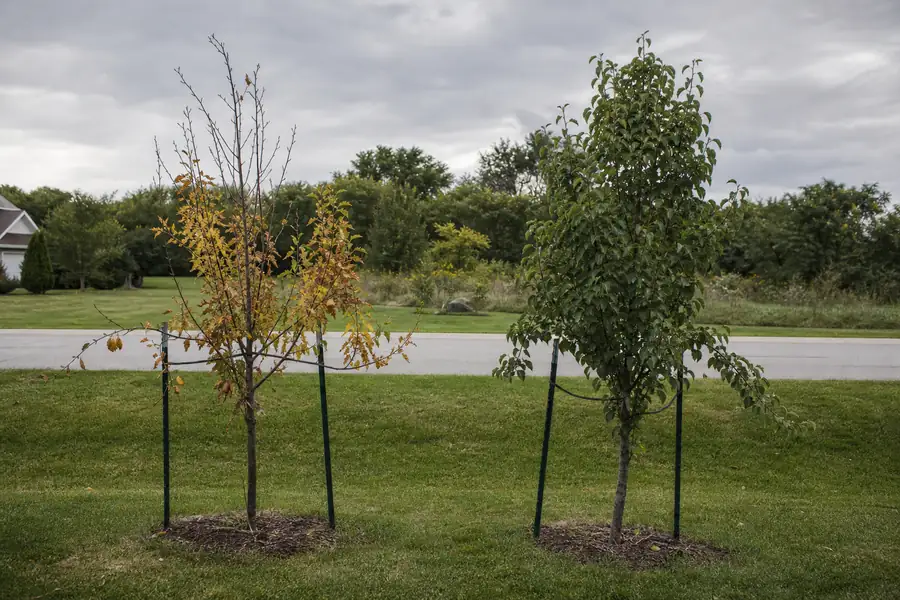
Overwatered Tree Signs vs. Underwatered Tree Signs: The Quick Answer
Read the leaf color first, then check the soil, because leaf look plus soil feel together diagnose water stress while wilting alone does not. A drooping tree sitting in soggy, heavy soil is drowning. A drooping tree in soil that crumbles dry is dehydrated. This two-step check matters most in the first year after planting, when root systems are still small and unforgiving, which is why our newly planted tree care guide leans so heavily on soil checks over fixed watering schedules.
Signs of an Overwatered Tree
An overwatered tree shows yellowing leaves across the canopy, soft and limp wilting, and leaves dropping while still green instead of browning first. The soil around the root ball stays wet days after the last watering, sometimes with a sour, swampy smell.
- Yellowing leaves, often starting on older growth
- Soft, limp wilting despite wet soil
- Green leaves dropping before they discolor
- Constantly damp or waterlogged soil
- Sour or musty smell near the root zone
- Fungus gnats or mushrooms in the mulch
These are classic early signs of root rot, a condition where waterlogged soil starves roots of oxygen and lets fungal pathogens take hold. Roots need air pockets in the soil as much as they need moisture, and saturated ground pushes that air out. Once the fine feeder roots die back, the canopy above starts to starve even though the ground underneath is soaked, which is the part that trips up new tree owners most. Overwatering is the more common mistake on newly planted trees, mainly because owners water on a fixed schedule instead of checking the soil first.
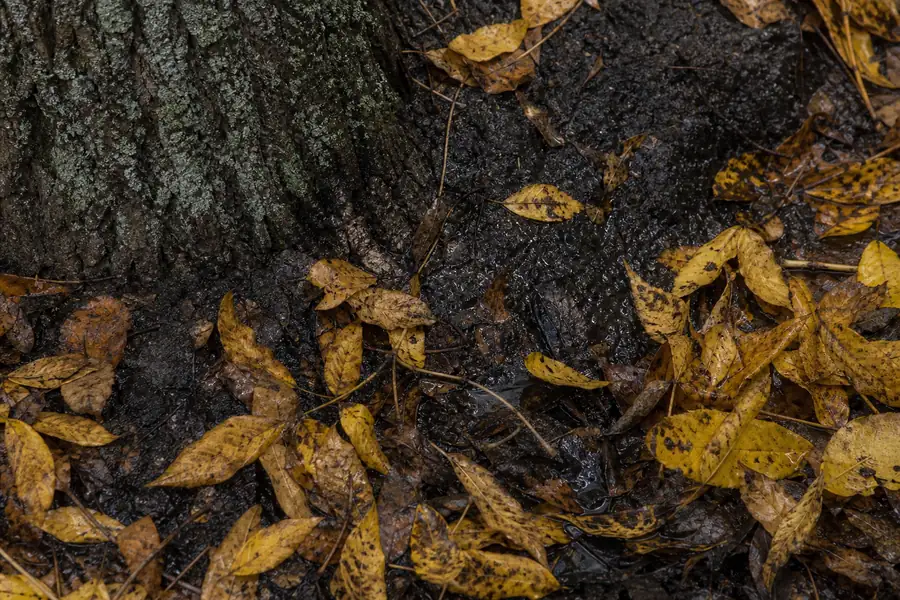
Signs of an Underwatered Tree
An underwatered tree shows brown, crispy leaf edges known as leaf scorch, leaves that curl inward, a dull gray-green cast to the whole canopy, and dry soil that has pulled away from the trunk or the pot edge. Leaf drop typically starts at the bottom of the canopy and works upward as the tree sheds foliage it can no longer support.
- Brown, crispy edges on leaves (leaf scorch)
- Leaves curling or rolling inward
- Dull, gray-green leaf color instead of the deep green the tree should have
- Dry, crumbly soil that pulls away from the trunk
- Leaf drop starting at the bottom of the canopy
Underwatering is easier to diagnose because the damage pattern is consistent: the tree is rationing water to its most important tissue and sacrificing the leaf edges first. It's still a serious stress, especially in the first season, and it compounds quickly in hot weather. This bottom-up leaf drop pattern is a useful clue on its own, since overwatered trees tend to drop leaves from anywhere on the canopy while underwatered trees shed from the bottom first. Our guide on how to water a newly planted tree covers how often young roots actually need a deep soak, which is usually less frequent but far heavier than a quick daily sprinkle.
Symptom Comparison Table: Overwatered vs. Underwatered
Use this table as a fast reference when the leaves and soil don't immediately point one way.
| Symptom | Overwatered | Underwatered |
|---|---|---|
| Leaf color | Yellowing, whole canopy | Dull gray-green, then brown edges |
| Wilting type | Soft, limp | Dry, brittle, curling |
| Leaf drop | Green leaves falling | Starts at bottom of canopy |
| Soil feel | Wet, heavy, sticky | Dry, crumbly, pulling from trunk |
| Smell | Sour or musty | None |
| Pests | Fungus gnats, mushrooms | Spider mites (in extreme drought) |
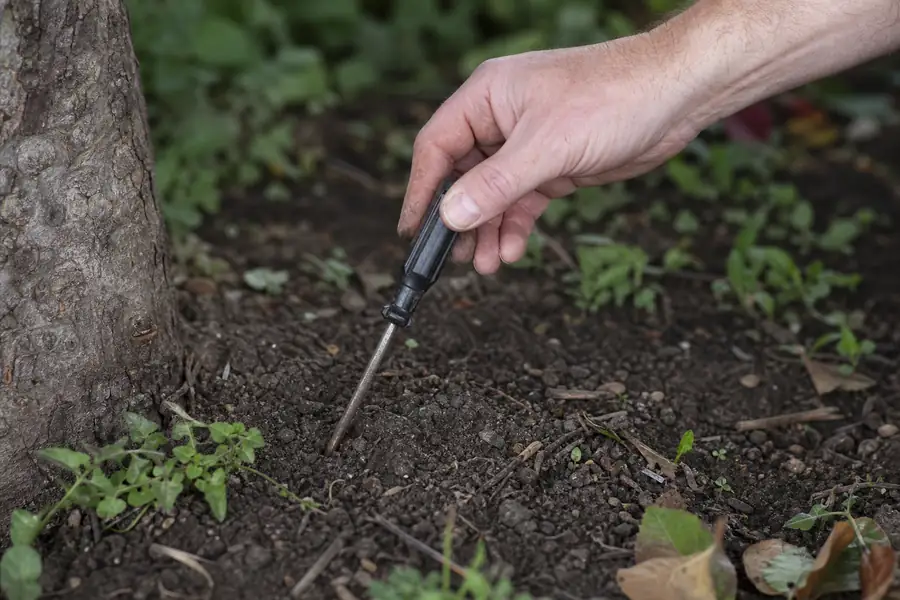
The Soil Moisture Test
Push a screwdriver, soil probe, or your finger 4 to 6 inches into the soil at the edge of the root ball, not right against the trunk, and feel what comes up. If the soil is cool, damp, and clings together, the tree has enough water or too much. If it's dry, crumbly, and falls apart, the tree is thirsty.
Extension horticulturists generally recommend this kind of physical check over a fixed watering calendar, since soil type, weather, and tree size all change how fast water disappears. Sandy soil drains in a day or two; clay-heavy soil can stay wet for a week or more after a soak. The screwdriver test takes the guesswork out regardless of what's underfoot.
How to Correct Each Problem
For an overwatered tree, stop watering and let the top several inches of soil dry out before checking again. Then check drainage: if water pools on the surface for more than an hour after a rain, the planting hole or bed may need a drainage fix, since a tree sitting in a bathtub of clay will keep drowning no matter how careful you are with the hose afterward.
For an underwatered tree, give it a deep soak rather than a splash, roughly 10 gallons per inch of trunk caliper, applied slowly so it soaks in instead of running off. Follow with 2 to 3 inches of mulch around the root zone, kept a few inches back from the trunk, to slow evaporation between waterings.
Every tree from Arbor Buddy is matched to your growing zone before it ships and is covered by our one-year guarantee, so if a watering mix-up happens in that first year, you're not starting over from scratch.
FAQs
Can overwatering and underwatering look the same?
They can both cause wilting, which is why wilting alone is not a reliable diagnosis. The tiebreaker is soil feel and leaf color: soggy soil with yellowing leaves points to overwatering, while dry soil with brown, crispy edges points to underwatering.
Do yellow leaves always mean too much water?
Uniform yellowing across the canopy usually points to overwatering or poor drainage, but yellowing can also come from nutrient deficiency or compacted soil. Check the soil moisture first before assuming it's a watering issue.
How do I check soil moisture on my own tree?
Push a screwdriver or your finger 4 to 6 inches into the soil at the edge of the root ball. Damp, cool soil that clings together means enough or too much water; dry, crumbly soil means the tree needs a deep soak.
Can a tree recover from overwatering?
Yes, if you catch it before root rot spreads too far. Stop watering, improve drainage if needed, and give the roots time to dry out and recover; most trees bounce back within a few weeks once the soil stops staying saturated.
How much water is right for a young tree?
A common guideline is about 10 gallons per inch of trunk caliper per deep watering, adjusted by season and soil type. Checking the soil before each watering, rather than sticking to a fixed schedule, prevents both extremes.