

Nurseries size trees three different ways: container volume in gallons, trunk caliper in inches, and height in feet. Each system fits a different tree stage, from a young shrub in a pot to a field-grown shade tree. Mix them up and you can order a tree that isn't what you pictured. This guide gets tree sizes explained on one scale, so a #7 pot, a 1.5-inch caliper, and a 6-7 ft listing all make sense together.
Key takeaways
- Container sizes like #3 or #15 describe pot volume, not a guaranteed tree height.
- A trade gallon holds about 0.7 true gallons, so a container runs smaller than the number suggests.
- Trunk caliper, measured in inches, is the standard for field-grown and landscape-grade shade trees.
- Height classes (4-5 ft, 6-7 ft, and so on) are how evergreens and hedges are sold.
- Height per size varies by species, so treat every range here as typical, not a promise.
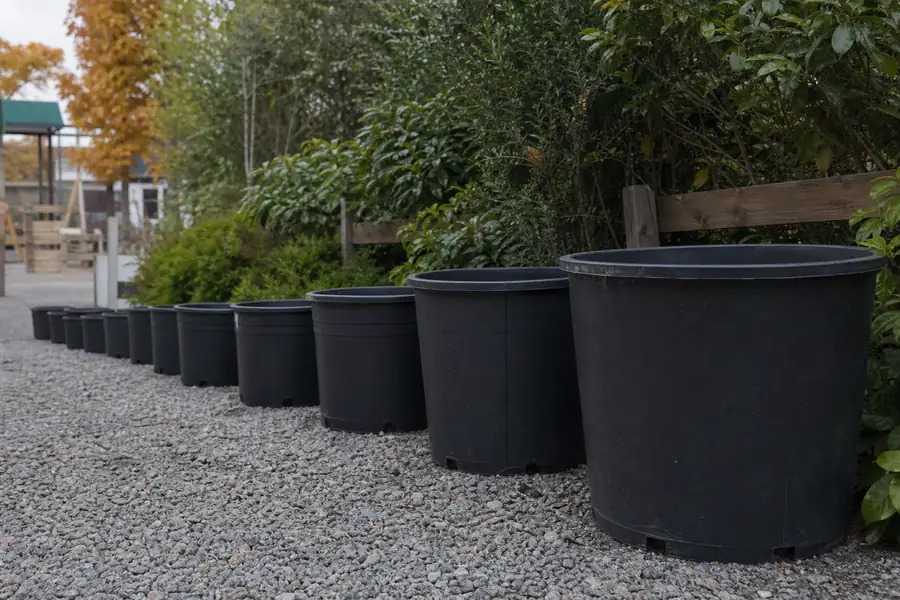
Tree Sizes Explained: Three Systems, One Scale
Tree sizes explained comes down to matching the system to the plant's growth stage. Young trees and shrubs haven't grown a trunk worth measuring, so they're sold by container size, the volume of the pot they're growing in. A field-grown tree with a real trunk gets sized by caliper, trunk width, because that predicts canopy and root mass better than pot volume does. Evergreens and hedge plants get sold by height, since screening value comes from how tall and wide the plant is right now, not from trunk thickness.
None of these systems convert perfectly into each other. A #15 container oak and a 2-inch caliper oak might be close to the same tree at different points, but the label tells you which measurement to trust.
Container Sizes, #1 to #25: What the Numbers Mean
Container size numbers are class numbers, not liquid measurements. A "#3" is a nursery-industry size class, not a promise of exactly three gallons of soil. Typical height ranges by container class, species depending:
- #1: under 2 ft, small shrubs and starts
- #3: 2-4 ft
- #7: 3-6 ft
- #15: 6-10 ft, common for landscape-grade shade trees
- #25: 8-12 ft
Here's the part that trips people up: a trade gallon, the unit nurseries actually use, holds about 0.7 true gallons. A "5-gallon" tree grows in something closer to 3.5 real gallons of soil, which is why a container size chart built on liquid gallons never lines up with what shows up at your door.
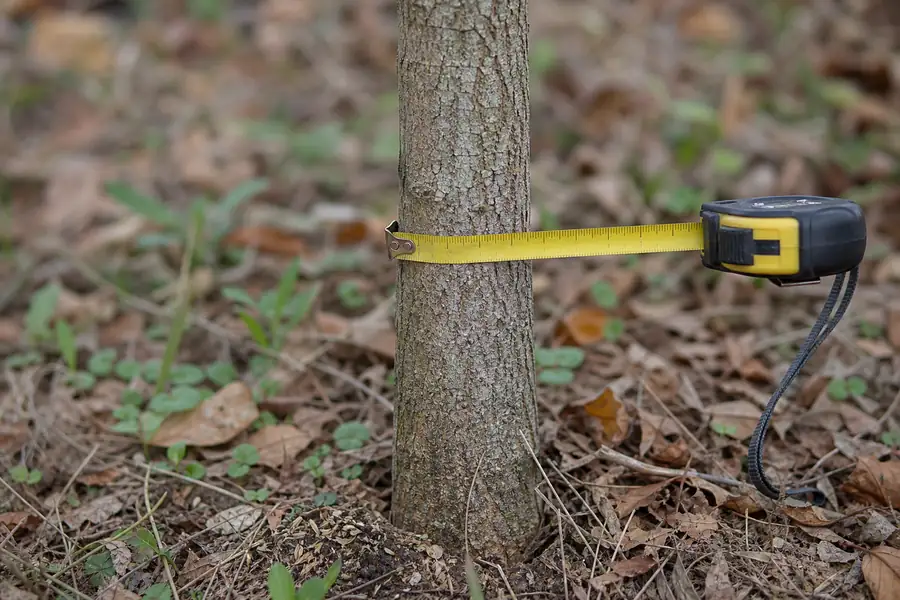
Trunk Caliper: The Shade Tree Standard
Trunk caliper is trunk diameter, measured in inches, and it's the standard sizing system for field-grown and landscape-grade shade trees. Under the American Standard for Nursery Stock (ANSI Z60.1), the nursery stock standards growers follow nationwide, caliper is measured 6 inches above the soil line for trunks up to 4 inches thick, and 12 inches above the soil line for anything larger.
Caliper matters because trunk width predicts canopy size and root ball diameter, the width of soil and roots that ship with a field-grown tree. A 1.5-2 inch caliper tree typically stands 8-10 ft tall. A 2-3 inch caliper tree usually runs 10-14 ft, species depending. Most shade trees, including Arbor Buddy's shade trees, sell this way rather than by container size.
Height Classes for Evergreens and Hedges
Evergreens and hedge plants sell by height class, listings like 4-5 ft, 5-6 ft, or 6-7 ft, because screening value tracks height and width, not trunk thickness. A privacy hedge buyer cares about how much of the fence line gets blocked this season, and a thin-trunked evergreen that's already 6 ft tall does that job better than a thick-trunked one at 3 ft.
Browse Arbor Buddy's evergreen and privacy trees and you'll see height classes on nearly every listing, since that's the number that actually tells you what kind of screen you're getting.
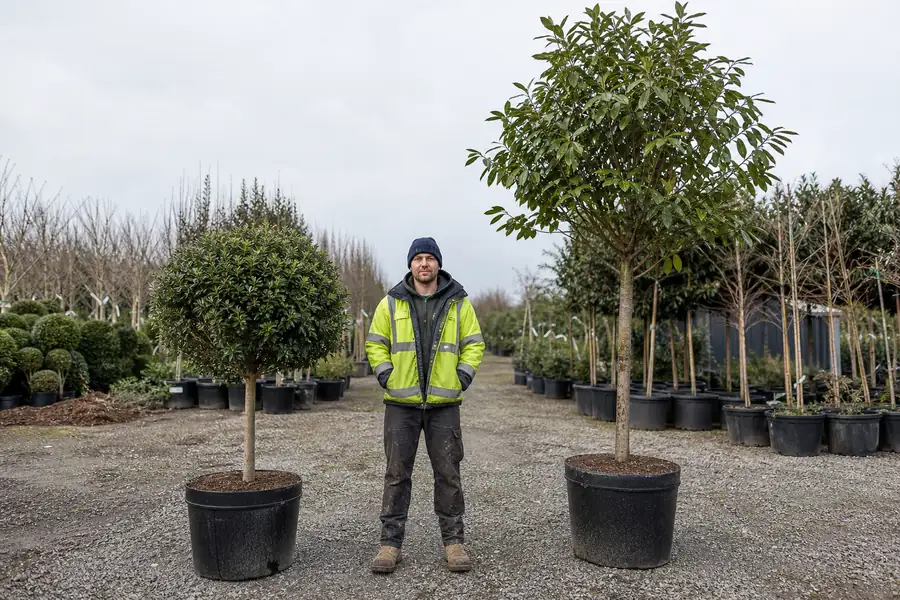
Tree Size Conversion Table
This table lines up the three systems side by side. Treat every height range as typical, not guaranteed: species and growing conditions change the numbers.
| Listing label | What it measures | Typical height | Best use |
|---|---|---|---|
| #3 container | Pot volume | 2-4 ft | Shrubs, hedges, budget starts |
| #7 container | Pot volume | 3-6 ft | Mid-size shrubs and young trees |
| #15 container | Pot volume | 6-10 ft | Landscape-grade shade and flowering trees |
| #25 container | Pot volume | 8-12 ft | Larger specimen trees |
| 1.5-2 inch caliper | Trunk diameter | 8-10 ft | Field-grown shade trees, faster canopy |
| 2-3 inch caliper | Trunk diameter | 10-14 ft | Instant shade or focal-point trees |
What Ships at Each Size
Parcel carriers handle boxed trees up to about 8 ft tall; anything taller or heavier ships freight on a pallet. Most online tree orders run 4-6 ft at ship height, small enough to box for a standard delivery driver. Landscape-grade trees, generally 1.5-3 inch caliper and 8-14 ft tall, are too big and too heavy for parcel boxes and ship freight instead, with cost calculated at checkout based on size and destination.
Picking a Tree Size on Purpose
Establishment, the period a tree spends growing new roots before it puts on real top growth, takes roughly a year per inch of caliper. A smaller, cheaper tree often catches up to a bigger one within a few seasons, since it spends less time recovering from the move and more time growing.
Pay for size when you need screening or a focal point now, not in five years. A #25 magnolia by the patio earns its price the day it's planted. A #7 tree in a back border can reach the same result for less money, if you're willing to wait.
Arbor Buddy's zone finder flags which sizes and species will actually survive your winters before you buy, and the Plant Finder quiz narrows the list to fit your yard. Every tree ships under Arbor Buddy's 1-Year Alive & Thrive Guarantee, so a tree that doesn't make it through its first year gets replaced, simple as that. When you're ready, browse trees by size and pick the one that matches your timeline and your budget.
FAQs
How tall is a 5-gallon tree?
A 5-gallon tree usually stands 3-5 ft tall, though height varies by species and how the individual tree grew. The "5-gallon" label refers to the trade gallon container it's growing in, not a guaranteed height.
What does 2-inch caliper mean?
Caliper is trunk diameter, measured in inches at a set height above the soil line. A 2-inch caliper tree is typically a 10-14 ft tree, species depending, and it's the standard way field-grown shade trees are sized.
Why does my 5-gallon pot look small?
Trade gallons, the unit nurseries use for container sizes, run about 30 percent under true liquid gallons. A "5-gallon" pot holds closer to 3.5 real gallons of soil, which is why it looks smaller than a 5-gallon paint bucket.
Is a bigger tree size worth the extra cost?
Only when time matters more than money. A larger tree gives you instant screening or a mature look right away, but a smaller tree of the same species often catches up within a few years since it spends less energy recovering from transplant.
What is root ball diameter?
Root ball diameter is the width of the soil and root mass dug up with a field-grown tree, and it typically scales with trunk caliper. A wider root ball means more intact roots at planting, which generally helps a tree establish faster in its new spot.