
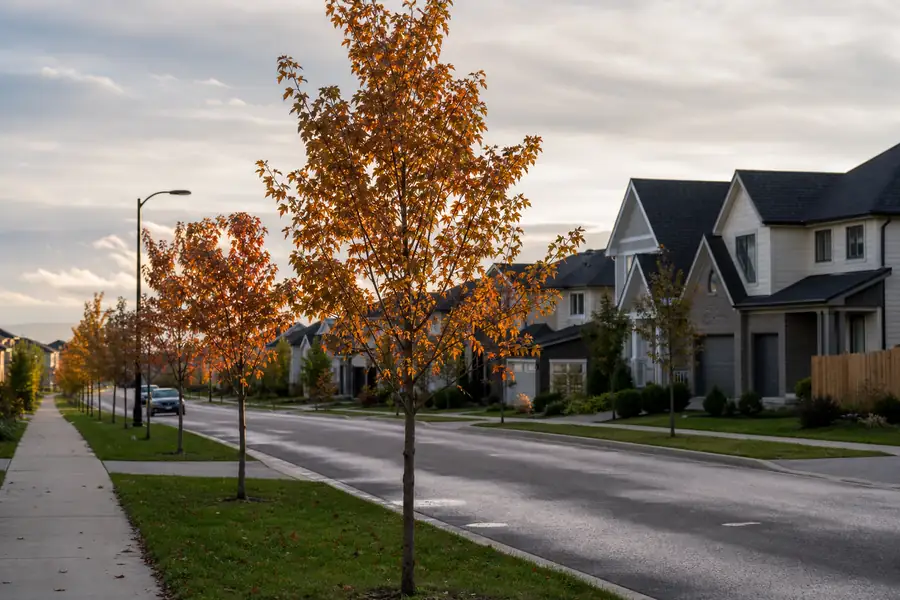
For most of the United States, autumn is the best planting season - but not everywhere, and "fall is the best time to plant" is repeated far more often than it is true. The deciding factor is soil temperature. Roots keep growing until soil drops to around 40°F, and need soil well above 55°F at planting to establish before winter. In the Southeast and much of the West, autumn delivers warm soil, cooler air and reliable moisture - close to ideal. In the upper Midwest and the colder Northeast, soil cools too fast, and Michigan State Extension recommends spring planting unless there is a compelling reason not to.
Key takeaways
- Soil temperature drives the decision, not the calendar. Root growth ceases below about 40°F; plant when soil is well above 55°F at 6 inches deep.
- Autumn wins in zones 7-10 and much of the West: warm soil, cool air, and usually more rain.
- Spring is the safer default in zones 3-5, per MSU.
- The worst time everywhere is midsummer. Full canopy, maximum water demand, minimum roots.
- Container stock is the most forgiving and extends the window at both ends.
- Bare-root stock is dormant-season only - roughly mid-November to mid-March.
Why soil temperature is the whole answer
A newly planted tree has one job: regrow roots. Everything about planting season follows from what helps or hinders that.
- Roots grow when soil is warm, and keep growing well after the canopy has gone dormant. Root growth continues until soil temperature falls to roughly 40°F.
- Leaves lose water. A tree with a full canopy and a reduced root system is under constant stress.
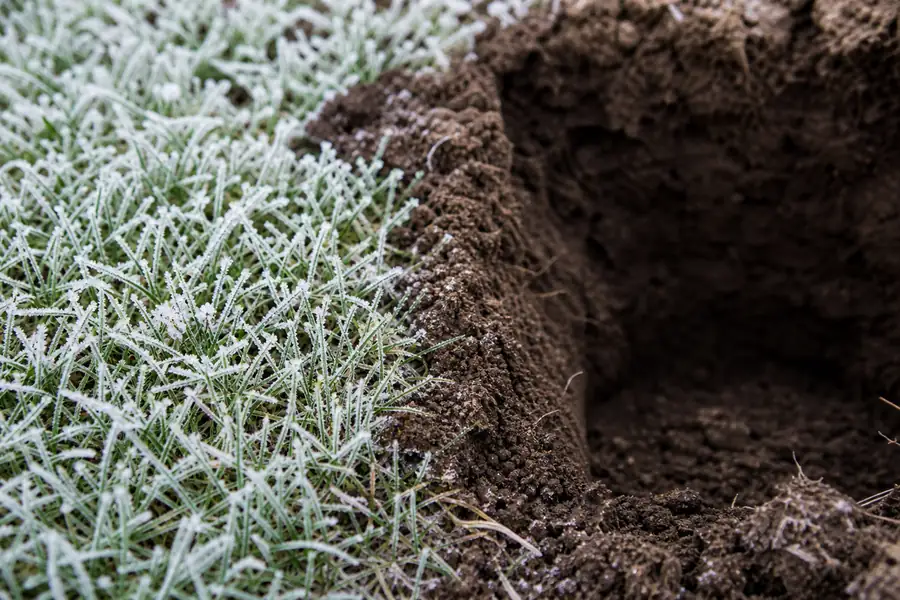
The ideal planting moment is therefore when soil is still warm but air is cool - roots active, canopy not demanding much. In most of the country that describes autumn. Michigan State's guidance is that soil should be well above 55°F at a depth of 6 inches at planting time, which in practice lasts until early-to-late October depending on where you are.
The autumn window closes when soil cools below the root-growth threshold. If you plant after that point, the tree sits with cut roots in cold soil through winter, unable to regenerate - exposed to frost heave and winter desiccation with no new root system to draw on. That is why the right answer changes with latitude.
The regional answer
| Region / zones | Best window | Second-best | Avoid |
|---|---|---|---|
| Deep South, Gulf Coast, Florida (9-11) | Late autumn through winter | Early spring | May - September |
| Southeast (7-8) | Mid-September to early December | March - April | June - August |
| Mid-Atlantic (6-7) | September to late October | March - April | July - August |
| Lower Midwest / Mid-South (6) | September to mid-October | April | July - August |
| Upper Midwest / Northern Plains (3-5) | Spring, after thaw to early June | Early September only, and only for forgiving species | Late autumn, midsummer |
| Northeast, interior (4-5) | Spring | Early September | Late autumn, midsummer |
| Pacific Northwest (7-9) | October to March | - | July - August |
| Southwest desert (8-10) | October to February | - | May - September |
| Mountain West (3-6) | Spring to early summer | Early September | Late autumn |
The upper Midwest row is the one that contradicts the internet. Michigan State Extension puts it plainly: for the Midwest, where cold soil temperatures limit new root growth in the fall, spring planting is recommended if there is no compelling reason to plant in the fall. North Carolina State, meanwhile, describes mid-September through early December as ideal for eastern North Carolina. Both are right, for their own states.
If you are not sure which row applies to you, the ZIP code zone finder will tell you your USDA sub-zone in a few seconds - and it uses the current 2023 map, which shifted a lot of the country half a zone warmer than people remember.
Season by season
Autumn - the default across most of the country
Why it works: soil is still carrying summer heat, air is cooling so the canopy demands less, and autumn rainfall is usually more reliable than summer rainfall. Deciduous trees are dropping leaves, which removes most of their water demand entirely. Roots keep working for weeks after the tree looks dormant.
What to watch: plant early enough that roots get established weeks of warm soil. Water right up until the ground freezes - this is the most commonly skipped step, and it is how autumn plantings fail. Evergreens keep losing moisture through their foliage all winter.
Rough rule: aim to have the tree in the ground at least four to six weeks before your average first hard freeze.
Spring - the safer choice in cold zones
Why it works: the tree goes in just as soil warms and has the entire growing season ahead to regenerate roots before facing a winter.
What to watch: the window between workable soil and summer heat can be short, especially where spring turns hot quickly. You will also be watering through the first summer, which is more work than an autumn planting. Plant as early as the ground allows.
Summer - possible, not advisable
Container stock can be planted in summer, because the root system is not disturbed. But the tree is carrying a full canopy in maximum heat with its roots confined to the root ball volume.
If you must: plant in the evening or on an overcast day, water on the front-loaded schedule in how to water a newly planted tree, mulch generously, and check soil moisture every other day.
Winter - regionally excellent or impossible
In zones 8-11, winter is often the single best planting season: soil never gets cold enough to stop root growth and the canopy is at its least demanding. In zones 3-6, the ground is frozen and the question does not arise.
Stock type changes the window
| Stock type | Window | Why |
|---|---|---|
| Container-grown | Widest - any time the ground is workable, with summer discouraged | Root system undisturbed; the tree barely notices the move |
| Balled-and-burlapped | Dormant season preferred; spring in cold zones | Roots were cut at digging, so timing matters much more |
| Bare root | Dormant only - roughly mid-November to mid-March, ground unfrozen | No soil at all; must be planted while fully dormant |
Arbor Buddy ships established container and root-ball stock - not bare-root material - which is why the shipping window is wider than a traditional mail-order nursery's. Deliveries are timed to protect trees in transit during cold months, and you can choose a later delivery date at checkout to match your own planting window. See shipping.
Details on the dormant-only stock type in how to plant bare root trees.
Species that are fussier about autumn
Not every tree transplants equally well in autumn. The pattern is about root architecture rather than hardiness: species with coarse, sparse root systems that regenerate slowly are the ones that struggle with an autumn move, because they cannot rebuild enough root before cold soil shuts the process down.
Oaks, hickories and walnuts are the usual examples - deep-rooted, slow to regenerate. Several commonly planted ornamentals are also named in Extension literature as better moved in spring in cold regions.
What to do with that: in zones 7 and warmer, this rarely matters - there is enough warm soil after planting for anything to establish. In zones 3-5, prefer spring for coarse-rooted species, and treat autumn as the exception rather than the rule.
A caveat worth stating: published lists of "do not fall plant" species disagree with each other and few are based on trials. The mechanism above is more reliable than any specific list. If a particular species matters to you, your county Extension office will give you a local answer.
What about buying versus planting?
These are different questions, and the gap between them is useful.
Best time to buy: when selection is best, which is generally late winter through spring for the widest catalog, and late summer into autumn for the best availability of larger specimen material. Buying does not commit you to planting the same week - delivery can be scheduled.
Best time to plant: per the table above.
If you find the tree you want outside your planting window, two options:
- Schedule delivery for your window. Arbor Buddy lets you choose a later delivery date at checkout.
- Hold it temporarily. A container tree can be held in its pot in a sheltered spot for a few weeks - kept watered, and out of wind and full afternoon sun. This is a short-term measure, not a season-long one.
Do not plant outside your window simply because the tree has arrived. A few weeks of careful holding is better for the tree than planting into frozen or baking ground.
FAQ
Is fall really the best time to plant a tree?
In most of the country, yes - warm soil, cool air and reliable moisture favor root growth. But in the upper Midwest and colder Northeast, soil cools too quickly for roots to establish, and Michigan State Extension recommends spring planting unless there is a compelling reason to plant in autumn.
How late in the fall can I plant?
Until soil temperature at 6 inches deep drops toward 40°F, below which root growth effectively stops. As a practical rule, aim to plant at least four to six weeks before your average first hard freeze, and keep watering until the ground freezes.
Can I plant a tree in summer?
You can, particularly container-grown stock, but it is the highest-risk season. Full canopy plus maximum heat plus a confined root ball is a difficult combination. Plant in the evening, water on a front-loaded schedule, and check soil moisture every other day.
Can I plant a tree in winter?
In zones 8-11, winter is frequently the best season. In zones 3-6, the ground is usually frozen and planting is not possible.
What temperature is too cold to plant a tree?
The limit is set by the soil, not the air. Once soil at 6 inches falls to around 40°F, roots stop growing and there is little benefit in planting. Frozen ground rules it out entirely.
Does the type of tree change the timing?
Yes. Container-grown stock has the widest window because its roots are undisturbed. Balled-and-burlapped stock does better in the dormant season. Bare-root stock must be planted dormant, roughly mid-November to mid-March.
When should I buy if I am not planting yet?
Buy when the selection you want is available and schedule delivery for your planting window - that is usually better than planting at the wrong time or holding a tree for months.
Not sure which window applies to your yard? Find your growing zone by ZIP code, then browse trees rated for your climate. Everything we ship is covered by a 1-Year Thrive Guarantee, and deliveries are timed for your region.