Plant Selection
Deer-Resistant Privacy Trees That Actually Survive

Quick answer: The privacy trees deer usually leave alone are Norway spruce, Colorado blue spruce, Eastern red cedar, hardy junipers, boxwood, and spiny-leaved hollies. Skip arborvitae and yew in deer country: both are browse favorites that get stripped bare, especially as young plants.
If deer have ever chewed a fresh planting down to bare stems, you already know the frustration. Picking privacy trees that deer rarely touch saves you years of wasted growth and repellent sprays. Here is what actually holds up, and what to leave off the list no matter how fast it grows.
Resistant Is Not Deer-Proof
No tree is deer-proof. "Resistant" means a species is rarely browsed under normal conditions, not that it is immune.
Deer preference shifts with hunger. Extension research on deer browse consistently finds that when snow cover or drought limits other food, deer will sample plants they normally ignore, including trees on every resistant list. Browse pressure is also worse on young trees, since deer can reach the entire canopy and a few nights of feeding can strip a two-year-old sapling that a mature tree would barely notice.
That is why the trees below are described as rarely browsed, not safe.
Best Deer-Resistant Evergreens for Privacy
Needled evergreens with stiff, aromatic, or prickly foliage top the list of deer resistant privacy trees for year-round screening.
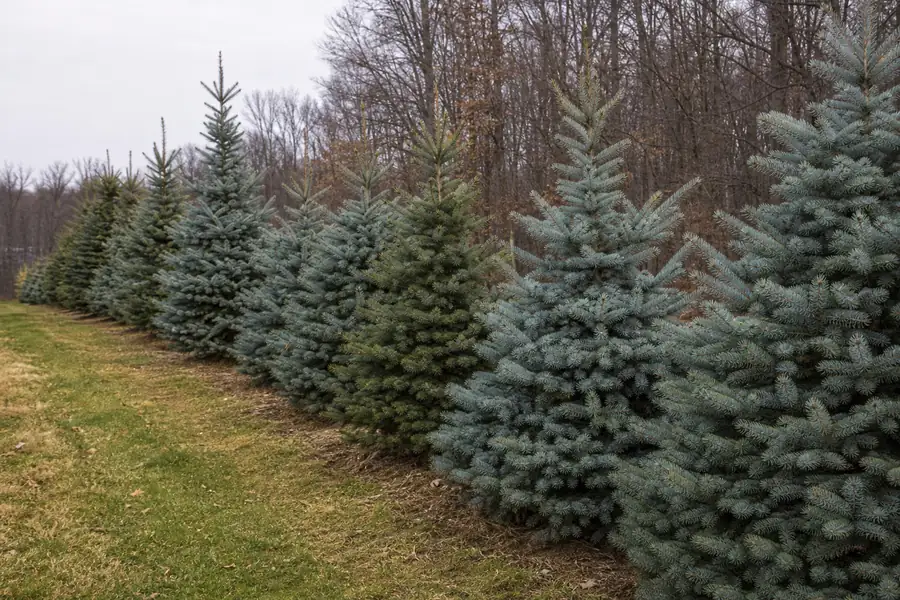
Norway spruce grows 40 to 60 feet tall and thrives in USDA zones 3 through 7. Its dense, stiff needles and strong resin scent make it one of the least-browsed conifers for northern yards.
Colorado blue spruce reaches 30 to 60 feet in zones 2 through 7, with the same sharp, resinous needles that discourage casual browsing.
Eastern red cedar tops out around 30 to 40 feet and handles zones 2 through 9, tolerating heat and drought far better than spruce while keeping its aromatic foliage mostly off the menu.
Spartan juniper grows a tighter 15 to 20 feet in zones 4 through 9 and works well where you want a narrower screen without sacrificing resistance.
Deer-Tolerant Broadleaf Privacy Trees
Boxwood and spiny hollies round out the broadleaf side of deer resistant privacy trees.
Boxwood, hardy in zones 5 through 9, forms a dense low wall that deer rarely touch because of its bitter taste and tough leaf texture.
Nellie Stevens holly and American holly, both suited to zones 5 through 9, rely on spiny leaf margins that deter browsing almost as effectively as a fence.
Cryptomeria, also zones 5 through 9, offers soft feathery foliage with a moderate resistance rating. It is a reasonable screen choice where deer pressure is light to moderate rather than severe.
The Trees to Avoid in Deer Country
Arborvitae and yew are the two privacy evergreens to skip if deer are a known problem on your property.
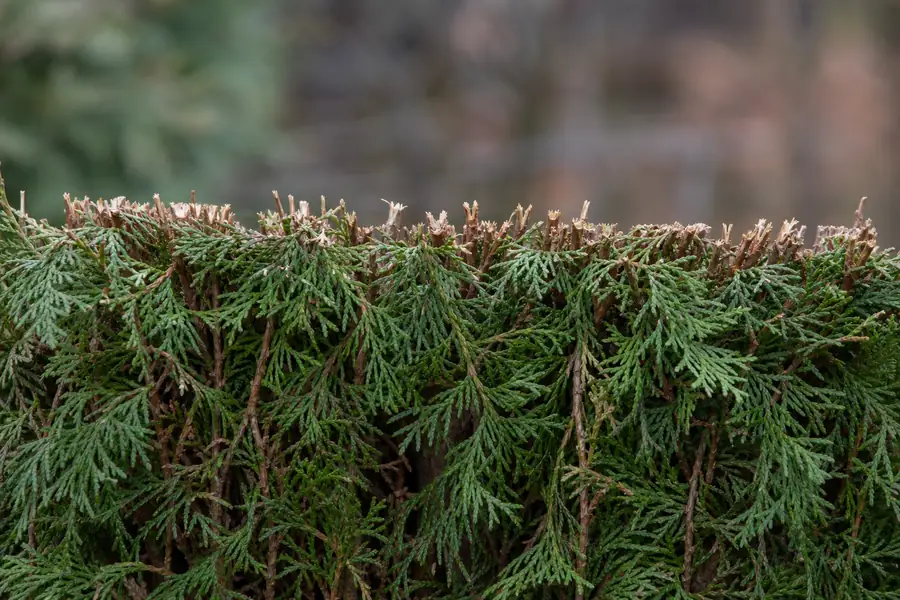
Emerald Green arborvitae in particular is deer candy. Its flat, soft foliage and tight growth habit make it easy and appealing to strip, and a single winter can reduce a young planting to bare branches. Green Giant arborvitae is somewhat more tolerant thanks to its faster growth and bulkier form, but young Green Giants still get hit hard before they size up. See the full breakdown in our Emerald Green vs Green Giant comparison. Yew carries the same problem: deer find its soft needles highly palatable, and repeated browsing can kill a young plant outright.
Protect Young Trees Anyway
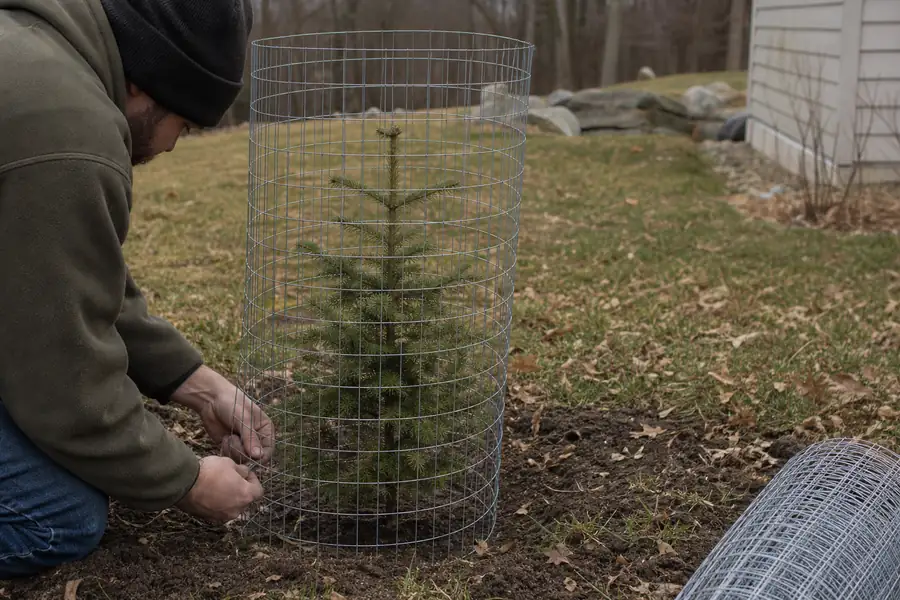
Even deer resistant privacy trees benefit from physical protection for their first few years in the ground.
A young spruce or cedar has thin, tender growth before its bark toughens and its canopy gets tall enough to sit above typical browse height. Wire cages, trunk tubes, or fencing around new plantings prevent the kind of early damage that stunts a tree permanently. Repellent sprays help too, but rotate scent-based and taste-based products every few weeks since deer learn to tolerate a single repellent over time. Our guide on how to protect trees from deer walks through cage sizing and repellent schedules in more detail.
Deer-Resistant Privacy Trees Compared
| Tree | Deer Resistance | Mature H x W | USDA Zones |
|---|---|---|---|
| Norway spruce | High | 40-60 ft x 25-30 ft | 3-7 |
| Colorado blue spruce | High | 30-60 ft x 10-20 ft | 2-7 |
| Eastern red cedar | High | 30-40 ft x 8-20 ft | 2-9 |
| Spartan juniper | High | 15-20 ft x 5-6 ft | 4-9 |
| Boxwood | Medium-High | 6-12 ft x 6-12 ft | 5-9 |
| Nellie Stevens holly | Medium-High | 15-25 ft x 10-15 ft | 5-9 |
| Cryptomeria | Medium | 30-40 ft x 15-20 ft | 5-9 |
| Green Giant arborvitae | Low-Medium | 40-60 ft x 12-20 ft | 5-9 |
| Emerald Green arborvitae | Low (avoid) | 12-14 ft x 3-4 ft | 3-7 |
| Yew | Low (avoid) | 10-20 ft x 10-20 ft | 4-7 |
Every tree in that list still needs to match your winter cold and summer heat, not just your deer pressure. Arbor Buddy's zone finder checks both at once, and every tree ships under the 1-Year Alive & Thrive Guarantee, so if a species does not establish, it gets replaced. You can shop deer-resistant evergreens already sorted by hardiness zone.
FAQs
What privacy tree do deer avoid?
Deer most often avoid needled evergreens with stiff or aromatic foliage, including Norway spruce, Colorado blue spruce, Eastern red cedar, and hardy junipers. Spiny-leaved hollies and boxwood are solid broadleaf alternatives. None of these are guaranteed safe during a hard winter when food is scarce.
Do deer eat arborvitae?
Yes, arborvitae is one of the most heavily browsed privacy evergreens, and Emerald Green arborvitae is especially vulnerable because of its soft, flat foliage. Deer can strip a young planting of Emerald Green down to bare stems in a single season in areas with high deer density.
Is Green Giant deer-resistant?
Green Giant arborvitae is more deer-tolerant than Emerald Green because of its bulkier growth and faster size, but it is not resistant. Young Green Giant plants still get browsed heavily before they grow tall enough to outpace the damage.
What is the most deer-proof evergreen?
No evergreen is fully immune to deer browsing, but Norway spruce, Colorado blue spruce, and Eastern red cedar rank among the least browsed in most regions. Their stiff, resinous, or aromatic needles make them unappealing compared to softer foliage like arborvitae or yew.
Do deer repellents work?
Repellent sprays can reduce browsing, but they work best when rotated between scent-based and taste-based products every few weeks. Deer can grow accustomed to a single repellent over time, so pairing sprays with physical protection like cages or tubes gives young trees the best odds.