
First-Year Care
Should You Fertilize a Newly Planted Tree?
Quick answer: No, not in the first growing season. A newly planted tree spends its first year building roots, not leaves, and a nitrogen push from fertilizer forces top growth the roots can't yet support. Skip the feed, focus on water and mulch, and save fertilizing new trees for year two.
That advice runs against instinct. A tree looks thin and stressed after planting, so feeding it seems like the helpful thing to do. But the biology works against that reflex, and understanding why changes how you treat every tree you plant this year.
The short answer on fertilizing new trees
Skip fertilizer for the first growing season after planting. A transplanted tree has lost a large share of its root system in the dig and move, and its first job is regrowing roots into the surrounding soil, a process called root establishment.
Nitrogen, the nutrient in most fertilizers, signals a plant to push leaf and stem growth. A tree that's still rebuilding roots can't support that extra top growth, so the energy gets misdirected instead of helping the tree recover. The tree you just planted from newly planted tree care basics needs time underground before it needs food.
Why feeding new trees early backfires
Excess nitrogen right after planting can burn tender new roots and push soft, weak growth that outpaces the root system's ability to support it. That mismatch leaves the tree more vulnerable to wind damage, drought stress, and dieback, not less.
A starter dose at planting time rarely helps a stressed transplant, and it can actively set it back. The tree's priority is anchoring itself in the soil, not growing a bigger canopy it can't yet feed through its own root system.
The phosphorus myth in root stimulator products
Root stimulator products that lean on phosphorus mostly overstate what they do. Phosphorus helps root development, but most garden soils already contain enough of it, and adding more when it isn't needed does nothing for the tree.
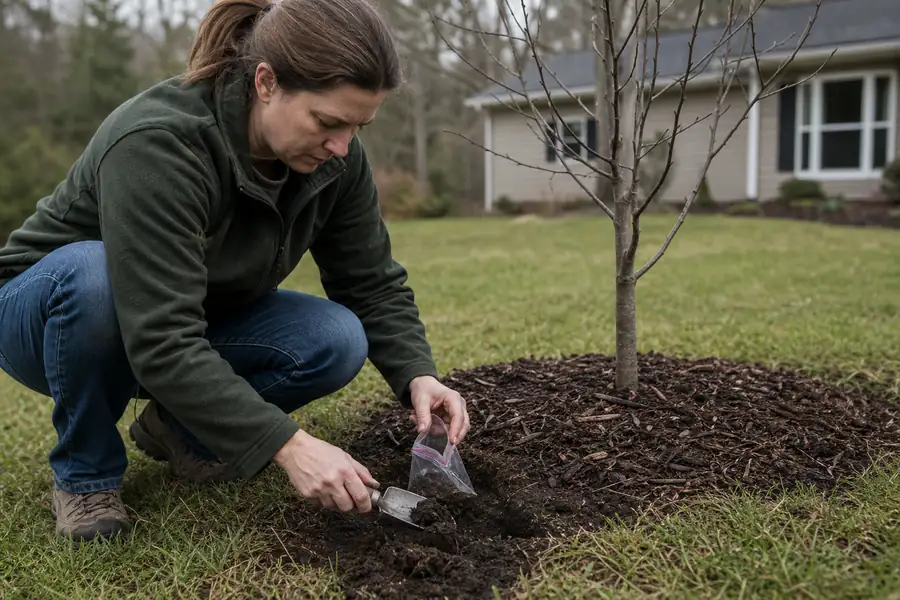
A soil test, not a bag label, should be what triggers any phosphorus application. Extension research on transplant nutrition consistently finds that unless a soil test shows a real deficiency, store-bought root stimulants add cost without adding benefit. If you want to know what your soil actually needs, a basic test kit is a better first move than a bag of fertilizer.
What to do instead of fertilizing new trees
Water correctly, mulch well, and let the soil do the feeding for the first year. These three habits do more for a new tree than any fertilizer bag on the shelf.
- Water deeply and consistently so the root zone stays moist but not soggy
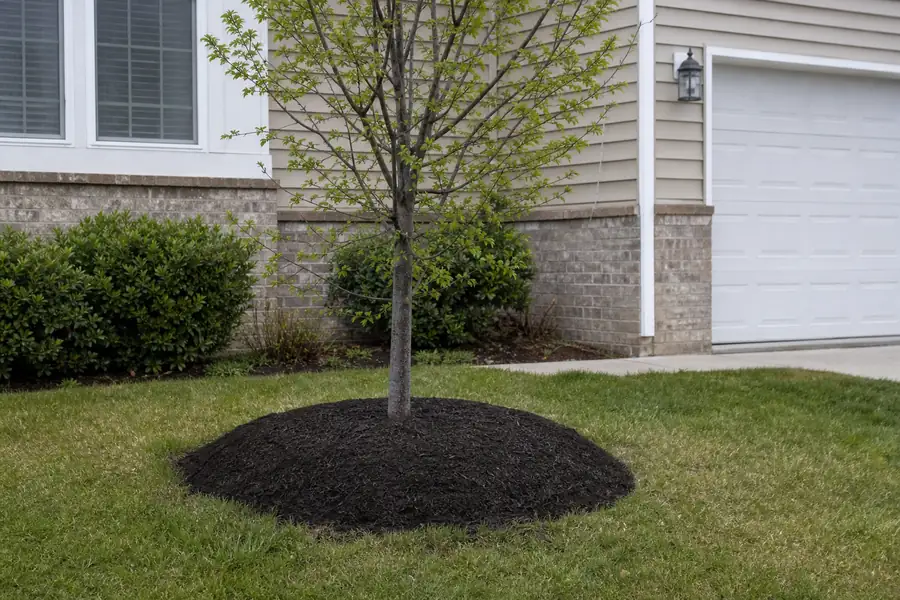
- Spread mulch 2 to 4 inches deep over the root zone, kept clear of the trunk
- Let decomposing mulch and existing soil microbes release nutrients slowly
- Check for a soil test before adding anything, rather than guessing
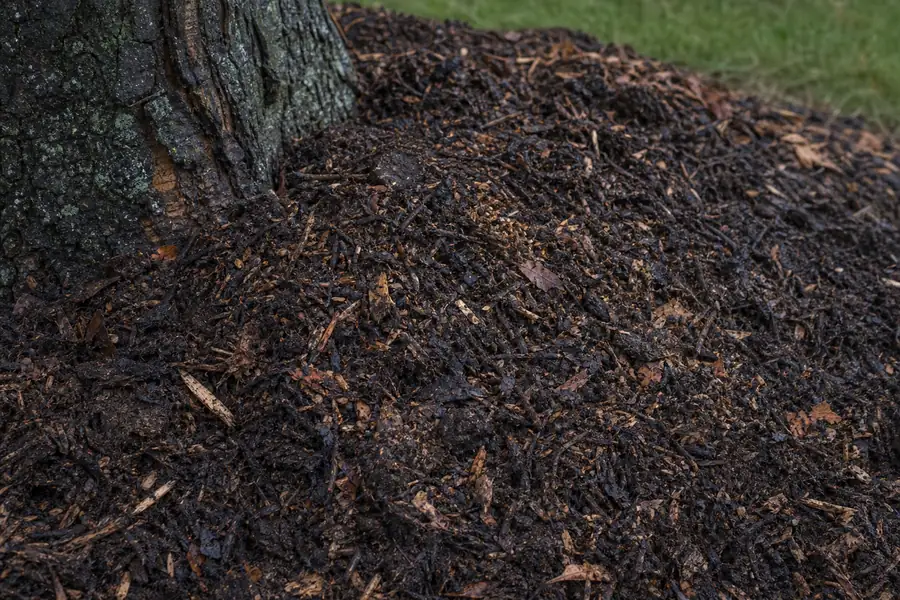
Mulch does double duty: it holds moisture and, as it breaks down, it feeds the soil with slow, steady nutrition instead of a sharp dose of nitrogen. If you haven't built a mulch ring yet, our guide on how to mulch around a tree walks through the right depth and shape.
When feeding a new tree does help
Fertilizer earns its place starting in the second growing season, once roots are established and the tree is drawing on soil it has actually grown into. At that point, feeding helps if growth is visibly weak or a soil test shows a real nutrient gap.
When you do feed, use a slow-release fertilizer rather than a fast-release one, and apply it in early spring or late fall when the tree can use the nutrients without a sudden growth spike. A soil amendment based on a real test result beats a routine feeding schedule every time.
How to feed correctly later
Match the fertilizer rate to the product label and your soil test results, not to habit. Over-applying nitrogen to an established tree causes the same soft-growth problem it causes in a new one, just on a bigger scale.
Spread fertilizer across the entire root zone out to the drip line (the ground below the outer edge of the canopy), never piled against the trunk. Roots that feed the tree extend well past the trunk, and concentrated fertilizer at the base can scorch bark and do more harm than good.
Every tree that ships from Arbor Buddy is matched to your USDA hardiness zone before it ever reaches your yard, and it's covered under the trees covered by our one-year guarantee for its first year in the ground. Honestly, most new trees do better with no fertilizer at all than with a well-meaning dose applied too soon.
FAQs
Can I fertilize at planting?
It's best to skip fertilizer at planting time. The tree's roots are disturbed and not yet able to use the extra nutrients, so a dose at planting more often stresses the tree than helps it.
Will fertilizer help transplant shock?
No, fertilizer doesn't treat transplant shock and can make it worse by pushing top growth the damaged root system can't support. Water, shade from harsh afternoon sun, and time are what help a tree recover from transplant stress.
What about root stimulator products?
Most root stimulator products rely on phosphorus claims that are overstated for typical garden soil, which usually already has enough phosphorus. Only use one if a soil test shows an actual deficiency.
When can I start feeding a new tree?
Start in the second growing season, once the tree has had a full year to establish roots. Use a slow-release fertilizer in early spring or late fall, and base the rate on a soil test if growth looks weak.
Is compost better than fertilizer for a new tree?
Compost worked lightly into the surface soil or added under mulch supplies nutrients gradually, which suits a newly planted tree better than a concentrated fertilizer dose. It feeds soil life rather than forcing a quick growth spurt the roots aren't ready for.