Quick answer: Usually, no. Decades of university extension trials find that trees establish as well, often better, when the planting hole is backfilled with the same native soil that came out of it. Skip the bagged compost and the soil conditioner. If your soil is genuinely poor, fix the whole bed, not just the hole, and let mulch do the feeding from the top down.
This runs against what the garden center upsell shelf tells you, and we'll say that plainly: bags of "planting mix" sitting next to the trees you're buying are a habit, not a horticultural requirement. The mechanism behind the no-amend rule matters more than the rule itself, so let's walk through it.
The verdict on soil amendment for trees
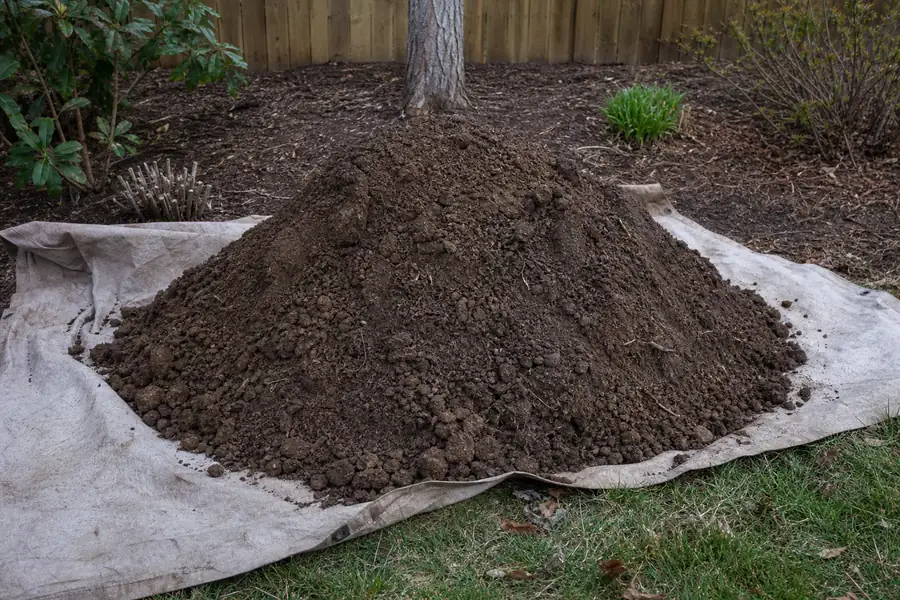
Refill the hole with the same dirt you dug out, clods broken up by hand, no compost, topsoil, or potting mix folded in. That's the whole recommendation, and it's held up across decades of extension research on tree establishment in ordinary yard soil.
The logic is simple once you see it: a tree's root system needs to spread far past the planting hole within a year or two to support the canopy above it. Anything that makes the hole itself more comfortable than the soil around it works against that goal.
Why rich holes backfire
Amended soil creates two problems, and both have names. The first is the flowerpot effect: roots grow easily through loose, fertile backfill, but when they hit the firmer native soil at the edge of the hole, many just turn and circle back inward instead of pushing through. The tree ends up rooted in a pot-sized pocket years after the pot is gone.
The second is the texture interface, the boundary where two different soil types meet. Water moves differently through sand, compost, and clay. When a loose, water-retentive mix sits inside a denser clay hole, water can pool in the amended zone and drown the root ball. In sandy soil, the same setup drains too fast and the roots dry out between waterings. Either way, the interface stalls water instead of letting it move naturally, which is the opposite of what a new tree needs.
Do this instead of amending the hole
Topdress with 2 to 4 inches of organic mulch spread in a ring from the trunk out to beyond the drip line, keeping it off the bark itself. This feeds the soil from the surface down, the same way leaf litter builds soil on a forest floor, and it breaks down over months instead of creating an instant rich pocket underground.
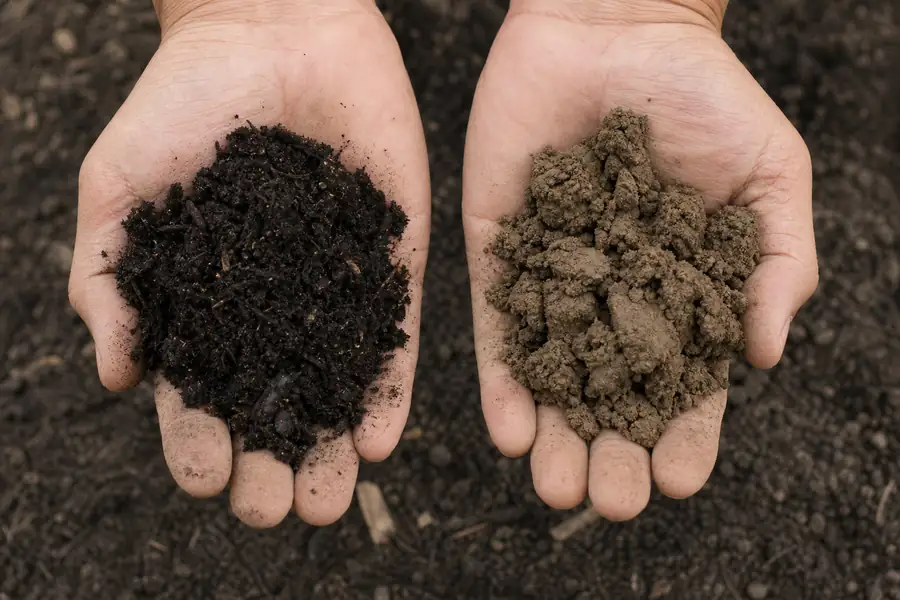
If your native soil really is thin or depleted, work compost or soil conditioner into the whole planting area, 8 to 10 feet wide, tilled a few inches deep before you dig the hole. Improving a wide zone lets roots keep growing through consistent soil in every direction. Improving one hole just builds a nicer trap. For the full digging, backfill, and staking steps in order, the full planting method covers the whole process from start to finish.
The real exceptions where soil amendment for trees makes sense
Three situations justify changing the soil, and none of them involve compost in a single hole. Construction fill loaded with rubble, broken concrete, or construction debris needs to be dug out and hauled off, not amended around. Debris doesn't compost, and roots can't grow through brick chunks no matter what you mix in beside them.
Whole-bed plantings, where you're putting in several trees and shrubs together in one new landscaped area, are a legitimate case for area-wide soil improvement before anything goes in the ground. And badly compacted subsoil, the kind left behind after heavy equipment or years of foot traffic, often needs mechanical loosening across the whole planting zone before roots can move through it at all. If you're working with heavy clay specifically, planting trees in clay soil has more on how compaction and drainage change the approach.
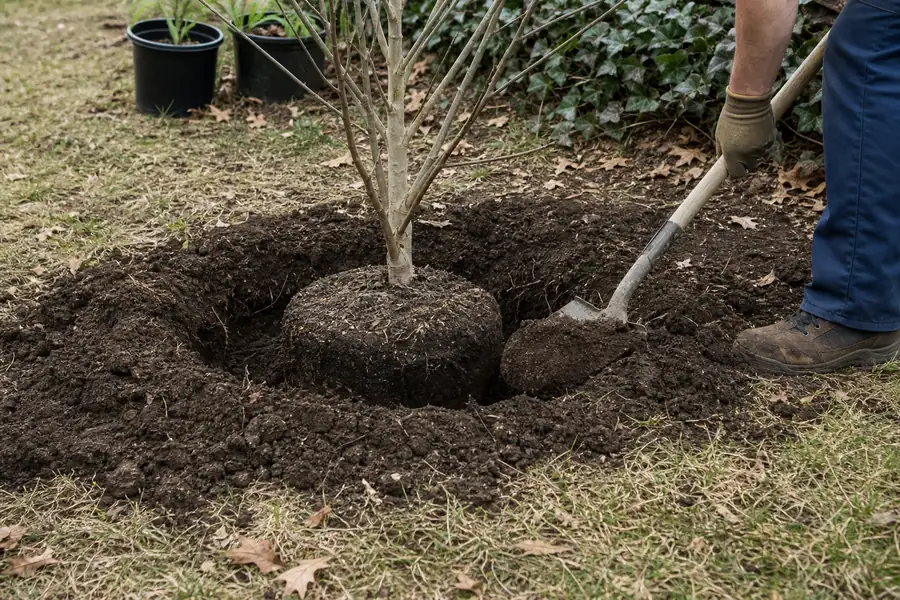
Skip fertilizer and mycorrhizal packets at planting
Neither belongs in the hole on planting day. Fresh-cut roots are easily burned by fertilizer salts, and a nitrogen boost right now tends to push leaf growth before the roots are established enough to support it, which stresses the tree at exactly the wrong time.
Mycorrhizal packets get pushed hard at checkout counters, but most established yard soil already carries the fungi these products claim to add. Paying extra for a packet rarely changes the outcome in a typical home landscape. Save fertilizer for the tree's second growing season, once roots have had a chance to spread.
What actually speeds establishment
Four things move the needle far more than anything in a bag: planting depth, hole width, watering, and mulch.
| Factor | What to do | Why it matters |
|---|---|---|
| Root flare | Set 1 to 2 inches above grade | Buried flares trap moisture and rot the trunk base |
| Hole width | 2 to 3 times the root ball width | Loosened soil at the edges lets roots spread faster |
| Watering | About 10 gallons per inch of trunk caliper, weekly | Consistent moisture beats any soil additive for establishment |
| Mulch ring | 2 to 4 inches, kept off the trunk | Regulates soil temperature and moisture without the flowerpot effect |
None of this is exciting. That's the point: establishment comes down to boring fundamentals done consistently, not a product on the shelf next to the trees. Getting the species right matters just as much as the planting itself, since even a perfectly planted tree struggles if it was never suited to your winters or summers. Pick a tree matched to your zone before you ever break ground, and half the establishment battle is already won.
Every tree Arbor Buddy ships is zone-matched to your ZIP code before it leaves the nursery, and it's backed by a 1-Year Alive & Thrive Guarantee if it doesn't make it through its first year. That guarantee exists because climate mismatch, not planting technique, is the most common reason new trees fail. Getting the soil right in the hole matters, but it's a smaller factor than most people assume.
FAQs
Should I mix compost into the planting hole?
No. Extension research consistently shows trees establish as well or better in plain native soil, and mixed-in compost inside the hole tends to encourage roots to circle rather than spread outward.
Is potting mix worse than compost in the hole?
Yes. Potting mix is engineered for containers, extremely loose and fast-draining, which creates the sharpest possible texture interface against native soil and often leads to water pooling right at the root ball.
When do amendments actually make sense?
Amending helps when you're improving an entire planting bed for several trees and shrubs at once, or when the soil is genuinely poor across a wide area. It rarely helps to enrich a single hole for one tree.
Do mycorrhizal packets help new trees?
Rarely, in typical home yards. Most existing garden and lawn soil already contains the mycorrhizal fungi these products are meant to supply, so the added cost seldom changes how well a tree establishes.
What about adding peat moss to the hole?
Skip it. Peat moss holds too much water in clay soil, contributing to root rot, and it repels water once it dries out, leaving roots without moisture right when they need it most.