
Quick answer: How far from house to plant a tree depends on its mature size. Small trees under 30 feet stay at least 8 to 10 feet from the foundation, medium trees between 30 and 70 feet need 15 to 20 feet, and large trees over 70 feet need 20 to 30 feet or more.
Those numbers are conservative on purpose. If you garden in a region with expansive clay soil, the kind that swells when wet and shrinks hard when dry, use the far end of every range in this article. The bigger risk in clay isn't a root cracking concrete, it's the soil itself shifting under the slab.
How far from the house to plant a tree, by mature size
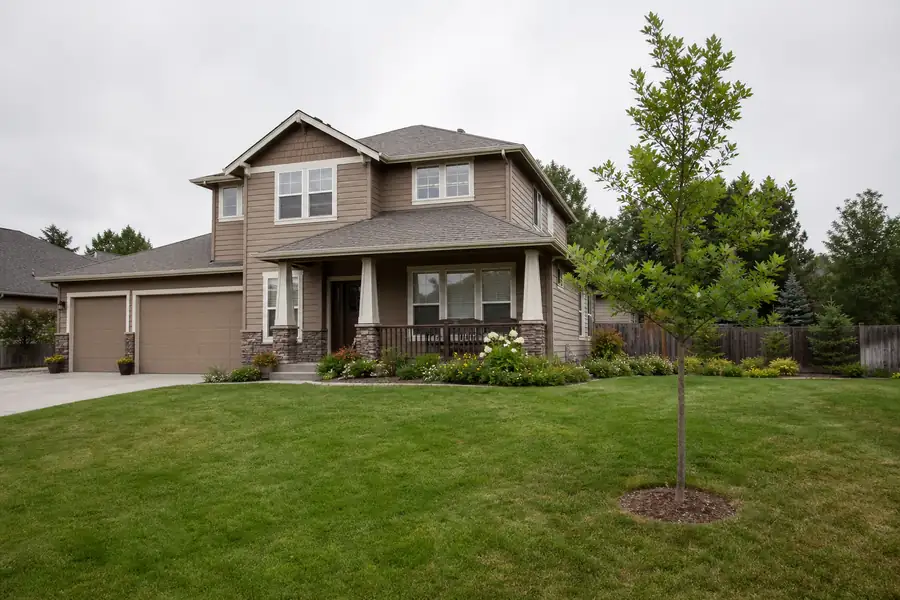
Match the tree to its full-grown size, not the size it ships at, and the right distance becomes obvious. A tree planted at 4 feet tall today might still spread 60 feet wide in 20 years, so plan for the adult, not the sapling.
| Size class | Examples | Minimum distance from foundation |
|---|---|---|
| Small (under 30 ft) | Rise 'N Shine Eastern Redbud (zones 4-9), White Dogwood (zones 5-9) | 8-10 ft |
| Medium (30-70 ft) | Autumn Blaze Maple (zones 3-8) | 15-20 ft |
| Large (over 70 ft) | Bur Oak (zones 3-8, exact size varies by species) | 20-30 ft or more |
Mature spread and hardiness both shift by cultivar and by climate, so see mature sizes for your zone before you measure and dig.
What tree roots actually do to a foundation
Tree roots don't crush a solid foundation. They exploit cracks and gaps that already exist, working into a joint or a weep hole the way water does, and widening it slowly over years. A foundation with no existing faults has little to fear from roots pushing on it directly.
The real damage mechanism is moisture, not force. In expansive clay soil, a thirsty root system pulls water out of the ground near the house, and the clay shrinks as it dries out. That uneven shrinking is what causes slabs to settle and crack, not the root itself butting up against concrete.
Most of a tree's root system lives in the top 12 to 18 inches of soil, and it spreads two to three times wider than the canopy above it. A tree with a 30 foot canopy can easily have roots reaching 60 to 90 feet out looking for moisture, which is why distance still matters even for a foundation in good shape.
Driveways, walks, and expansive clay
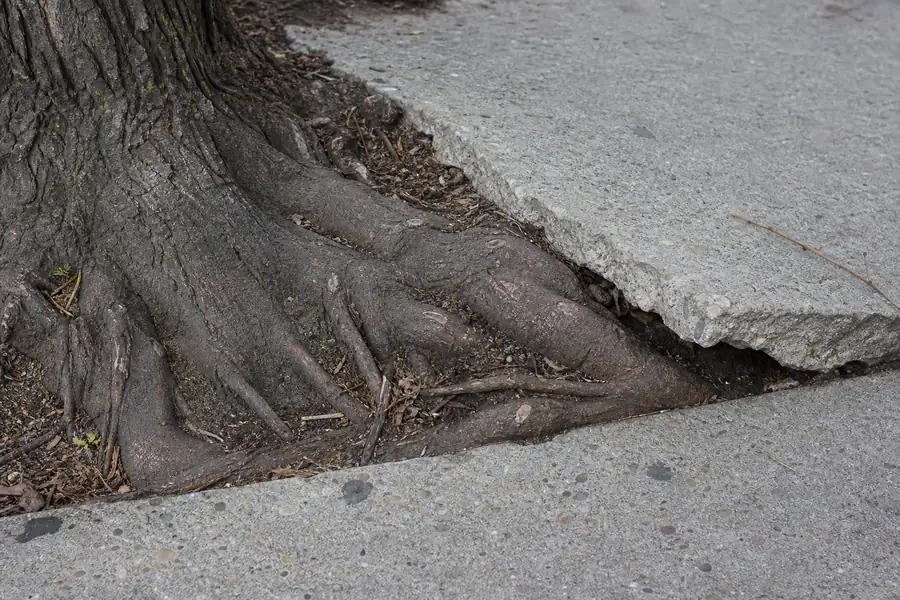
Roots lift pavement more often than they crack foundations, because a driveway or walkway sits directly on top of shallow roots with no rebar or depth to resist them. Small trees need 3 to 4 feet of setback from paved surfaces, medium trees 5 to 6 feet, and large trees 8 to 12 feet.
Root barriers, vertical panels buried 18 to 24 inches deep between the tree and the pavement, help redirect roots downward when installed at planting time. They're far less effective added later, once roots have already found a path toward the slab. In expansive clay regions, add a foot or two to every one of these distances, since drying and swelling soil movement compounds the mechanical push from roots.
Septic drain fields and buried lines
Keep any tree at least 20 feet from a septic drain field, the network of buried perforated pipes that disperses wastewater into the soil. Roots seeking moisture and nutrients will grow toward a drain field faster than toward almost anything else in the yard, and a clogged or crushed line is an expensive fix.
Thirsty species need even more room. Willow, poplar, and silver maple actively hunt for water and should sit 50 feet or more from a drain field or any buried water line. A weeping willow is a good example of the kind of aggressive water-seeker to keep well away from septic systems and pipes. Call 811 before you dig anywhere near your house to get buried utility lines marked, it's free and it's the law in every state.
Think up and out, not just down
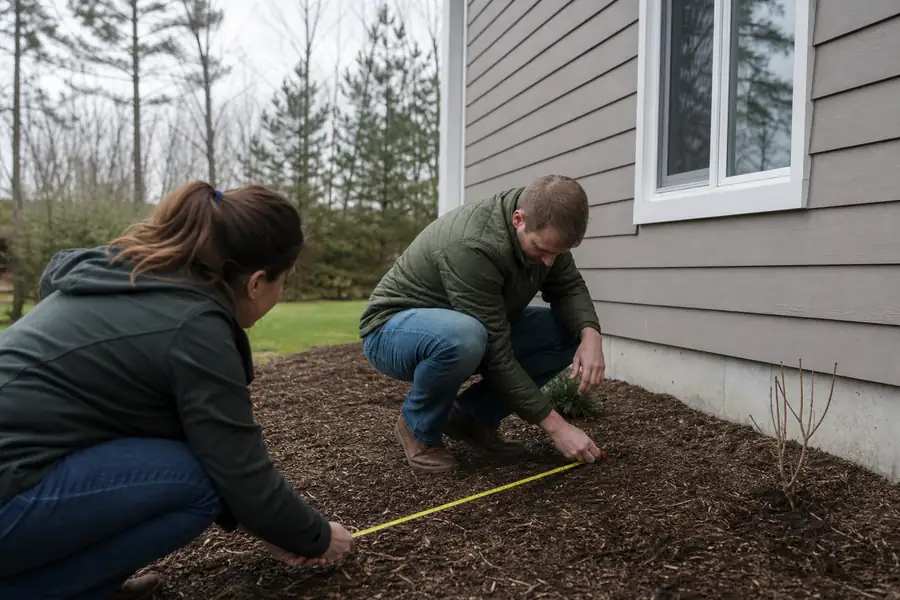
Half of a tree's mature spread tells you roughly how far its branches will reach, so use that number to check clearance above the house, not just distance at ground level. A tree with a 40 foot mature spread can extend 20 feet of canopy in every direction once it's grown.
Keep that canopy clear of the roof, gutters, and any overhead service drops running to the house. Branches resting on shingles trap moisture and shed debris into gutters year after year, and a canopy grown into power lines becomes a hazard and a maintenance headache. Also think about which windows a mature canopy will shade. That can be a bonus for a hot afternoon exposure or a problem for a room that relies on morning light.
Small-lot strategy: pick the right size instead of fighting it
On a tight lot, the easiest fix is choosing a naturally small or columnar variety instead of planting a large species and pruning it hard for the next 30 years. A tree that tops out at 20 feet needs a fraction of the setback, root spread, and canopy clearance that a full-size shade tree demands, and it never outgrows the space no matter how long you own the house.
Arbor Buddy's Plant Finder quiz asks about your yard size and sun exposure along with your ZIP code, so you get a shortlist of trees that fit your lot at full maturity, not just at delivery. Every tree Arbor Buddy ships is zone-matched and backed by the 1-Year Alive & Thrive Guarantee, so the risk of a mismatch, in climate or in size, is covered either way.
FAQs
What's the minimum distance from the house for any tree?
Plan for at least 8 to 10 feet, even for the smallest ornamental trees. That gives roots and a young canopy room to establish without immediately pressing on the foundation or siding.
Will tree roots crack my foundation?
It's rare for roots to crack a sound foundation on their own. They typically exploit cracks or gaps that already exist, and in expansive clay soil they can dry the ground unevenly and cause the slab to settle, which is a more common cause of damage than direct root pressure.
What are the worst trees to plant near a house?
Willow, poplar, and silver maple are the classic problem trees near homes because they grow fast, need a lot of water, and send roots searching aggressively for moisture, often toward foundations, pipes, and septic lines.
How far should a maple tree be from the house?
Most maples fall into the medium to large category and need 15 to 20 feet or more from the foundation, depending on the specific variety's mature height and spread.
How far does a tree need to be from a septic system?
Keep trees at least 20 feet from a septic drain field, and push that to 50 feet or more for thirsty species like willow, poplar, or silver maple. Calling 811 before you dig will confirm the exact location of your drain field and any buried lines.