

Quick answer: Transplant a tree while it's dormant, root prune it 6 to 12 months ahead of the move, and dig a root ball 10 to 12 inches in diameter for every inch of trunk caliper. Once a tree passes about 3 inches of caliper, hire a tree spade crew instead of moving it by hand.
Knowing how to transplant a tree without losing it comes down to two things: timing and root ball size. Every established tree you move loses roots, and every root it loses is a root it can't use to pull water next summer. Do the prep work months in advance and dig the ball at the right size, and most trees under 3 inches of caliper come through fine. Skip the prep and you're gambling with a tree that took years to grow.
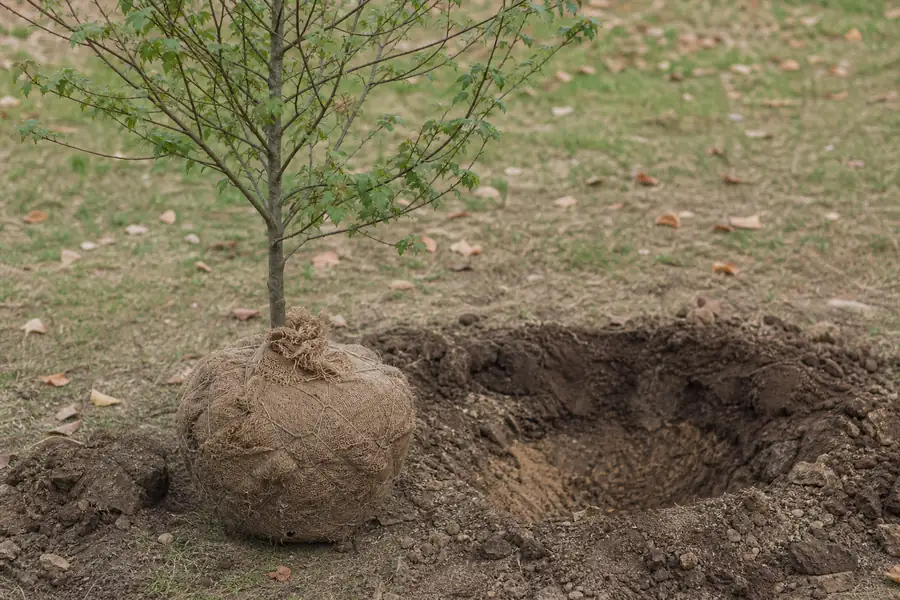
Should You Even Move It?
The DIY ceiling for hand-digging a tree sits around 2 to 3 inches of trunk caliper, the trunk's diameter measured about 6 inches above the ground on young trees. A 2-inch caliper tree needs a root ball roughly 20 to 24 inches across, and that ball alone can weigh 200 pounds or more before you factor in the tree itself. If you're not sure how caliper is measured or sized against a tree's age, our guide to tree sizes explained breaks it down.
Odds drop as the tree gets bigger and climb the more root pruning you do beforehand. Past 3 inches of caliper, or for any tree with real sentimental weight, bring in a crew with a mechanical tree spade or get a professional quote before you dig. Losing a tree you can't replace to save a rental fee is the expensive mistake here, not the smart one.
Sometimes the math favors starting over instead. A nursery-grown, landscape-grade tree matched to your climate can outgrow a stressed transplant in its first year, with none of the root-pruning wait, and browsing our roundup of mature trees for sale shows what a head start actually looks like. If the odds aren't in your favor, it's worth it to compare replacement trees for your zone before you commit to a risky move.
How to Transplant a Tree: The Timeline
The best time to transplant a tree is while it's dormant, meaning it's not actively pushing new leaves or growing roots, and root pruning has to happen one full season before that move. Prune the roots in spring for a fall transplant, or in fall for a spring transplant. That gap gives the tree a full growing season to build new fibrous roots inside the ball you'll eventually dig.
Move deciduous trees after leaf drop in fall or before bud break in late winter, when they're leafless and using the least water. Move evergreens in early fall or early spring instead, avoiding both the hard freeze window and the heat of summer. Either way, never move a tree in full summer leaf. That's when it's working hardest to move water up through roots you're about to cut.
Root Pruning: How to Prep the Root Ball
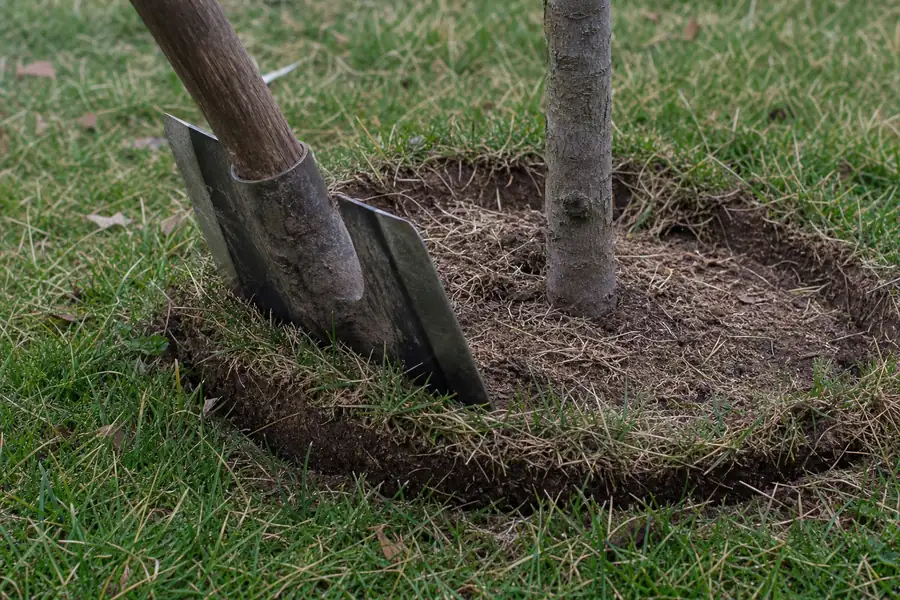
Root pruning forces a tree to grow a dense mat of new fibrous roots inside the exact ball you plan to dig, and those new roots are what keep the tree alive after the move. Start by marking the future root ball at 10 to 12 inches of diameter for every inch of trunk caliper, measured out from the trunk toward the drip line, the ring on the ground below the outer edge of the canopy where rain drips off the leaves.
Cut a clean trench around that circle, one spade blade deep, severing every root that crosses it. Refill the trench with the same soil you took out. Over the growing season that follows, the tree responds to the cut by pushing new roots inward, into the ball, instead of outward past it. Do this 6 to 12 months ahead and those new roots travel with the tree on moving day instead of shearing off in the ground.
Moving Day: Digging and Wrapping the Root Ball
Dig the new hole before you touch the tree. It should be 2 to 3 times the width of the root ball and no deeper than the ball itself, so the trunk's flare, where trunk meets root, ends up sitting right at grade once you backfill.
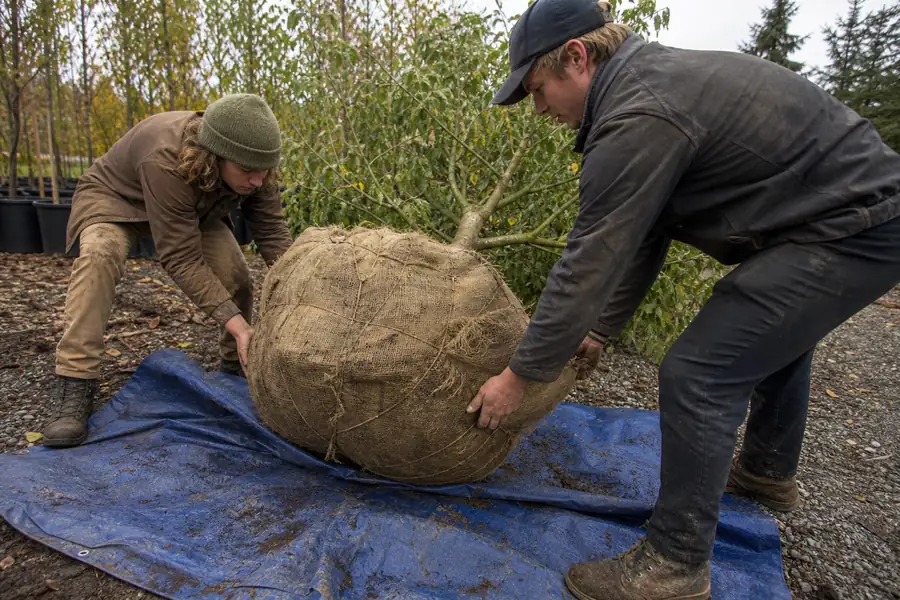
Then undercut the root ball at an angle, working the spade underneath to sever the taproot and free the ball from the soil below it. Wrap it tightly in burlap and lace it closed, then slide the wrapped ball onto a tarp or a dolly to move it. Never drag it by the trunk and never bare-hand a loose ball by its edges. A cracked root ball shears off the fine new roots you spent months growing, and that's the single most common way a transplant fails. Above 3 inches of caliper, this is exactly where a mechanical tree spade earns its rental cost: it lifts the whole ball in one intact motion instead of relying on hand tools and hope.
Replant by the Book
A transplanted tree lives or dies on how you replant it, not just on how carefully you dug it up. Set the root flare 1 to 2 inches above the surrounding grade, since a flare buried too deep smothers the roots that need air.
Backfill with the native soil you dug out, in lifts: fill a few inches, water it in to settle out air pockets, then repeat until the hole's full. Water heavily right away and keep watering about 10 gallons per inch of trunk caliper, once a week, through the first growing season. Spread 2 to 4 inches of mulch out to the drip line, but keep it a few inches clear of the trunk itself. Stake loosely only if the site is windy, and take the stake off within a year; a tree left staked too long never builds the trunk strength it needs on its own. Plant the new spot correctly the first time and you avoid having to fix flare depth or backfill problems months later.
Aftercare Expectations
Establishment takes roughly one year for every inch of trunk caliper, so a 3-inch caliper tree needs about three years before its root system works like it never moved. Expect reduced growth for 1 to 3 years after the move. That's normal recovery, not failure.
Skip fertilizer the first year. A newly transplanted tree is dealing with transplant shock, the stress response of reduced water uptake and dieback that follows root loss, and pushing new top growth with fertilizer just burns the tender new roots it needs to focus on. By midsummer, run a scratch test on a small twig: green underneath the bark means it's alive and working, brown and dry means it likely didn't survive the move. If it fails, our overview of buying trees online at buy trees online walks through picking a replacement without repeating the same climate mismatch.
FAQs
When is the best time to transplant a tree?
The best time is while the tree is dormant, typically late fall after leaf drop or early spring before bud break. Dormant trees aren't actively growing leaves or using much water, so they handle root loss far better than a tree in full leaf.
How big does the root ball need to be?
Plan on 10 to 12 inches of root ball diameter for every inch of trunk caliper. A 2-inch caliper tree needs a ball roughly 20 to 24 inches across, and that ball alone can weigh 200 pounds or more.
Can I skip root pruning?
You can skip it on small trees, generally under an inch of caliper, and still get a reasonable survival rate. On anything larger, skipping root pruning cuts your odds significantly since the tree won't have new fibrous roots ready inside the ball you dig.
What are my odds of success?
It depends almost entirely on prep, not luck. A tree that's been properly root pruned months ahead, dug at the right ball size, and replanted correctly has a good shot, while one that's rushed with a shovel-width ball on the same day usually doesn't make it.
When should I hire a professional instead of doing it myself?
Hire a tree spade crew once the trunk passes about 3 inches of caliper, since the root ball at that size is too heavy and fragile to move safely by hand. It's also worth calling a pro for any tree with real sentimental or landscape value, where losing it isn't an option.