
First-Year Care
How to Protect Trees in Winter

Quick answer: Protect young trees in winter by wrapping thin, sun-exposed bark to prevent sunscald, watering evergreens deeply before the ground freezes, keeping 2 to 4 inches of mulch over the root zone, and keeping de-icing salt away from trunks and soil. Each threat needs its own specific fix, not one blanket solution.
A young tree's bark, roots, and foliage are thinner and less established than a mature tree's, so winter stress hits harder in the first few years. This guide walks through how to protect trees in winter against sunscald, frost cracks, desiccating wind, and road salt, with a specific fix for each. Get the newly planted tree care basics right through the growing season first, then layer on winter protection as temperatures drop.
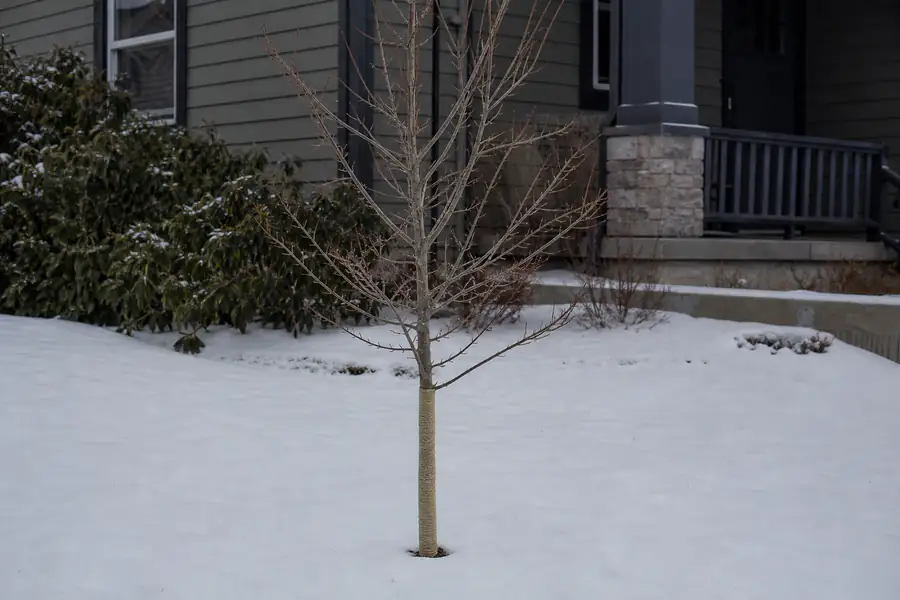
How to Protect Trees in Winter From Sunscald and Frost Cracks
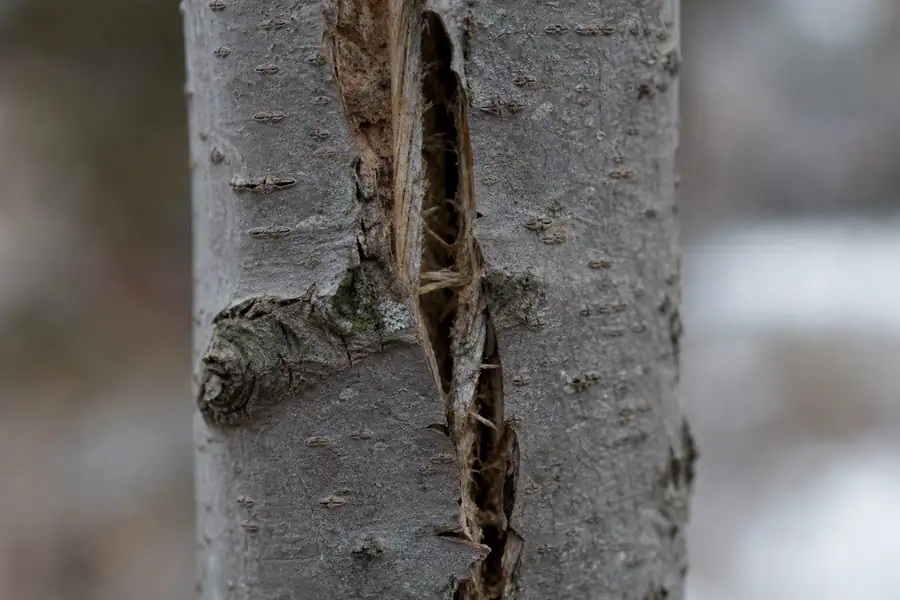
Sunscald happens when winter sun warms bark on the south or southwest side of a trunk during the day, then a hard freeze at night refreezes those warmed cells and splits the bark. The result is a frost crack, a vertical split that runs down the trunk and leaves the tree open to insects and disease. Thin-barked species feel this most: young maples, cherry and other fruit trees, linden, and even the Bloodgood Japanese Maple in its first few winters.
The fix is a light-colored tree wrap or a plastic trunk guard, wrapped from the base of the trunk up to the first branches. Light colors reflect sun instead of absorbing it, which keeps the bark from warming and cooling so sharply. Put the wrap on in late fall after leaf drop and take it off again in early spring. Left on through summer, a wrap traps moisture against the bark and invites the exact rot and insect problems it was meant to prevent.
Winter Desiccation on Evergreens
Winter desiccation browns evergreen needles and leaves when wind and winter sun pull moisture out of the foliage faster than frozen roots can replace it. The ground freezes, the roots effectively shut off the water supply, and the top of the plant keeps losing moisture anyway. Broadleaf evergreens like holly and magnolia and needled evergreens alike can scorch this way, with browning showing up most on the side facing prevailing wind.
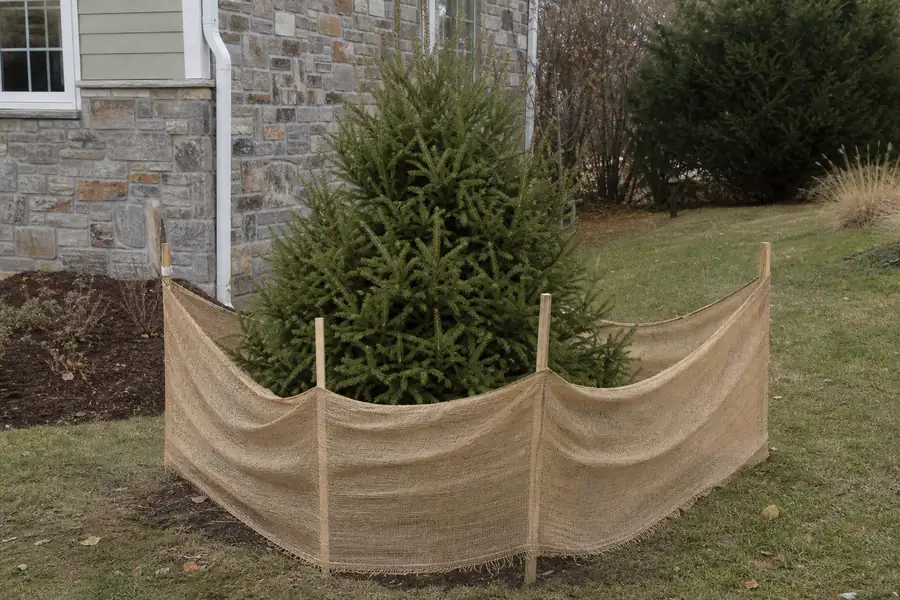
Water deeply before the ground freezes for good. A deep soak in late fall fills the soil profile so roots have moisture reserves to draw on all winter; see how to water a newly planted tree for the right soak schedule. For evergreens standing in an open, windy spot, add a simple burlap windbreak staked on the windward side. It blocks the drying wind without sealing off light or airflow the way a full wrap would.
Do Anti-Desiccant Sprays Work?
Anti-desiccant sprays can slow moisture loss on some broadleaf evergreens, but the evidence is mixed and the product is oversold. These waxy or polymer coatings go on foliage to reduce water loss through the leaf surface, and extension research on their performance varies by species, application timing, and weather after spraying. At best, an anti-desiccant supplements fall watering. It does not replace it.
Skip anti-desiccant sprays on waxy-needled conifers like blue spruce and cedar. Their needles already carry a natural wax coating, and an added layer can clog the pores the foliage uses to breathe. Check the product label for which species it's rated for before spraying anything.
Road and Sidewalk Salt Damage
De-icing salt burns trees two ways: spray drift scorches foliage and buds directly, and salt that washes into the soil pulls water away from roots and disrupts nutrient uptake. Trees planted close to a road, driveway, or sidewalk that gets salted face the highest risk, especially on the side facing traffic.
Keep newly planted trees out of the direct salt spray zone where possible. Where that isn't practical, stake a burlap barrier between the tree and the road to block drift, and plan to flush the root zone with a deep watering in spring to rinse accumulated salt out of the soil before the growing season starts.
Mulch and Root Protection
A 2 to 4 inch layer of mulch over the root zone insulates roots against temperature swings and helps soil hold moisture through winter. Spread it in a wide ring out to the tree's drip line, and pull it back a few inches from the trunk itself. Mulch piled against the bark traps moisture there and invites rot and rodents, undoing the benefit it's providing the roots. For the right technique, see how to mulch around a tree.
Snow and Ice Load
Snow and ice can snap young branches before they've built the strength to carry the weight. Brush heavy, wet snow off with an upward broom motion as soon as you can after a storm, working gently so you don't bend brittle young wood. Never knock ice off a branch. Ice-coated wood is far more brittle than dry wood, and trying to break it free usually snaps the branch instead of freeing it.
How much protection a given tree needs depends on its USDA hardiness zone. In zone 4 or 5, where hard freezes and heavy snow are routine, plan on the full set of steps above every winter. In zone 7 or 8, mulch and salt avoidance may be the only two that matter most years.
Winter losses are rare on a tree that's properly zone-matched and cared for, but they happen. Winter losses are covered by our one-year guarantee, so a tree that doesn't make it through its first year gets replaced.
FAQs
How do I stop sunscald?
Wrap the trunk of a young, thin-barked tree in a light-colored tree wrap or plastic guard from the ground to the first branches in late fall. The light color reflects winter sun so the bark doesn't warm during the day and crack when it refreezes at night. Remove the wrap again in early spring once the risk of hard freezes has passed.
Should I wrap my tree every winter?
Only while the bark is thin and young, typically the first two to three winters after planting. Once bark thickens and develops its mature texture, most trees no longer need a wrap. Leaving a wrap on past spring, or using one on a tree that no longer needs it, can trap moisture and invite pests.
Do anti-desiccants work?
They can modestly reduce moisture loss on some broadleaf evergreens, but results are inconsistent and research findings vary by species and conditions. Anti-desiccants are not a substitute for watering evergreens deeply before the ground freezes, which does more to prevent winter desiccation than any spray. Treat them as a minor supplement, not a core strategy.
How do I protect evergreens from wind?
Water the evergreen deeply in late fall before the soil freezes so its roots have moisture reserves to draw on all winter. If the plant stands in an open, exposed spot, stake a burlap screen on the side facing prevailing wind to block drying gusts without fully enclosing the plant.
Does road salt hurt trees?
Yes. Salt spray burns foliage and buds on contact, and salt that washes into the soil pulls moisture from roots and interferes with nutrient uptake. Keep young trees out of the salt spray zone near roads and sidewalks when possible, and flush the soil with a deep watering each spring to rinse out what's accumulated over winter.