

Quick answer: Some leaf drop on a new tree is normal, especially in the first few weeks after planting or during fall. It usually means transplant shock or seasonal dormancy, not death. A sudden, heavy drop paired with wilting, blackened or scorched leaves, or soggy soil is different, and that combination means you should check the roots right away.
A little leaf loss right after planting is the tree adjusting to a new root system and a new spot in your yard, not a sign it's failing. Arbor Buddy's newly planted tree care guide covers the first few weeks in more depth, but the short version here: watch how much comes down, how fast, and what the leaves look like before you assume the worst.
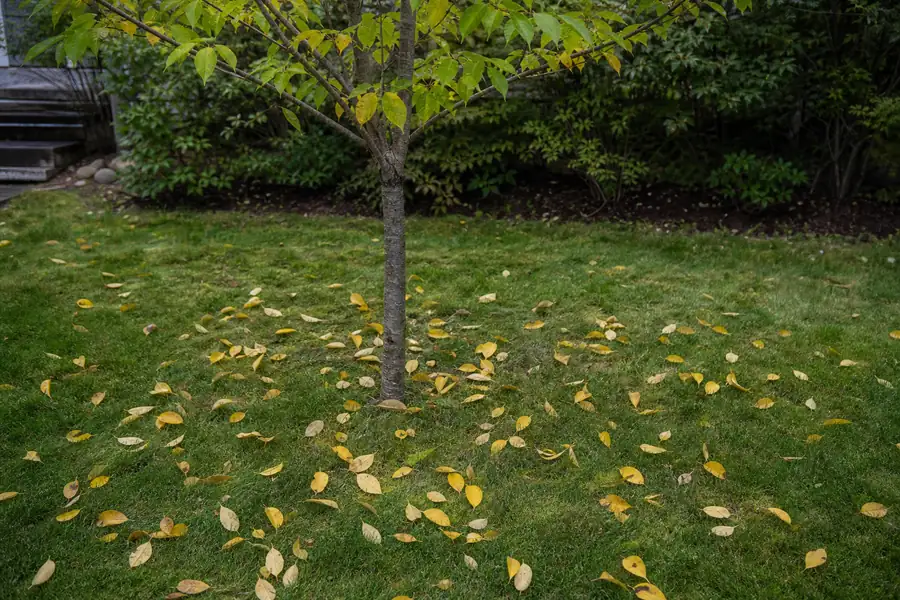
Why a New Tree Dropping Leaves Right After Planting Is Normal
A newly planted tree drops some leaves as a survival move, not a failure. Digging up a tree cuts a large share of its root system, so the tree sheds foliage to reduce the water it needs while new roots grow back in. Horticulturists call this transplant shock, and it typically shows up as scattered yellowing or a light, even drop over the first two to six weeks after planting.
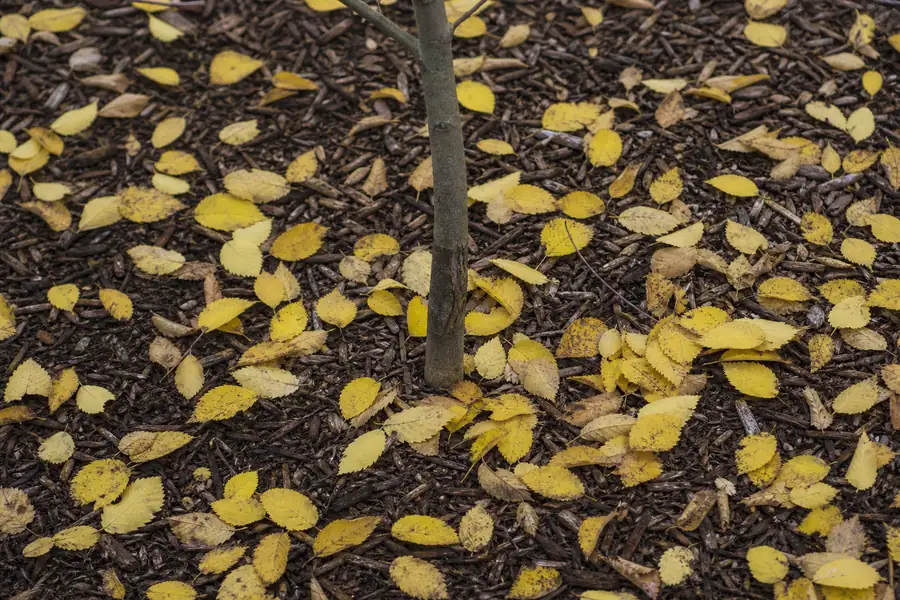
Deciduous trees also drop leaves every autumn regardless of planting date. As days shorten and temperatures cool, the tree pulls nutrients back into its branches and roots and lets leaves go, often with normal fall color first. That process looks dramatic but it's the tree preparing for dormancy, the resting state trees enter over winter.
Evergreens do their own version each fall. Pines, junipers, and other conifers shed their oldest, innermost needles every year while the newer growth at the branch tips stays green. This inner needle drop can look alarming on a tree that's supposed to stay green, but it's a normal maintenance cycle, not disease.
When Leaf Drop Signals Real Trouble
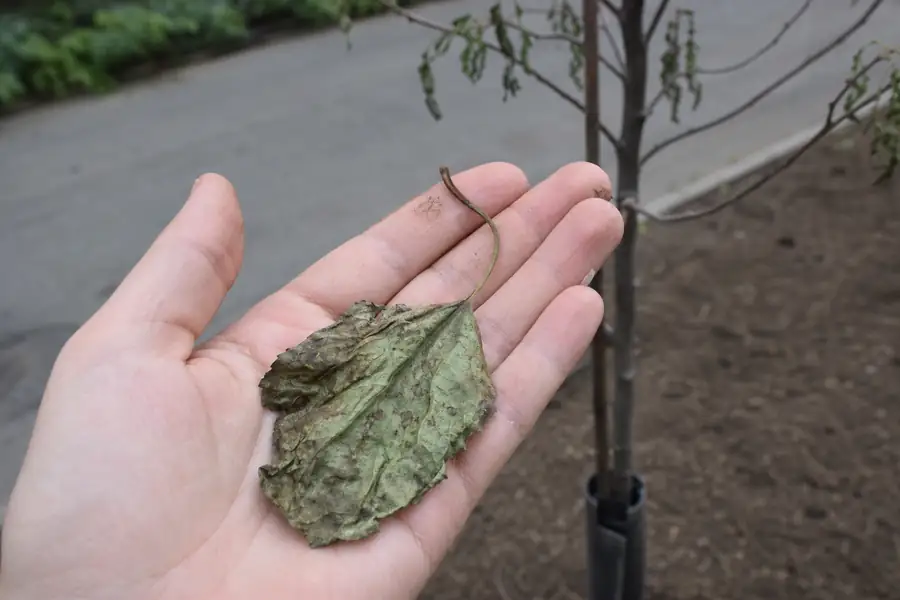
Trouble drop looks and moves differently than normal drop: leaves fall fast, in large numbers, and often still green rather than yellowed. Watch for leaves that wilt and hang limp before they fall, or that turn black or crispy brown at the edges (a sign of leaf scorch, tissue damage from heat, wind, or root stress rather than gradual seasonal color change).
Soggy or waterlogged soil around the root ball is the other major red flag. If the ground stays wet for days after watering and leaves are yellowing and dropping at the same time, overwatering and root rot are the likely cause, not underwatering. Arbor Buddy's guide to how often to water trees can help you check whether your watering routine is part of the problem.
How to Water a Stressed Tree Back to Health
Check soil moisture 4 to 6 inches deep before you water or hold off, since surface soil can look dry while the root zone underneath is still soaked. Push a finger or a screwdriver into the soil near the root ball; if it's dry at that depth, water deeply and slowly. If it's still damp or your finger comes out muddy, wait.
Soil that's too dry brings on leaf scorch and drop as the tree pulls back to conserve water. Soil that's too wet suffocates roots, which shows up as yellowing leaves, a sour smell in the soil, and drop that keeps getting worse even after you stop watering. Arbor Buddy's guide to watering a newly planted tree lays out a simple schedule by season and soil type so you're not guessing week to week.
Other Causes: Heat, Planting Depth, and Pests
Heat and wind pull moisture out of leaves faster than roots can replace it, which shows up as scorched, curling leaf edges on the side of the tree facing the afternoon sun or prevailing wind. This is common in the first summer after planting, before the root system has fully re-established.
Planting too deep buries the root flare, the point where the trunk widens out at the base and roots begin. A buried flare traps moisture against the trunk, slows root oxygen exchange, and often shows up months later as gradual yellowing and drop that doesn't match any weather pattern. Arbor Buddy's guide to finding the root flare shows what proper planting depth should look like.
Pests and disease are less common on a brand-new tree but worth ruling out. Look for holes, sticky residue, webbing, or spots with defined edges on the leaves themselves; these point to insects or fungal issues rather than water or transplant stress, and usually call for a closer look rather than a watering change.
A Simple Decision Path for Diagnosing Leaf Drop
Work through these checks in order and you'll usually land on the likely cause within a few minutes.
- Check soil 4 to 6 inches deep: soggy points to overwatering, bone-dry points to underwatering or scorch.
- Check the season and recent weather: fall drop on a deciduous tree, or inner needle drop on an evergreen, is likely normal; a recent heat wave or windstorm points to scorch.
- Check the leaves themselves: gradual yellowing spread evenly across the canopy leans normal or water-related; blackened, wilted, or spotted leaves lean toward stress or disease.
- Check the trunk base: if soil is mounded over the flare, replanting at the correct depth may be the fix.
When to Worry About a Bare Tree
A bare tree isn't automatically a dead tree. Many species drop every leaf and still have a living, functioning root system underneath, especially within the first year after planting.
The real test is the scratch test: use a fingernail or small knife to scratch a small patch of bark off a pencil-thick twig. Green, moist tissue underneath (the cambium layer) means the branch is alive; brown, dry, and brittle tissue means that section has died back. Test a few spots, since one dead twig doesn't mean the whole tree is gone.
If it's late spring, the tree still has no leaf buds swelling, and scratch tests come back brown throughout the canopy and lower trunk, the tree has likely failed. That's the point to contact the nursery or supplier you bought it from. Every tree from Arbor Buddy ships eligible for replacement under our one-year guarantee, so a genuine failure in the first year doesn't have to be a total loss.
FAQs
Is it normal for a new tree to drop leaves?
Yes, light to moderate leaf drop in the first few weeks after planting is normal and usually reflects transplant shock as the tree grows new roots. Fall leaf drop on deciduous trees and inner needle drop on evergreens are also expected seasonal events, not signs of a problem.
Will the leaves grow back?
In most cases, yes. If the roots and branches are still alive, a tree that drops leaves from transplant shock, heat stress, or normal fall dormancy will push new growth the following spring once conditions improve.
Does leaf drop mean overwatering?
It can, but not always. Overwatering usually shows up as yellowing leaves combined with soggy soil that stays wet for days, while underwatering or seasonal drop looks different, so checking soil moisture 4 to 6 inches deep is the fastest way to tell them apart.
Should I fertilize a tree that's dropping leaves?
No, fertilizing a stressed tree usually does more harm than good. Fertilizer pushes new top growth at a time when the tree needs its energy for root recovery, and it won't fix the underlying water, planting depth, or pest issue causing the drop.
When should I worry about a new tree dropping leaves?
Worry if the drop is sudden and heavy, paired with wilting, blackened leaves, or soggy soil, or if the tree is completely bare with no bud swell and no green tissue under a scratch test by late spring. At that point it's worth reaching out to whoever supplied the tree about a possible replacement.