Quick answer: In clay, dig the hole 3 to 5 times wider than the root ball, keep it shallow, set the trunk flare 2 to 3 inches above grade, and never mix in sand. Sandy soil needs smaller, more frequent waterings. Compacted ground needs the whole area loosened, or a mound, not one dug hole.
Planting trees in clay soil trips up more homeowners than any other soil condition, and clay itself isn't the enemy. The trouble starts when a clay hole gets dug and backfilled the same way you'd handle loam. Sand and compacted "builder's" soil need their own adjustments too, and guessing wrong is how a healthy nursery tree dies by its second summer.
Two Simple Tests to Run Before You Dig
The ribbon test and the percolation test tell you what soil you're working with in under an hour, no lab required.
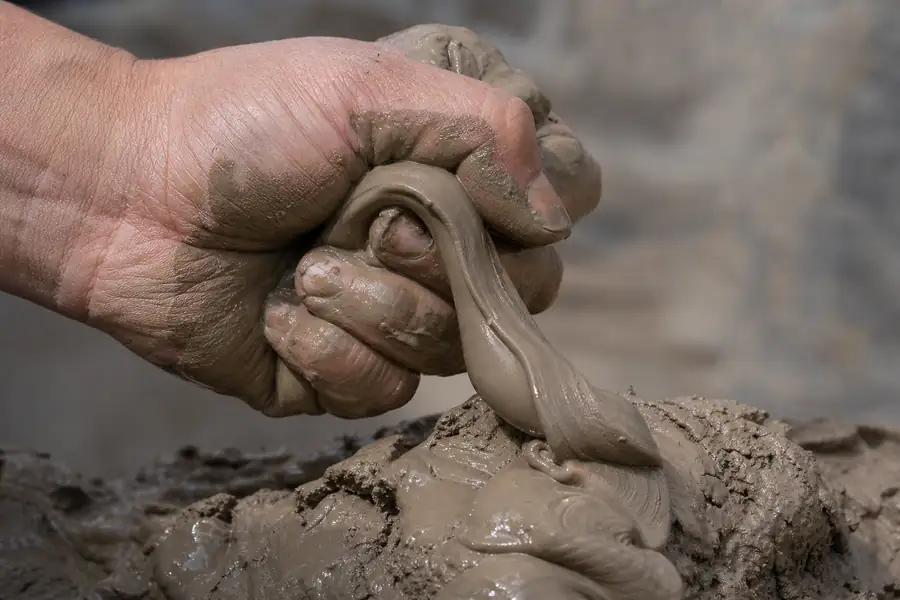
For the ribbon test, squeeze a handful of moist soil between your thumb and forefinger into a flat ribbon. Holding together past 2 inches means clay. Crumbling apart, gritty and loose, means sand. Loam ribbons an inch or so, then breaks.
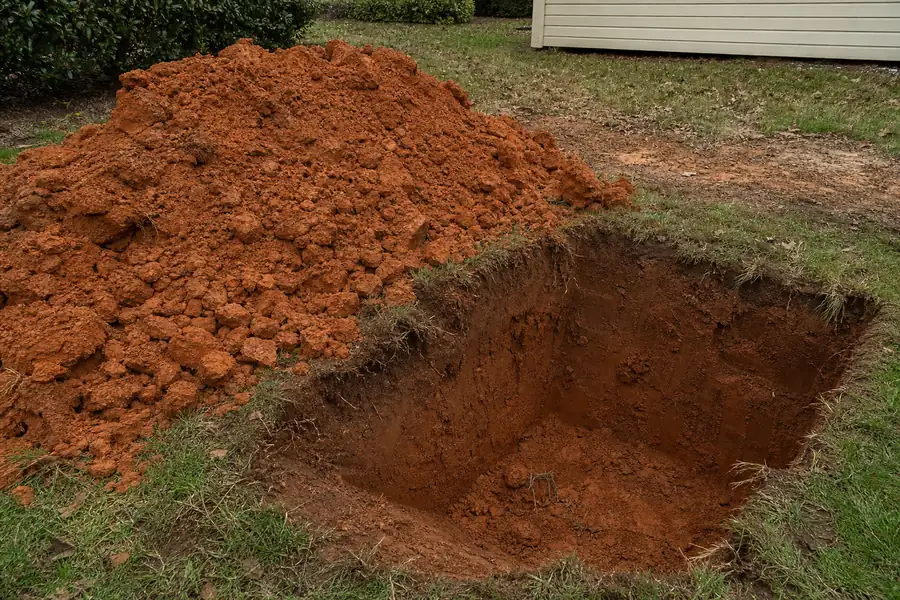
For the percolation test, dig a hole 12 inches deep and wide, fill it with water, let it drain once, then refill and time the drop. Well-drained soil drops 1 to 3 inches per hour. Under 1 inch per hour signals a drainage problem, often hardpan, a dense compacted subsoil layer that blocks water and roots.
| Test | Clay Signal | Sand Signal | Compacted/Hardpan Signal |
|---|---|---|---|
| Ribbon test | Ribbon holds 2+ inches | Crumbles, won't ribbon | Often ribbons like clay, glazes when dug |
| Percolation test | 0.5-1.5 in/hr | 3+ in/hr | Under 1 in/hr, water may sit for hours |
Planting Trees in Clay Soil: The Playbook
Planting trees in clay soil works best when the hole is wide, shallow, and rough-sided, with the root ball sitting slightly high instead of buried.
Dig the hole 3 to 5 times wider than the root ball, but only as deep as the root ball itself, minus an inch or two. Scratch up the sides instead of leaving them smooth. A smooth-sided hole develops glazed hole sides, a slick compacted wall roots can't cross, so they circle inside the hole instead of spreading out.
Set the trunk flare 2 to 3 inches above grade, then mound native soil up to the root ball's shoulder. Mulch just 2 inches deep; clay already holds water well, and a thick mulch layer traps too much of it around the trunk.
Water deeply but less often. Overwatering, not underwatering, kills more trees in clay than anything else, because clay drains slowly and waterlogged roots suffocate.
Never mix sand into the backfill. Clay plus sand cements together as it dries, closer to concrete than soil, worse for roots than clay alone.
Clay planting takes more work up front. But once established, that same clay holds moisture through a dry summer better than lighter soils, a real trade worth remembering come August.
The Sandy Soil Playbook
Sandy soil needs a standard hole and a different watering rhythm, not a different planting depth.
Dig the hole 2 to 3 times the width of the root ball, planted at grade. Sand drains so fast that one deep soak passes straight by the roots, so split the standard 10 gallons per caliper inch into two waterings a week during hot stretches. Mulch 3 to 4 inches deep to slow evaporation. Where you have a choice, lean toward species that already tolerate drought and fast-draining ground.
The Compacted-Lot Playbook
New-construction yards are often subsoil, not topsoil, and a single dug hole in that ground behaves like a bathtub.
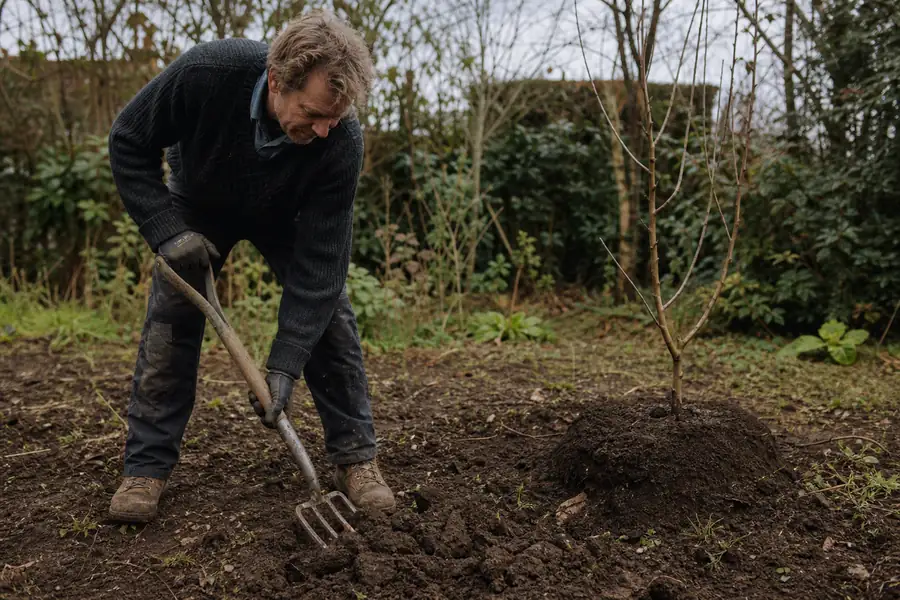
Grading strips off good topsoil and compacts what's left. One hole in that dense layer fills with water and drains slower than the surrounding soil, so roots sit in a puddle even on a dry week. Loosen the whole planting area instead, 6 to 8 feet wide and 8 to 12 inches deep, with a garden fork. If you'd rather not dig that much, build a mound 8 to 12 inches tall and 4 to 6 feet wide, and plant into the top of it. Either approach beats one lonely hole.
Best Trees for Clay Soil, Sandy Soil, and Compacted Ground, by Zone
Some species handle wet clay or dry sand far better than the average shade tree, so matching species to soil does work no amendment can replace.
For wet clay, bald cypress (zones 4-9), river birch (zones 4-9), and red maple types such as Autumn Blaze Maple (zones 3-9) tolerate soggy roots that would rot most shade trees. For dry sand, eastern red cedar (zones 2-9) and honeylocust (zones 4-9) shrug off drought and loose ground.
Species that suit your soil still need to suit your winters. If you're not sure which zone you're in, find trees suited to your zone and soil before choosing on soil type alone.
When to Walk Away From a Wet Site
If water still stands on the surface two or three days after a hard rain, that spot needs a different plan, not a different tree.
No amendment turns standing water into good root habitat. Gypsum, compost, extra sand, none of it rescues a low spot that doesn't drain. Pick a higher part of the yard, or build a genuinely raised bed with new soil above the water table.
FAQs
Can trees grow in heavy clay soil?
Yes. Trees grow fine in heavy clay when they're planted high and wide, with the flare set 2 to 3 inches above grade, and matched to a species that tolerates slow drainage, such as bald cypress or river birch.
Should I add sand to clay soil to loosen it?
No, never mix sand into a clay planting hole. Clay and sand particles bind together as they dry into a dense, cement-like mix that's harder on roots than clay alone.
Does gypsum fix clay soil?
Rarely, and not in most home yards. Gypsum can help certain sodium-heavy clay soils found in some agricultural settings, but it does little for the structural clay most homeowners deal with, so it's not a substitute for planting high and wide.
How tall should a planting mound be in compacted soil?
Build the mound 8 to 12 inches tall and 4 to 6 feet wide, then plant the tree into the top of it. That gives roots enough loose, well-drained soil to spread into before they hit the compacted layer underneath.
How do I confirm my soil is compacted?
Two signs together confirm compaction: the ground is hard to dig by hand, and a percolation test drains slower than 1 inch per hour. If you see both, treat the site as compacted and loosen a wide area or build a mound rather than digging a single hole.