Planting & Care
Keeping Trees Alive Through Heat Waves and Drought

Quick answer: Save a heat-stressed tree by soaking the root zone deeply in the early morning or evening, spreading 2 to 4 inches of mulch to hold that moisture, and skipping fertilizer and heavy pruning until the heat breaks. Newly planted trees need water first, since their roots haven't spread far enough yet to find moisture on their own.
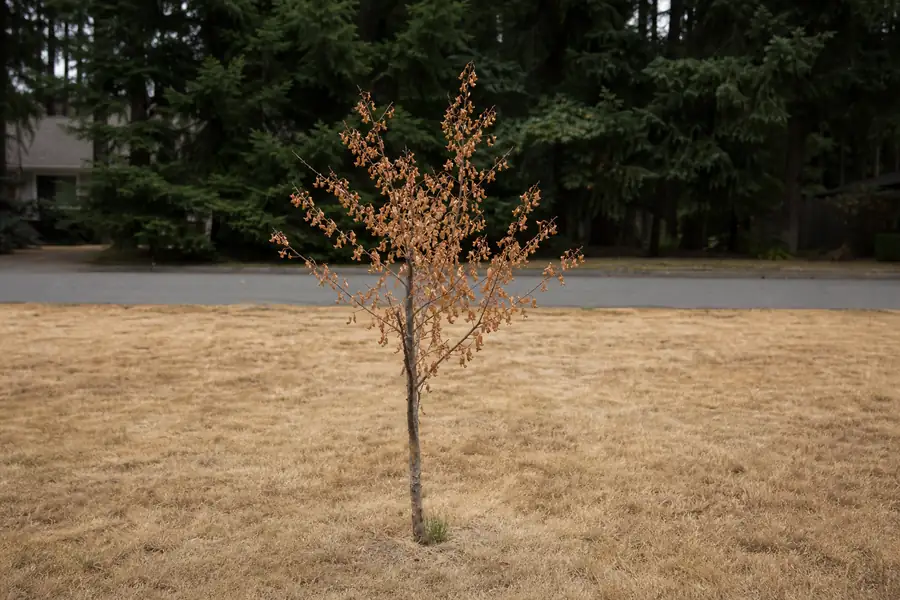
Heat waves rarely kill a tree outright. They kill it slowly, through dehydration that shows up first as scorched leaves, then dropped foliage, then dead branches by late summer. Most of that damage is preventable if you act in the first few days of a hot, dry stretch instead of waiting until the tree looks obviously sick.
How to Save Trees From Heat Stress: Water Deep, Not Often
The most effective way to save trees from heat stress is a slow, deep soak that reaches 12 to 18 inches down, not a daily sprinkle that wets only the top inch of soil. For young trees, give roughly 10 to 15 gallons per inch of trunk caliper (the trunk's diameter measured about 6 inches above the soil) at each watering. A tree with a 2-inch caliper trunk needs about 20 to 30 gallons per deep soak, delivered once or twice a week rather than a little bit every day.
Water in the early morning or evening, never at midday. Midday watering loses much of its volume to evaporation before it reaches the roots, and wetting leaves in full sun can scorch them further. Aim the water at the drip line, the ring on the ground below the outer edge of the canopy, since that's where most of the active feeder roots sit, not right against the trunk.
Frequent shallow watering trains roots to stay near the surface, where soil dries out fastest. Deep, infrequent watering pulls roots down into cooler, moister soil, which is what a tree needs to ride out a multi-week drought. Extension horticulturists consistently point to this as the single best move you can make for a stressed tree, more useful than any spray or additive.
Who to Save First in a Heat Wave
Newly planted and evergreen trees are the most at risk in a heat wave and should get water first. A tree planted in the last one to three growing seasons still has a root system confined mostly to its original root ball, so it can't yet reach moisture beyond that zone the way an older tree can. If you've got a young tree in the ground, our guide on newly planted tree care walks through the full first-year routine, and the watering schedule for a newly planted tree is worth checking before a heat wave hits.
Evergreens lose water through their needles or leaves year-round, which puts them under constant drought stress even during a short hot spell. Established trees, generally anything five or more years in the ground, can go longer between waterings because their roots spread well beyond the drip line. But in a drought that stretches past two or three weeks, even mature trees need a deep soak or two. Don't assume a big old oak is immune just because it's survived past summers.
Read the Stress Signs Before They Spread
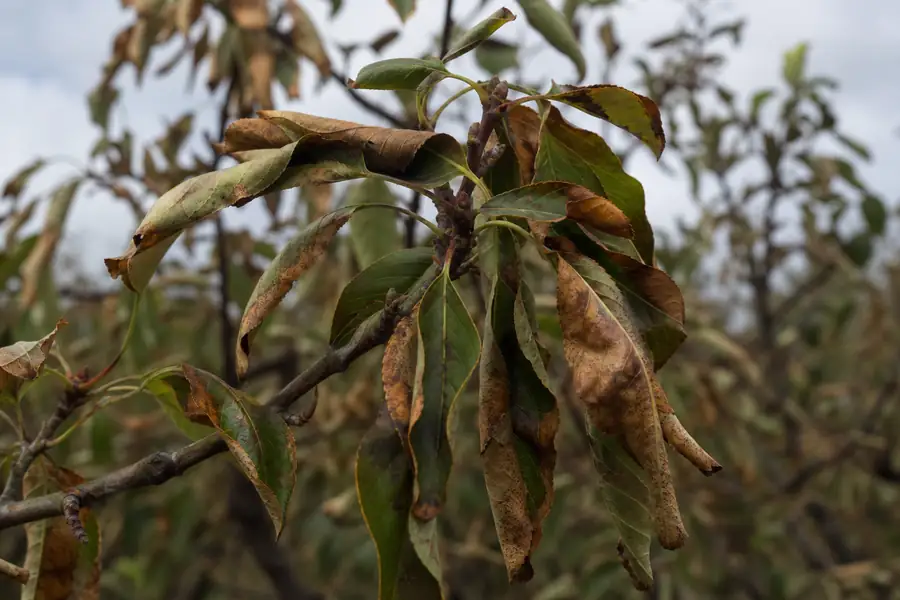
Wilting, curling leaves, scorched brown edges, and leaves dropping early are the clearest signs of heat and drought stress, and they're usually worst on the sun-facing side of the tree. Leaf scorch looks like a dry, papery brown band along the leaf margin, a sign the tree is pulling water back from its extremities to protect the trunk and roots.
Here's the honest part: scorched leaves usually don't green back up. But the tree underneath them often survives and leafs out fine the following spring, as long as you keep watering through the rest of the season. Losing some leaves in August is a tree protecting itself, not necessarily a tree dying. The real warning sign is wilting that doesn't recover overnight after watering, or bark that's splitting and pulling away from the trunk.
Mulch and Shade Hold the Moisture You've Watered In
A 2 to 4 inch layer of mulch over the root zone cools the soil and slows evaporation, often making the difference between a weekly deep soak holding up and drying out in three days. Keep mulch a few inches back from the trunk itself to avoid trapping moisture against the bark, which invites rot and pests. Our guide to mulching around a tree covers the right depth and spread for different tree sizes.
For a brand-new planting in its first summer, temporary shade cloth draped loosely over the canopy during the hottest afternoon hours can cut leaf scorch significantly. It's a short-term fix, not a permanent fixture: pull it once the heat wave breaks so the tree gets normal light again.
What to Skip in a Heat Wave
Skip fertilizer and heavy pruning on a heat-stressed or drought-stressed tree. Fertilizer pushes new leaf and shoot growth, and new growth needs more water right when the tree has the least to spare, which compounds the stress instead of relieving it. Wait until fall or the next normal growing season.
Heavy pruning in a heat wave removes the canopy that's shading the trunk and root zone, exposing bark to direct sun and raising soil temperature right where the roots need it coolest. If you must remove a clearly dead or hazardous branch, do the minimum and leave the rest of the canopy intact until temperatures ease.
Water Without Waste on Hard, Dry Soil
On soil that's baked hard, water in stages, applying a few gallons, letting it soak in for 10 to 15 minutes, then repeating, instead of pouring it all at once and watching it run off across the surface. This staged approach gets far more water into the root zone than a single fast dump from a hose.
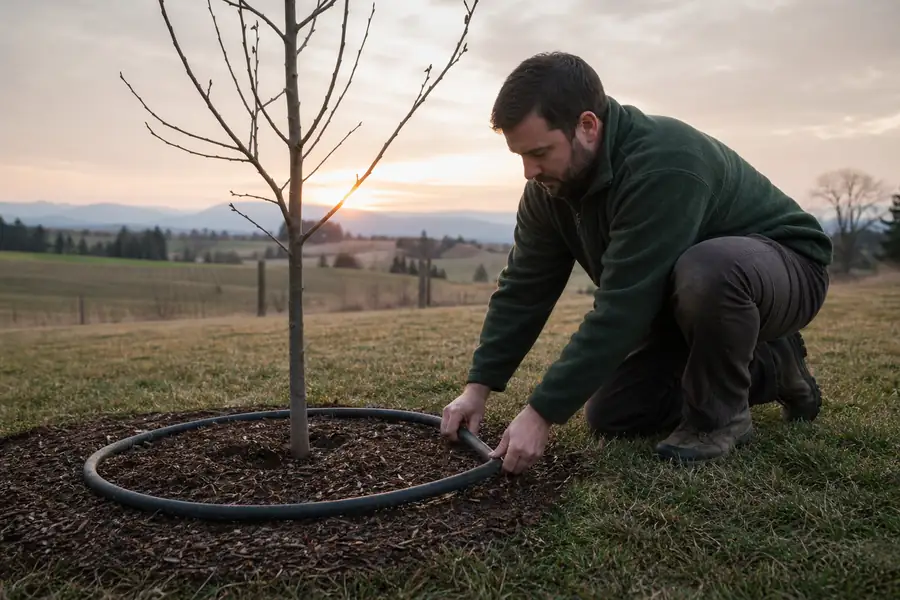
A soaker hose or a slow-release watering bag does this work automatically, delivering water gradually over several hours so it has time to soak down instead of pooling and running off. Our breakdown of tree watering bags explains how to size and fill one for a young tree's trunk diameter. Trees from Arbor Buddy ship as young trees backed by our one-year guarantee, so even if a rough first summer sets a tree back, you're not starting over from scratch on your own dime.
FAQs
How do I save a heat-stressed tree?
Give it a slow, deep soak at the drip line in the early morning or evening, spread 2 to 4 inches of mulch to hold that moisture, and hold off on fertilizer and pruning until the heat passes. For young or evergreen trees, check soil moisture every few days rather than waiting for visible wilting.
How much water does a tree need in a heat wave?
Plan on roughly 10 to 15 gallons per inch of trunk caliper per deep watering, once or twice a week depending on how hot and dry it stays. A tree with a 2-inch caliper trunk typically needs about 20 to 30 gallons each time you water.
Is it too late if the leaves are already scorched?
Scorched leaves themselves usually won't recover, but the tree underneath them often does if you keep watering deeply through the rest of the season. Watch for wilting that doesn't bounce back overnight after watering, since that's a more serious sign than brown leaf edges alone.
Should I water a stressed tree every day?
No. Daily shallow watering keeps roots near the dry surface instead of encouraging them to grow deeper where soil stays cooler and moister. A slow, deep soak once or twice a week beats a quick sprinkle every day.
Do established trees need water during a drought?
Yes, if the drought runs longer than two or three weeks. Established trees can go longer between waterings than newly planted ones, but a deep soak or two keeps a mature tree from losing significant canopy during an extended dry spell.