

Quick answer: Tree watering bags work. Filled with roughly 15 to 20 gallons, they release water slowly over 5 to 9 hours through small holes so it soaks into the root zone instead of running off the surface. They're a convenience tool for consistent watering, not a fix for giving a newly planted tree the wrong amount of water in the first place.
A newly planted tree lives or dies on root establishment: the process of new roots growing out into native soil during the first one to two years after planting. That process needs steady, deep moisture, not a quick surface splash. A slow-release watering bag (sometimes called a drip bag or doughnut ring bag depending on its shape) is built to deliver exactly that, hands-free.
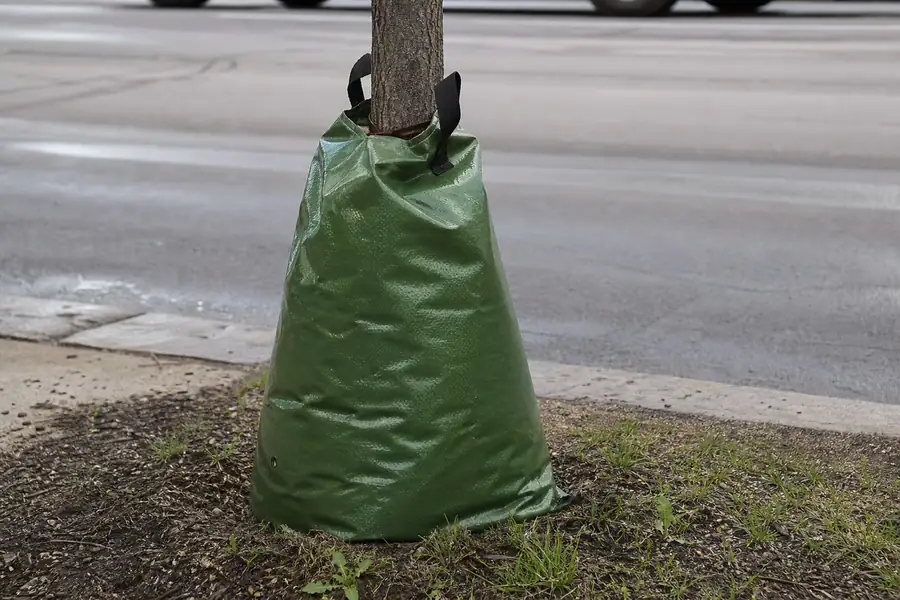
How Tree Watering Bags Work
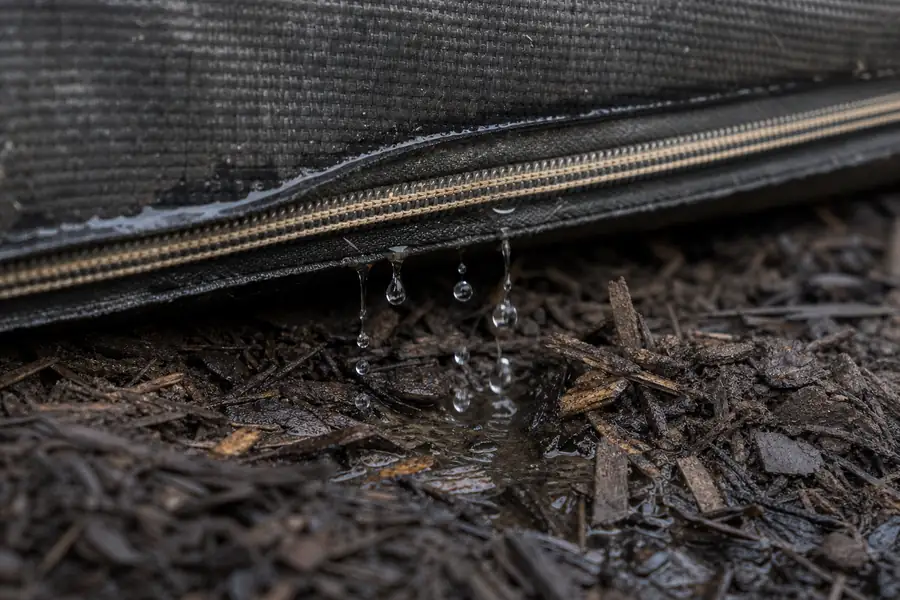
Tree watering bags hold roughly 15 to 20 gallons and drain through small perforations over 5 to 9 hours, letting water sink into the soil instead of pooling and running off. Most designs zip or wrap around the trunk, forming either a tall collar (drip bag) or a flat ring on the ground (doughnut ring bag) that sits over the root zone.
Gravity does the work. There's no pump, no timer, just a slow trickle that gives the top 12 to 18 inches of soil, where a young tree's roots are actively growing, time to absorb water rather than shed it.
Where Watering Bags Shine
Watering bags earn their keep on young trees, sandy or sloped sites, and for owners who can't hand-water on a strict schedule. On sandy soil, water drains fast and a garden hose often loses half its output to runoff before it soaks in; a slow drip gives that same water time to settle in place.
On a slope, a bucket poured too fast just runs downhill. A bag holds the water against the trunk long enough to soak in evenly on both the uphill and downhill sides of the root ball.
They're also genuinely useful if you travel, work long hours, or simply forget. Fill it Monday, walk away, and the tree gets a deep soak with zero further effort.
Where Watering Bags Fall Short
Watering bags have real limits: they're oversized for trunks under about an inch in caliper, they can trap moisture against bark if left zipped on too long, they're vulnerable to freeze-and-split damage in winter, and they cost more than a bucket that does a similar job. Extension horticulture guidance consistently flags the moisture-trapping issue as the biggest risk, since bark kept constantly damp against the collar invites fungal issues and, eventually, root rot.
Cost is the other honest tradeoff. A quality bag runs more than a five-gallon bucket, and for a single small tree that price difference is hard to justify. On a very young or thin-trunked tree, a full bag can also be more water than the small root ball actually needs at one time, so oversizing the tool oversizes the risk.
Watering Bag vs. Mulch Ring vs. Bucket
Each watering method trades convenience for cost or effort differently, and no single option wins on every front.
| Method | Rough cost | Best for | Main downside |
|---|---|---|---|
| Watering bag | $15 to $40 | Busy owners, sandy or sloped sites | Trapped moisture, freeze risk |
| Mulch ring + hose | $5 to $15 | Any newly planted tree | Requires manual timing |
| Two 5-gallon buckets | $10 or less | Tight budgets, one or two trees | Slower, needs drilled holes |
How to Use a Tree Watering Bag the Right Way
Fill a watering bag once or twice a week, sized to about 10 gallons per inch of trunk caliper (the trunk diameter measured a few inches above the ground, the same figure nurseries use when they describe how tree sizes are measured at planting). A 2-inch caliper tree, roughly, needs about 20 gallons a week during its first growing season, which lines up neatly with one full bag.
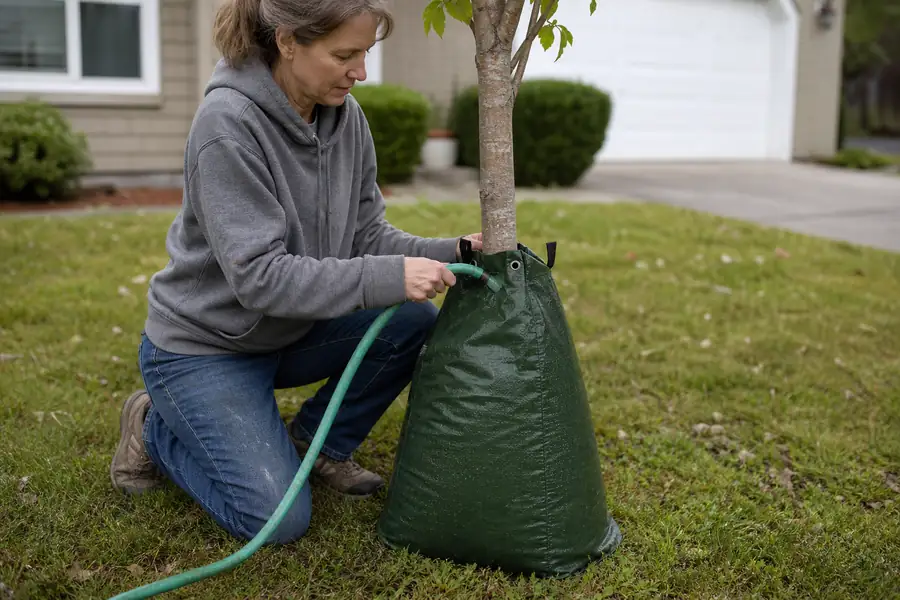
Loosen or remove the bag as the tree establishes, generally after the first full growing season, once new growth shows the roots have taken hold. Leaving it zipped tight against the bark for months at a time is exactly what causes the rot and disease problems bags get blamed for.
Take the bag off entirely before hard freezes. Water left inside can freeze, expand, and split the material, and a frozen collar sitting against bark all winter does the tree no favors either.
Do You Even Need a Watering Bag?
Honestly, no, not always. A slow-running hose left at the base of the tree for 30 to 45 minutes, or two 5-gallon buckets with a few small holes drilled near the bottom, delivers the same deep soak for less money and no leftover plastic collar to remember in the fall.
A watering bag earns its cost when your schedule, soil, or slope makes hand-watering unreliable. If you're already out there with a hose twice a week, save the money.
Whichever method you use, the tree still needs to be the right one for your climate in the first place. Every tree Arbor Buddy ships is zone-matched to your ZIP code before it ever reaches your door, and it's backed by trees backed by our one-year guarantee, so a watering routine, bag or bucket, is working in your favor from the start. If you're still narrowing down species, the Plant Finder shortlists trees suited to your yard before you worry about how to water them.
FAQs
How long do watering bags take to drain?
Most slow-release tree watering bags drain over 5 to 9 hours, depending on the size of the holes and how full the bag is. A completely full 20-gallon bag on a warm day tends to drain faster than a half-full bag in cool weather.
How often should I refill it?
Once or twice a week during the growing season covers most newly planted trees, adjusted for rainfall. Skip a refill if you've had a solid rain that week, since overwatering a young root ball causes as many problems as underwatering it.
Can I leave it on all year?
No. Leaving a watering bag zipped on year-round traps moisture against the bark, which raises the risk of rot and disease, and the bag itself is prone to freezing and splitting in winter. Remove it once the tree establishes and again before hard freezes.
Do watering bags cause rot?
They can, but the bag itself isn't the cause, prolonged bark contact with trapped moisture is. Loosening the collar periodically and taking it off once the tree is established avoids the issue entirely.
Are they worth it for a single tree?
For one tree, a slow hose or two buckets with drilled holes does the same job for less money. A watering bag makes more sense once you factor in a busy schedule, sandy soil, or a slope where hand-watering runs off before it soaks in.