
First-Year Care
Your New Tree's First 30 Days: A Simple Checklist
Quick answer: In the first 30 days, confirm the root flare sits at grade, water deeply on a tightening schedule, lay mulch correctly, and skip fertilizer while you watch for transplant shock. Most preventable tree losses happen in this first month, not because owners did anything dramatic wrong, but because small mistakes (planted too deep, watered on the wrong schedule, mulch piled against the trunk) stack up quietly.
This new tree checklist is ordered by time, not topic, so you can work through it day by day without guessing what matters when. Keep it next to your watering can for the next month.
Day 1 of Your New Tree Checklist: Planting Day Tasks
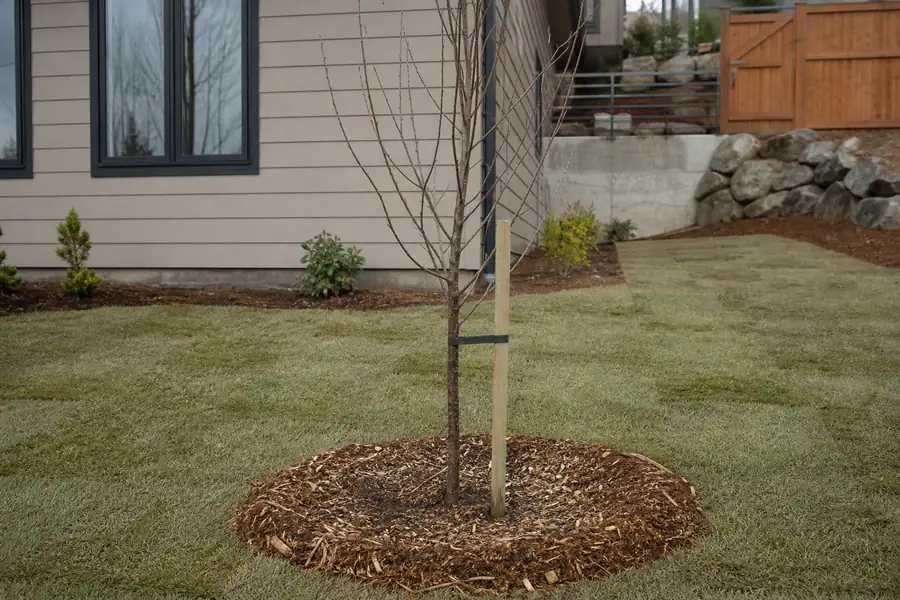
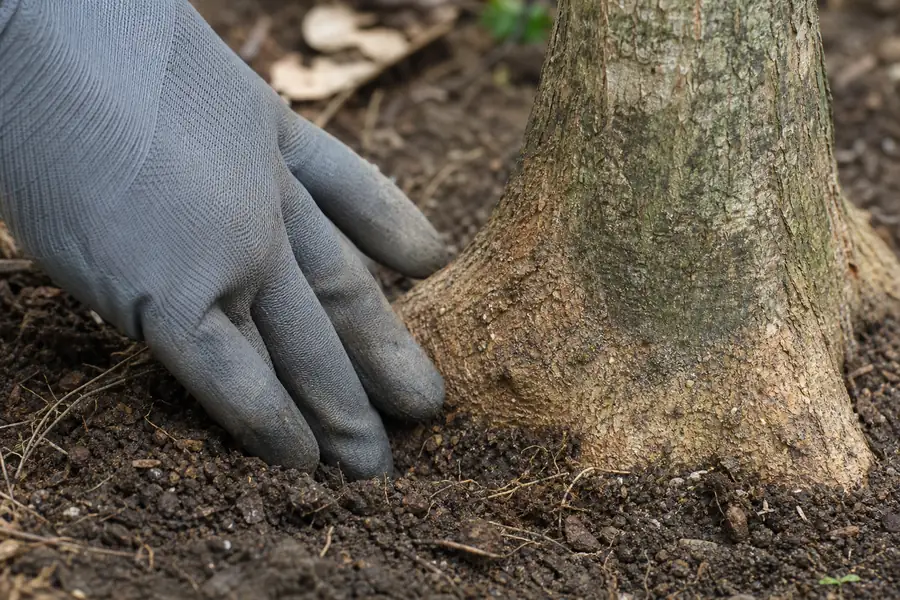
On planting day, confirm the root flare (the point where the trunk widens into roots) sits right at or slightly above soil grade. A tree planted too deep suffocates its roots slowly over months, so this one check matters more than almost anything else on this list.
Remove all nursery tags, twine, and any wire basket material from the top of the root ball. Then water deeply: about 10 gallons per inch of trunk caliper, applied slowly so it soaks down instead of running off. Finish by laying a mulch donut 2 to 4 inches deep, pulled back from the trunk so it never touches the bark. For the exact layering method, Arbor Buddy's guide on how to mulch around a tree walks through it step by step.
Days 2-14: Daily Watering and Early Checks
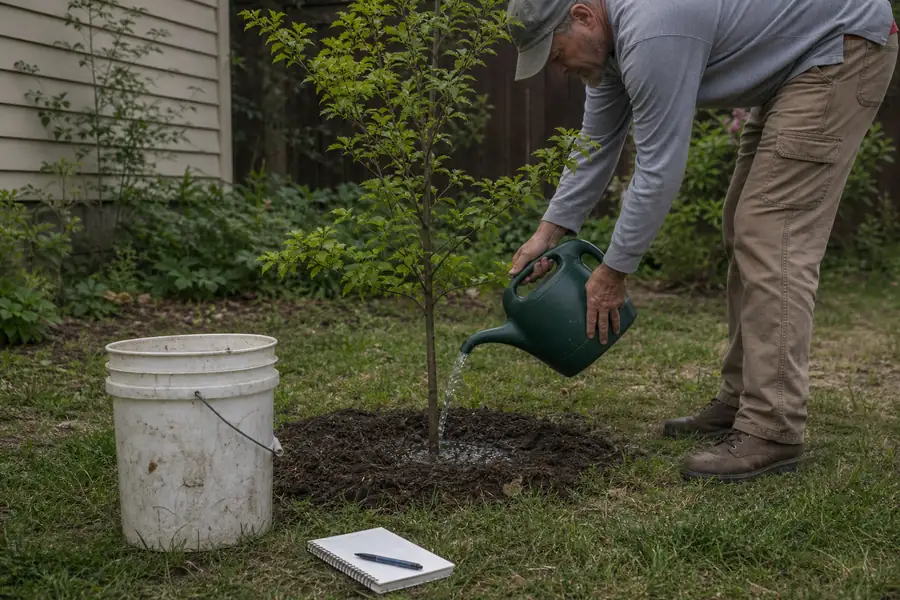
Water a newly planted tree daily or every other day through the first two weeks, depending on your soil and weather. Sandy soil drains fast and needs more frequent watering; clay holds moisture longer and needs less. The full schedule and signs of under or overwatering are covered in how to water a newly planted tree.
If you staked the tree, check that the ties are snug but not tight enough to cut into bark. A stake should let the trunk flex slightly in the wind; too rigid and the trunk never builds the strength to stand on its own. Keep grass and weeds cleared back about 3 feet from the trunk so they are not competing for water with the new roots.
Days 15-30: Easing Off Water and Watching for Shock
Shift watering to every 2 to 3 days once you reach the back half of the first month. The root ball has started drawing some moisture from the surrounding soil by now, so daily watering is no longer necessary and can actually waterlog the roots.
Expect some transplant shock during this stretch: a bit of leaf curl, yellowing, or leaf drop is a normal stress response, not a sign of failure. Arbor Buddy's guide to transplant shock explains what counts as normal versus what needs attention. If deer, rabbits, or rodents are active in your area, add a trunk guard now to protect the bark through the rest of its vulnerable first season.
What to Skip During Your Tree's First Month
Do not fertilize a newly planted tree in its first 30 days. The roots are focused on establishing themselves in the soil, not on pushing new top growth, and fertilizer can actually burn stressed roots before they have settled in.
Skip pruning too, beyond cutting off any branches that snapped during shipping or planting. Heavy pruning this early just adds another stress on top of transplanting, and the tree needs its full canopy to photosynthesize and recover.
Warning Signs to Catch Early
Soggy, swampy-smelling soil around the root ball means overwatering, and the fix is to stop watering for several days and check that the planting hole drains at all. Standing water around roots cuts off oxygen and leads to root rot fast.
Sudden, heavy leaf drop, as opposed to a slow gradual thinning, usually signals overwatering or a sharper shock than normal and is worth checking soil moisture immediately. Bark damage, whether splitting, peeling, or gnaw marks, calls for a trunk guard right away before sun exposure or animals make it worse.
End-of-Month Check: What to Assess After 30 Days
By day 30, your tree should show stable color in its remaining leaves and no new damage, even if growth itself is still slow. This is a good point to plan out your watering rhythm for the rest of the season based on your local rainfall and soil type, something the pillar guide on newly planted tree care covers in more depth for months two and beyond.
It is also the point to get your paperwork in order. Keep your receipt for our one-year guarantee, since Arbor Buddy's guarantee covers your tree's survival through its first year if it was planted and cared for as directed.
FAQs
What do I do the day my tree is planted?
Confirm the root flare sits at or just above soil grade, remove all tags and twine, water deeply at about 10 gallons per inch of trunk caliper, and add a mulch ring 2 to 4 inches deep kept off the trunk. These few steps on planting day set the tone for how well the tree establishes.
How often should I water in the first month?
Water daily or every other day for the first two weeks, then taper to every 2 to 3 days for the rest of the month. Adjust based on your soil type and rainfall, since sandy soil dries faster than clay.
When do I fertilize a new tree?
Not in the first 30 days. Wait until the tree has had at least one full growing season to establish roots before adding fertilizer, since early fertilizing can stress a root system that is not ready for it.
Is early leaf drop normal?
Some leaf curling, yellowing, or dropping in the first few weeks is a normal transplant shock response and usually resolves on its own. Sudden, heavy leaf loss all at once is different and usually points to overwatering or a drainage problem that needs checking right away.
Do I need to stake my new tree?
Not always. Staking helps in windy sites or with top-heavy trees, but it should allow some trunk movement and should come off within a year once the tree can stand on its own.