
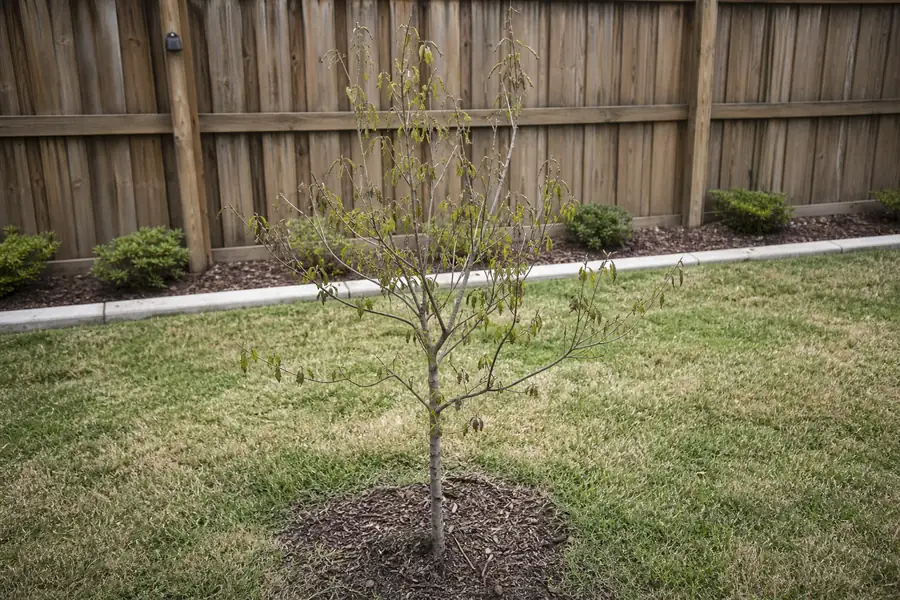
Transplant shock is the stress a tree goes through after planting because it lost most of its root system in the move. When a field-grown tree is dug, more than 95% of its absorbing roots are severed - so a full-size canopy is left running on a fraction of its water supply. Wilting, leaf scorch, early leaf drop and a year of minimal growth are normal responses, not failure. The tree recovers when it has regrown enough roots to supply itself, which takes roughly three months per inch of trunk caliper in zone 10 and about twelve months per inch in zone 4.
Key takeaways
- Most "dying" new trees are not dying. They are short of roots, and that looks the same from the outside.
- The cause is quantifiable: more than 95% of absorbing roots are lost in digging (South Carolina Forestry Commission).
- A 1-inch caliper tree has a root system about 4.5 feet across and leaves with a root ball about 1.5 feet across.
- The scratch test tells you if it is alive in about ten seconds.
- Overwatering a shocked tree is the most common way people finish it off.
- Duration depends on caliper and zone, not on the species' general toughness.
First: is the tree alive?
Before anything else, run two checks.
The scratch test
Pick a pencil-thin twig. Scrape a thin sliver of bark off with a thumbnail or a knife.
| What you see | What it means |
|---|---|
| Green or greenish-white, slightly moist | That twig is alive |
| Brown, dry, papery | That twig is dead |
If the twig is dead, work down the branch toward the trunk, testing every foot or so, until you find green. That tells you how far back the dieback goes. Test the trunk too - a tree with dead twigs and a green trunk is a tree that will very likely push new growth.
The bud test
Look closely at the branches. Firm, plump buds mean living tissue. Buds that crumble to dust between your fingers are dead.
If the trunk scratches green, do not remove the tree, and do not prune it back hard. Wait until the following spring - many trees that look finished in August leaf out normally in May.
What transplant shock actually is
A tree in a nursery field has a root system roughly two to three times wider than its canopy. When it is dug, the digging blade cuts a ball far smaller than that root system.
The numbers, from the South Carolina Forestry Commission:
| Tree caliper | Root system diameter in the field | Root ball actually moved |
|---|---|---|
| 1 inch | 4.5 ft | ~1.5 ft |
| 4 inches | 18 ft | ~3.5 ft |
More than ninety-five percent of the absorbing roots are severed. The canopy, meanwhile, arrives intact. The tree now has to run full-size foliage on a small fraction of its former water-gathering capacity, through the hottest part of the year, in soil it has never grown in.
Everything that follows - the wilting, the small leaves, the year of no visible growth - is the consequence of that arithmetic.
Container-grown trees experience less of this, because the root system stays in its pot. Their version of the problem is different: roots that have circled inside the container need to be cut or shaved at planting so they grow outward, and until they do, the tree is still drawing from a limited volume.
The symptoms, and what each one means
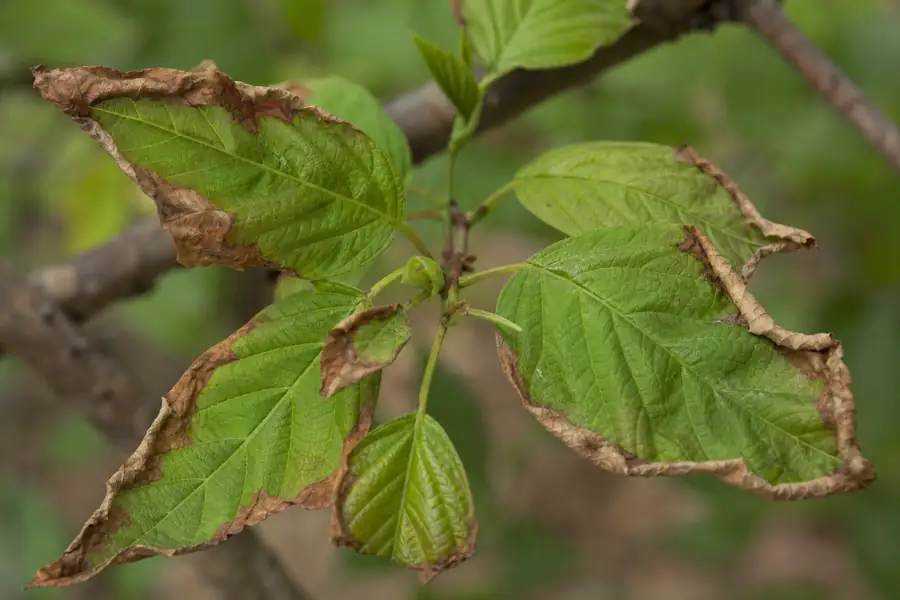
| Symptom | Normal after planting? | What it usually means |
|---|---|---|
| Wilting in afternoon heat, recovering by evening | Yes | Normal water-demand mismatch |
| Leaf scorch - brown, crispy edges and tips | Yes, commonly | Leaf margins are furthest from the water supply and dry first |
| Partial leaf drop in the first weeks | Yes | The tree shedding leaf area it cannot support. A self-correction, not a failure |
| Smaller leaves than normal for the species | Yes, often for 1-2 seasons | Reduced resources |
| Little or no shoot growth in year one | Yes | Energy is going into roots, which is exactly what you want |
| Early autumn color and early leaf drop | Yes, in year one | Stress response |
| Full defoliation in midsummer | Sometimes | Can still recover if the trunk scratches green. Watch, do not act |
| Leaves yellowing from inside the canopy outward | No | Usually overwatering - check soil before adding more |
| Soft, wet soil with a sour smell | No | Root suffocation or poor drainage |
| Dieback progressing down branches over weeks | No | Investigate - possible planting depth, drainage, or a damaged root ball |
| No bud break in spring, trunk scratches brown | No | The tree has failed |
The row that matters most is the yellowing one. Leaf yellowing starting at the interior of the canopy, with soil that is wet when you check it, is overwatering - and the natural response to a sick-looking new tree is to water it more. See how to water a newly planted tree for the finger test and the differential.
How long it lasts
Transplant shock ends when the tree has rebuilt a working root system. That is what "establishment" means, and it scales with both tree size and climate.
| Your USDA zone | Establishment per inch of trunk caliper | A 2-inch tree |
|---|---|---|
| 10-11 | ~3 months | ~6 months |
| 8-9 | ~4 months | ~8 months |
| 6-8 | ~8 months | ~16 months |
| 2-5 | ~12 months | ~2 years |
From Dr Edward Gilman's work at UF/IFAS; Watson's widely cited general rule of at most one year per inch of caliper sits at the conservative end of the same range. Worked examples from the South Carolina Forestry Commission: a 1-inch tree takes about a year to restore its original root system, a 4-inch tree about five.
Two consequences worth understanding:
- A bigger tree is not a shortcut. It starts taller, but it carries a proportionally larger root deficit for proportionally longer. A smaller tree planted alongside it will often catch and pass it. Tree size and establishment covers the trade-off.
- Your zone changes the commitment. The same 2-inch tree is self-sufficient in about six months in South Florida and needs roughly two years of attention in Minnesota. Find your zone if you are not sure.
What helps - and what does not
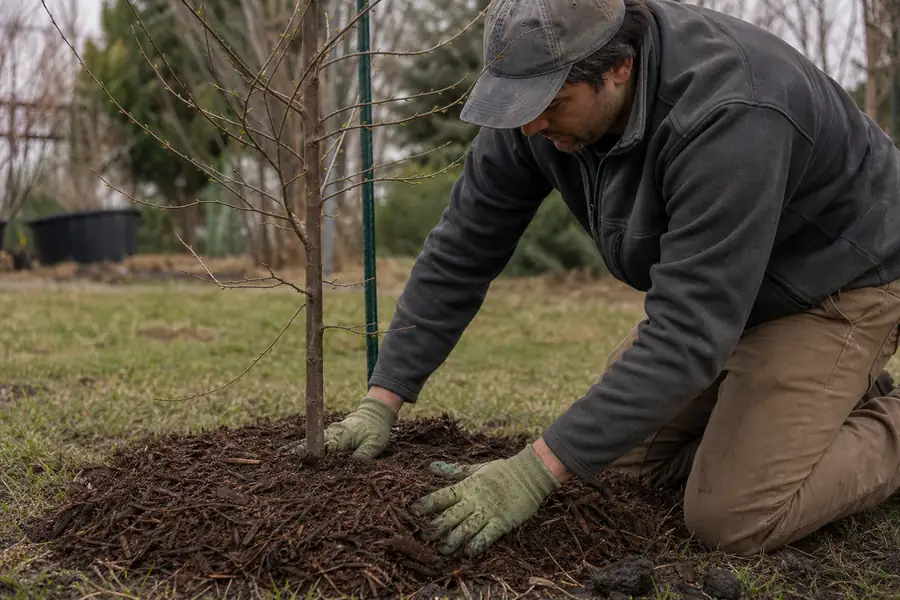
Helps
| Action | Why |
|---|---|
| Correct, measured watering | 2-3 gallons per inch of trunk diameter per irrigation. The single most important factor |
| Mulch, 2-3 inches, not touching the trunk | Moderates soil temperature, conserves moisture, keeps mowers away |
| Checking planting depth now | If the flare is buried, nothing else will fix the tree. How deep to plant a tree |
| Patience through year one | A year of no visible growth is a tree investing underground |
| Removing competing turf from the root zone | Grass competes directly for water in the top few inches |
Does not help, or actively harms
| Action | Why not |
|---|---|
| Fertilizer | ISA: "Avoid fertilizing at the time of planting." The tree is short of roots, not nutrients. Nitrogen pushes top growth the roots cannot support |
| Pruning the canopy to "balance" root loss | Obsolete advice. The tree rebuilds roots using energy from its leaves. Remove only dead or broken wood |
| More water, applied because the tree looks sick | The most common way a shocked tree is killed. Check the soil first, every time |
| Vitamin B1 and "transplant tonic" products | No reliable evidence of benefit for transplant establishment |
| Digging it up to "check the roots" | Repeats the injury |
| Replacing it in month two | Most of these trees recover. Wait for the following spring before deciding |
A realistic first year
You plant a 2-inch caliper Autumn Blaze Maple in June, in zone 6.
- Week 1: leaves wilt each afternoon, recover overnight. Normal.
- Week 3: margins of some leaves brown and crisp. Perhaps 15% of leaves drop. Normal - the tree is shedding load.
- Month 2: no new shoot growth. Leaves smaller than the ones it arrived with. Normal.
- September: colors up and drops leaves two weeks earlier than established maples nearby. Normal.
- Following May: buds break, modest new growth - a few inches. This is the signal that it is establishing.
- Second summer: noticeably stronger growth; less frequent watering needed.
- Establishment, zone 6, 2-inch caliper: roughly sixteen months, so around autumn of year two.
At no point in that sequence is anything wrong. The temptation to intervene peaks around month two, which is precisely when intervening does the most damage.
When it is not transplant shock
Rule these out before accepting shock as the explanation:
- Planted too deep. Check for a visible root flare. This is the most commonly missed cause and it mimics shock exactly. What the root flare is.
- Poor drainage. Dig 6 inches at the root ball edge. Wet, sour-smelling soil is a drainage problem. Planting trees in clay soil.
- Twine or wire left on the trunk. Check the base for anything wrapped around it.
- Mulch piled against the trunk. Pull it back and look.
- Wrong zone. A species outside its hardiness range will decline no matter how well it is planted - and it is also the one circumstance Arbor Buddy's guarantee does not cover. Check with the zone finder.
- Herbicide drift, from lawn treatment nearby. Distorted, cupped or strap-like new leaves rather than scorched ones.
FAQ
How long does transplant shock last?
Until the tree re-establishes its root system: roughly three months per inch of trunk caliper in zones 10-11, four in zones 8-9, eight in zones 6-8 and about twelve in zones 2-5. For a 2-inch tree that ranges from about six months to about two years.
Will my tree recover from transplant shock?
Most do, provided the planting depth is right, drainage is adequate, and watering is correct. The scratch test is the quickest indicator - if the trunk and main branches scratch green, the tree is alive and has a good chance.
Should I fertilize a tree in transplant shock?
No. ISA advises against fertilizing at planting. A tree in shock is limited by root volume, not nutrients, and nitrogen pushes leaf growth that the roots cannot support.
Is leaf drop after planting normal?
Yes. Shedding leaf area is how a tree reduces water demand to match its reduced root system. Partial leaf drop in the first weeks after planting is a normal self-correction. Complete defoliation is more serious but not always fatal - scratch-test the trunk before acting.
Do container-grown trees get transplant shock?
Less of it, because the root system stays intact in the pot. They have a related problem instead: circling roots that must be cut or shaved at planting so they grow outward into the surrounding soil.
Can I prune to help it recover?
Only dead, broken or rubbing branches. Reducing the canopy to "balance" lost roots is outdated advice - the tree needs its leaves to generate the energy for root regrowth.
My tree lost all its leaves a month after planting. Is it dead?
Not necessarily. Scratch a twig, then the trunk. If the trunk is green beneath the bark, keep watering correctly and wait until the following spring before making a decision. Many fully defoliated trees leaf out normally the next season.
Every tree we ship is covered by our 1-Year Thrive Guarantee - one free replacement if it does not survive its first year with proper care. If your tree is showing signs you are unsure about, get in touch before replacing it; most of what looks like failure in month two is not.