

Quick answer: Trees under power lines need to mature under 25 feet tall if you're planting under or within 20 feet of overhead wires. Species that reach 25 to 45 feet belong 25 to 50 feet back from the lines, and anything taller than that needs at least 50 feet of clearance. Call 811 before you dig, no matter how small the hole.
Get the height class wrong and the tree loses eventually. Line-clearance crews will cut it back to protect the wires, year after year, whether or not it's convenient for you.
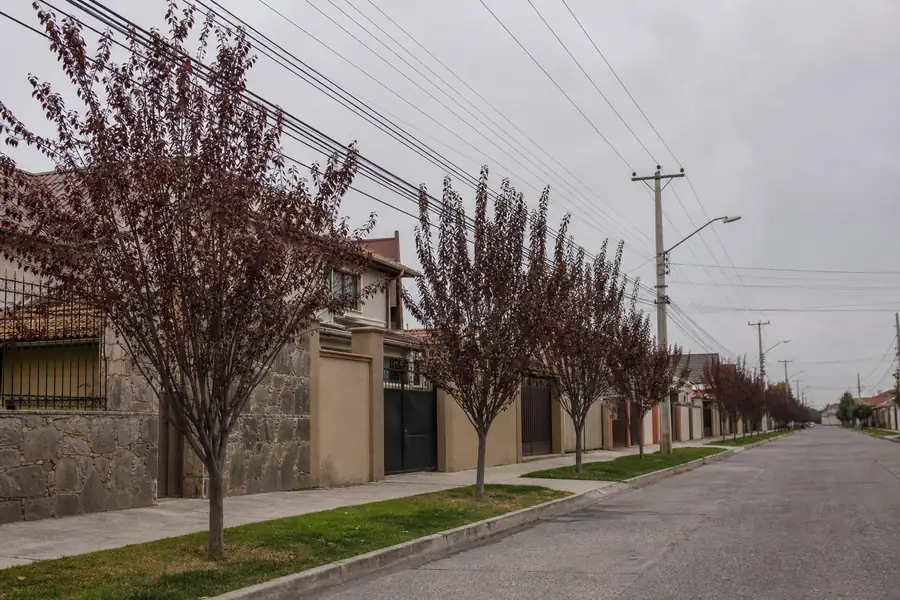
The Right Trees Under Power Lines: A Height and Setback Table
Mature height, not nursery size, decides where a tree can go near overhead lines.
A tree that stays under 25 feet tall for its whole life can grow directly beneath most residential distribution lines without ever touching a wire. Anything bigger needs distance instead of hoping a utility crew leaves it alone.
| Mature height | Placement near overhead lines | Typical species |
|---|---|---|
| Under 25 ft | Fine directly under or within 20 ft of distribution lines | Crape myrtle, redbud, dogwood |
| 25-45 ft | Plant 25-50 ft back from the lines | Ornamental pears, mid-size hollies |
| Over 45 ft | Plant 50 ft or more back from the lines | Oaks, sycamores, most shade trees |
Setback distance matters more the taller a species gets, because a wide, high canopy grows toward the wires from every direction, not just straight up.
What the Utility Company Can Do to Your Trees
Utility crews can legally prune or remove any tree growing inside their easement, and they usually don't need your permission first.
A utility easement is the strip of land around the lines, commonly 10 to 15 feet on each side, where the power company holds a legal right to access and maintain its equipment. Line-clearance pruning inside that strip keeps branches off energized wires and keeps the lights on during storms.
The result is rarely pretty. A tree pruned to a V shape around the wires never fills back in evenly. It stays lopsided for the rest of its life. The only real fix is prevention: plant a species that will never reach the wires in the first place.
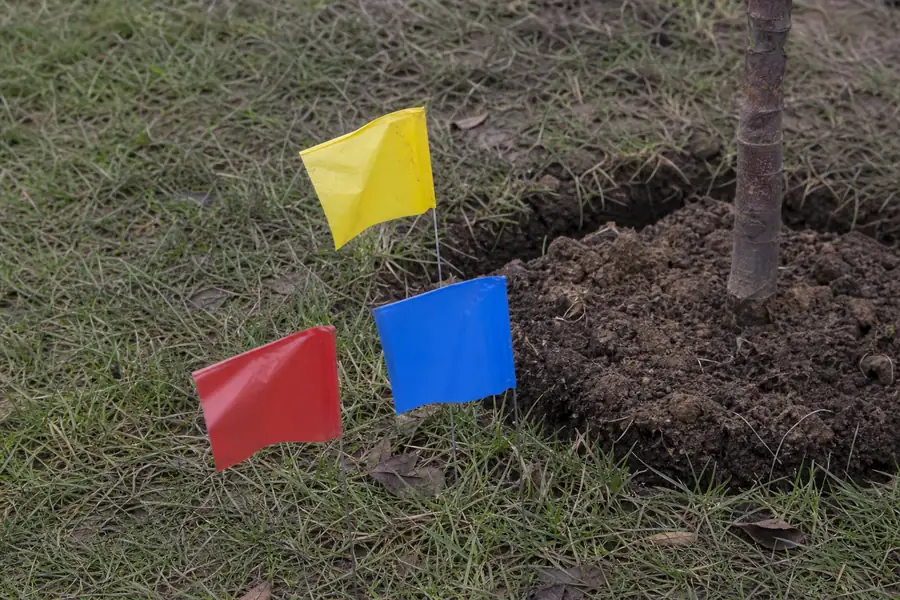
Underground Lines Count Too: Call 811 Before You Dig
Call 811 a few business days before any digging, even for a small tree or shrub. The service is free and required nationwide, and it marks buried gas, electric, water, and cable lines on your property.
Once the crews mark the ground, hand-dig within about 18 to 24 inches of the painted lines or flags. Machinery in that buffer zone is how homeowners hit lines that were never mapped precisely enough for power equipment. Skipping the call because it's just a small hole is the most common way people get hurt or knock out utility service to the whole street.
Best Small Trees to Plant Near Overhead Lines
Several small ornamental species mature at 25 feet or under, which makes them safe choices directly beneath or close to overhead power lines.
- Crape myrtle (zones 7-9): fast-growing, summer flowers, tops out well under the wires. The Natchez crape myrtle is a popular pick for this exact spot.
- Eastern redbud (zones 4-9): early spring color, naturally rounded, low mature height.
- Flowering dogwood (zones 5-9): understory tree by nature, rarely exceeds 25 feet.
- Serviceberry (zones 4-9): multi-stem habit, white spring flowers, stays compact.
- Crabapple (zones 4-8): dense spring bloom, mature height well under the clearance line.
- Japanese maple (zones 5-8): slow-growing, layered canopy, ideal for tight spots.
Not every cultivar in these species stays under 25 feet, and not every zone on this list matches your winters. Check small trees matched to your zone before you commit, since a tree rated for zone 8 can struggle or die in a zone 5 winter regardless of how short it stays.
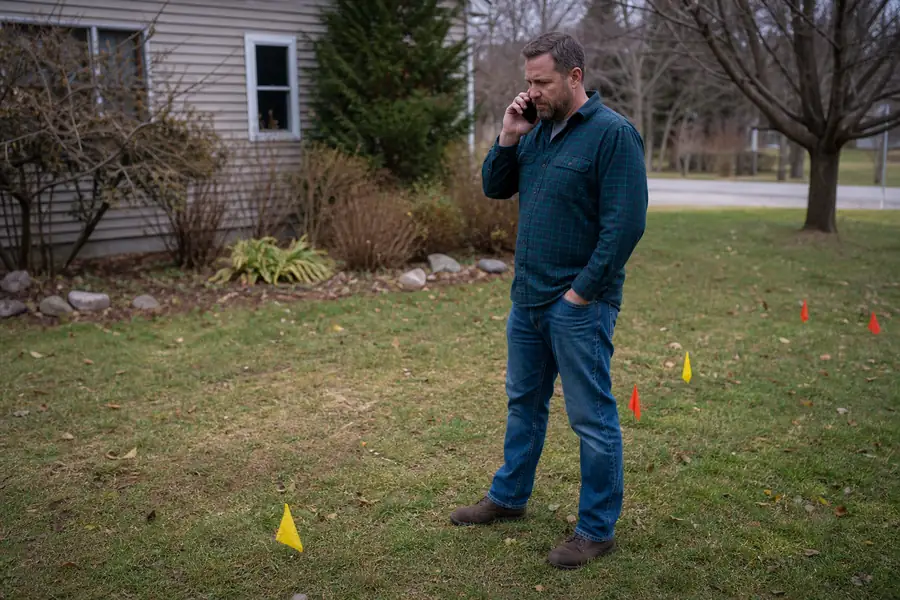
Setbacks for Driveways, Sidewalks, and Septic Lines
Small trees need 3 to 4 feet of clearance from pavement, medium trees need 5 to 6 feet, and large shade trees need 8 to 12 feet.
| Mature size | Setback from pavement |
|---|---|
| Small (under 25 ft) | 3-4 ft |
| Medium (25-45 ft) | 5-6 ft |
| Large (over 45 ft) | 8-12 ft |
A root barrier is a vertical panel installed at planting time that redirects roots downward instead of letting them heave nearby concrete. It only works if it goes in when the tree is planted; retrofitting one around an established root system does little.
Keep willow, poplar, and silver maple away from driveways, sidewalks, and septic lines altogether. These species grow across a wide range of zones, but their aggressive, shallow roots are built to find water, and a leaking pipe or septic line is exactly what they're looking for.
Before you settle on a spot, plan the whole planting site, including how close the tree sits to your house foundation, walkways, and any buried utilities. Getting the layout right the first time saves you from moving or removing a tree later.
The Service Drop to Your House
The service drop is the single line running from the utility pole to your house, and it still needs the same clearance rules as the bigger lines down the street.
Never prune anything within 10 feet of an energized line yourself, including the service drop. Branches, ladders, and wet wood all conduct electricity well enough to hurt you. If a tree is crowding that line, call the utility company and let a trained crew handle it instead.
Arbor Buddy's zone finder pairs your ZIP code with nursery-grown stock delivered at the right planting size, so you're not guessing how big a sapling will eventually get near your wires or walkways. Every tree ships under Arbor Buddy's 1-Year Alive & Thrive Guarantee, but where you plant it near lines and pavement is on you, not something a guarantee can fix after the fact.
FAQs
What can I plant under power lines?
Stick to species that mature under about 25 feet tall, such as crape myrtle, eastern redbud, dogwood, serviceberry, crabapple, or Japanese maple. Confirm the specific cultivar's mature height before planting, since some varieties within these species grow taller than others.
How far away does a big shade tree need to go?
A shade tree that matures over 45 feet tall needs at least 50 feet of clearance from overhead power lines. That distance keeps the full-grown canopy from ever reaching the wires from any direction.
Is calling 811 mandatory?
Yes. Calling 811 before you dig is required nationwide and it's free, even for a small planting hole. It's the only way to know exactly where buried gas, electric, water, and cable lines run through your yard.
Can the utility cut my tree without asking?
Generally, yes, if the tree is growing inside the utility easement around the lines. Line-clearance crews have the legal right to prune or remove trees that threaten the wires, and they typically don't need the homeowner's sign-off first.
How far from a sidewalk should I plant a tree?
Small trees need about 3 to 4 feet of setback from a sidewalk or driveway, medium trees need 5 to 6 feet, and large shade trees need 8 to 12 feet. The bigger the root system at maturity, the more room the pavement needs.