The thing that separates a good online tree purchase from a bad one is not price - it is whether the listing tells you the size you are actually buying, whether the tree is rated for your hardiness zone, and what happens if it arrives dead. A listing that says "5 gallon" and nothing else is telling you the pot volume and not the tree. One that says "1-inch caliper, 8-10 ft, zones 5-9, freight delivered" is telling you what will come off the truck. Here is how to read a listing properly, what the guarantees actually cover, and when buying locally is the better call.
Key takeaways
- Size claims are the biggest source of disappointment. Container class is not gallons, and "gallons" is not a compliant specification under the US nursery standard.
- Check the zone rating before anything else. It is also the condition most guarantees depend on.
- Read the guarantee's exclusions, not its headline.
- Freight and parcel are different purchases with different risks.
- Local nurseries win on some things - inspection, advice, instant collection, very large stock.
- Photographs are usually of mature specimens. Look for a size spec, not a picture.
The seven checks before you buy
1. Does the listing state a size you can verify?
The single most common complaint about online tree buying is "it was smaller than I expected." Usually the listing was technically accurate and uninformative.
| Listing says | What it tells you |
|---|---|
| "5 gallon" | Pot volume only - and under ANSI Z60.2-2025 a #5 container holds 3.4 to 5.4 actual gallons |
| "3-4 ft" | The tree's height today. Useful |
| "1-inch caliper" | Trunk diameter - the most informative spec for a shade tree |
| "Fast growing, reaches 50 ft" | Mature size. Tells you nothing about what arrives |
The American Standard for Nursery Stock is explicit that "Nursery stock specifications that reference only an imperial volume measurement, such as 'quarts' or 'gallons,' are not in accordance with the Standard" - and that container class alone is an incomplete specification.
What good looks like: a height range or caliper for the size you are buying, stated separately from the mature size. Full decoding in tree sizes explained.
2. Is it rated for your USDA zone?
Hardiness zone is the first filter, not the last. A tree outside its range will decline regardless of how well you plant it - and almost every online guarantee excludes trees planted outside their recommended zone, so this is also the term that decides whether you are covered.
Check the seller uses the current USDA Plant Hardiness Zone Map (2023 edition). The 2023 revision moved much of the country about half a zone warmer, so a site working from the older map may be telling you something out of date - and so may your own memory of your zone.
A zone match is not a complete suitability answer. Zones measure average winter minimum temperature only. They say nothing about summer heat, humidity, drought, or your soil. A tree can be zone-appropriate and still wrong for your site.
Find your zone here - it uses the 2023 map.
3. What does the guarantee actually cover?
Almost every online nursery advertises a guarantee. They differ enormously in the detail.
Read for these, in this order:
| Question | Why it matters |
|---|---|
| How long? | 30 days, one season and one year are all common |
| Replacement or refund? | Most offer replacement |
| How many times? | Usually once per item |
| What is excluded? | Typically neglect, extreme weather, animals, and planting outside the recommended zone |
| How soon must you report? | Often a short window after you notice the problem |
| Who pays return shipping? | On freight items this can be significant |
| Is proof required? | A photo is standard |
For transparency, here is ours in full: the Arbor Buddy 1-Year Thrive Guarantee covers one free replacement per item if the tree fails within 12 months of delivery. Claims must be reported within 30 days of noticing the problem, and a photo may be requested. Arrival damage must be reported within 5 days. It excludes damage from neglect, extreme weather events, animals, or planting outside the recommended hardiness zone. Replacement shipping is free. That is the whole thing - the guarantee page has it in the same words.
What to be wary of: a headline guarantee with exclusions that are hard to find, or a claims process requiring you to act within a window shorter than it takes for transplant stress to resolve. A new tree can look terrible for weeks and recover completely - see transplant shock.
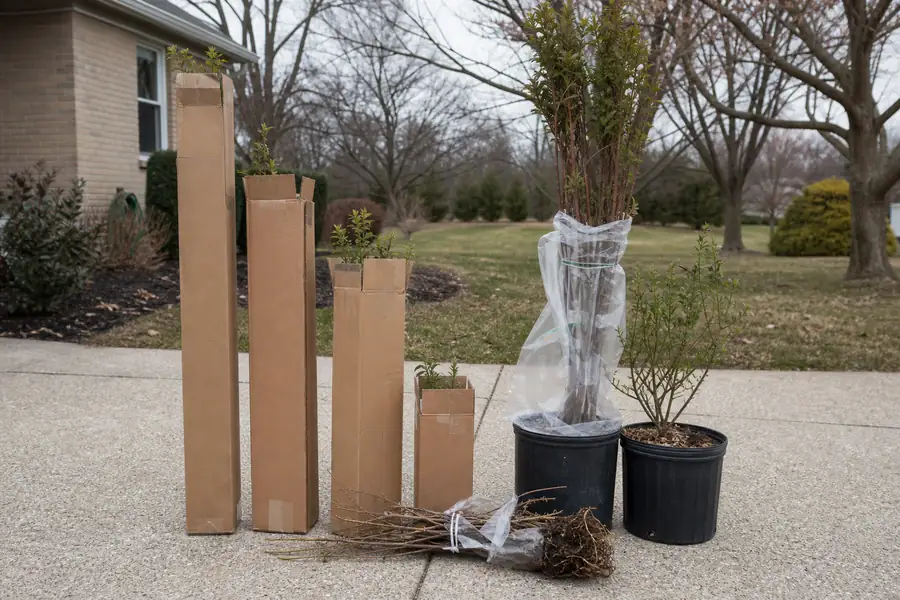
4. How does it ship, and what arrives?
| Method | Typical for | What to check |
|---|---|---|
| Parcel | Small stock, shrubs, young trees | Whether the tree is shipped in its pot or bare-rooted for transit |
| Freight | Large trees, anything with a substantial root ball | Cost (usually quoted by address), curbside delivery, who receives it |
| Bare root, dormant | Seasonal, dormant-season only | That the delivery window matches your planting window |
Questions worth answering before you order:
- Is the shipping cost shown before checkout, or added later?
- Can you choose a delivery date to match your planting window?
- Is delivery timed to avoid shipping into a freeze?
- Are there state restrictions on the species? Agricultural rules prevent some species entering some states, and a good seller says so on the product page.
5. Is the mature size stated - and does it fit?
A listing that gives mature height and width lets you decide properly. One that only says "fast growing" is selling you a problem for year fifteen. Check mature spread against your space before you buy - see how far from the house to plant a tree.
6. Are the photographs of the tree you are buying?
Catalog photographs almost always show mature specimens in full flower or autumn color. That is normal and not dishonest - but it means the photo tells you what the species looks like eventually, not what arrives. Judge by the size spec.
7. Can you reach a human?
Before you spend several hundred dollars on something living, check there is a phone number or an email that gets answered. If you have a problem it will be in the first month, and that is exactly when you need a response.
Online versus local - an honest comparison
Neither is simply better. They are good at different things.
| Online | Local nursery | |
|---|---|---|
| Selection | Far wider, including cultivars not grown locally | Limited to what sells locally |
| Inspecting before you buy | Not possible | You can see the actual tree |
| Zone suitability | Good sites filter by your ZIP; bad ones sell you anything | Stock is usually already regionally appropriate |
| Price | Generally lower for the same size | Higher, with no freight |
| Very large stock | Limited by what freight can carry | Often better, with delivery and planting available |
| Advice | Written guidance | Face to face, locally specific |
| Timing | You choose a delivery date | Take it home today |
| Guarantee | Usually formal and written | Varies; sometimes stronger, sometimes informal |
| Condition on arrival | Transit risk, mitigated by packing | You see what you get |
Buy locally when: you want to inspect the tree, you need it today, you want very large stock with planting included, or you want advice from someone who knows the local soil and pests.
Buy online when: you want a species or cultivar not stocked locally, you want a specific size at a better price, you want it delivered to your door, or there is no good nursery within reach.
A reasonable hybrid: buy large specimen trees locally where you can see them and have them planted, and buy screening rows, ornamentals and anything unusual online where selection and price are better.
Red flags
| Red flag | Why it matters |
|---|---|
| No size specification beyond a pot number | You do not know what you are buying |
| No USDA zone range on the product page | The seller is not filtering for suitability |
| Guarantee terms that are hard to find | Check the exclusions before you order |
| "Instant shade" claims on small stock | Growth-rate claims that defy the size being sold |
| No shipping cost until after you commit | Freight on a large tree is a real cost |
| No address or phone number anywhere | You will want one |
| Stock photos only, no size reference | Combined with no size spec, a bad sign |
| Prices far below everything comparable | Usually a much smaller tree than you think |
What to do the day it arrives
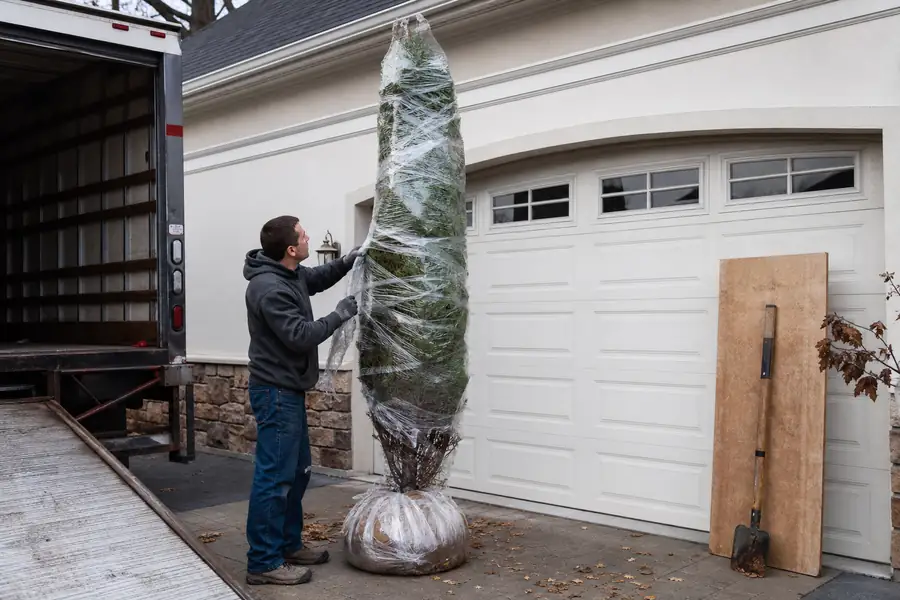
- Inspect and photograph immediately, before you move it. Most arrival-damage windows are short - ours is 5 days.
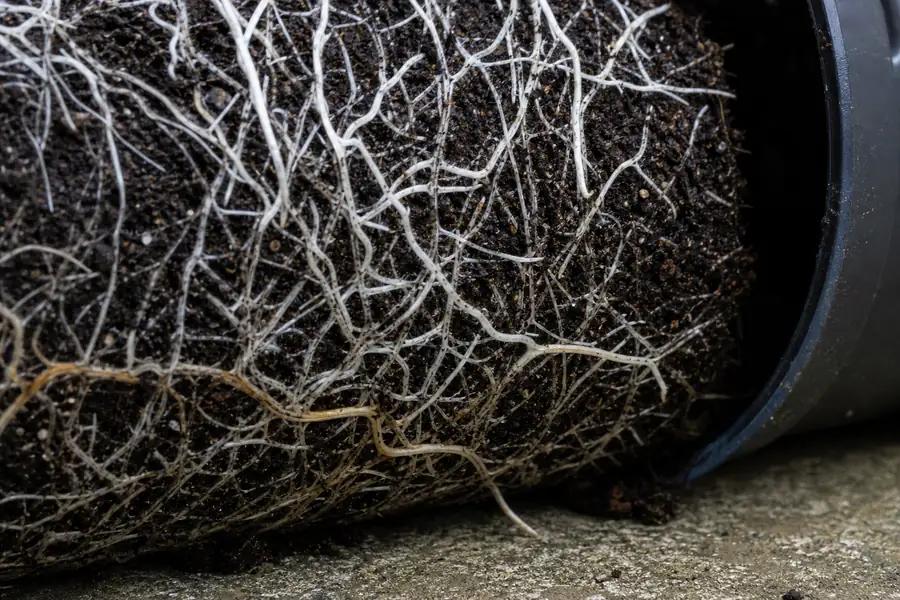
- Check the root ball is moist. Water it in its packaging if not.
- Keep it shaded and sheltered until you plant.
- Plant as soon as you reasonably can. If you cannot, keep container stock in its pot, watered, out of wind and afternoon sun.
- Do not panic at leaf drop. Shipping stress and transplant stress both cause it.
Full detail in what to do when your tree arrives, and the planting method in how to plant a potted tree.
FAQ
Is it safe to buy trees online?
Yes, if you check the specifics: a stated height or caliper rather than only a pot size, a USDA zone range on the product page, a guarantee whose exclusions you have read, and clear shipping terms. The risks are size disappointment and transit stress, and both are visible in the listing before you buy.
What is the best place to buy trees online?
The right answer depends on what you need - species, size and your zone. Rather than a ranking, use the seven checks above: verifiable size spec, zone rating on the 2023 USDA map, readable guarantee, clear shipping, stated mature size, honest photographs, and a contactable human.
Are online trees smaller than expected?
Often, and usually because container class is not gallons - a #5 pot holds 3.4 to 5.4 actual gallons under the ANSI standard. Buy from listings that state a height range or caliper.
Is it cheaper to buy trees online or locally?
Online is generally cheaper for the same size, before shipping. For large trees, freight narrows or closes the gap, and a local nursery that delivers and plants may work out better.
What happens if my tree arrives damaged?
Reputable sellers have an arrival-damage window - ours is a photo within 5 days of delivery. Photograph the tree before you move it, and report immediately.
Do online nurseries guarantee their trees?
Most do, and the terms vary a lot. Check duration, whether it is replacement or refund, how many claims are allowed, the reporting window, and the exclusions - planting outside the recommended hardiness zone is a near-universal exclusion.
Can all trees ship to every state?
No. Agricultural regulations restrict some species entering some states. A good seller notes this on the product page; we ship to the lower 48 and flag restrictions per product.
Every Arbor Buddy product page lists the sizes available, mature height and width, USDA range, soil tolerance and spacing. Find your zone to filter the catalog to what will thrive where you live, and read our guarantee in full before you order - not after.