
Fall usually beats spring for planting trees. Warm soil and cool air let a newly planted tree grow roots without the added strain of pushing out new leaves and stems at the same time. Fast rooters like red maple, hybrid elm, crabapple, pine, and spruce are some of the best trees to plant in the fall, since they get a head start on next year's growing season before winter even arrives. A short list of slow, fleshy-rooted species genuinely does better waiting for spring, and we'll name those too.
The idea that spring is the only safe planting window is one of the more persistent myths in home gardening. It's also the reason so many new trees struggle through their first summer. Understanding the difference between how roots behave in fall soil versus spring soil changes how you plan your whole planting season and how much attention a new tree needs after it goes in the ground.
- Fall soil stays warm for weeks after air cools, so roots keep growing.
- Fall-planted trees generally need less watering than spring-planted trees.
- Fast rooters like maples, elms, and crabapples thrive planted in fall.
- Magnolia, dogwood, birch, and flowering cherry root more reliably in spring.
- Get roots in the ground about six weeks before your soil typically freezes.
The soil-versus-air lag behind fall planting benefits
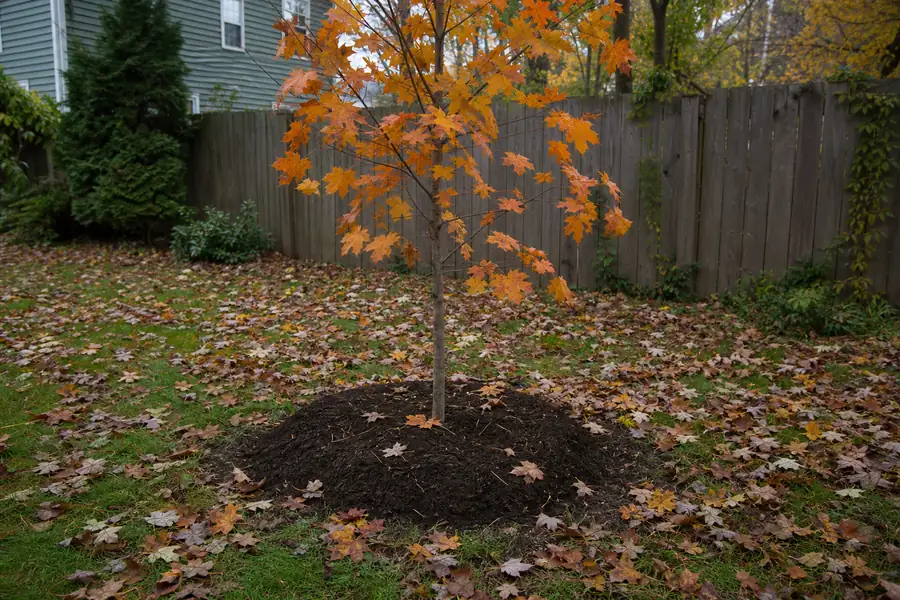
Soil holds heat far longer than air does, and that lag is the whole mechanism behind fall planting benefits. Once the first cold front pushes air temperatures into the 30s and 40s, soil temperature often stays in the 50s and 60s Fahrenheit for weeks. Root growth continues as long as soil temperature sits above roughly 40°F, and that window frequently runs six to eight weeks past the point where a tree's top growth has already shut down for dormancy, the resting state a tree enters once its leaves drop and growth pauses for winter.
University extension research on tree establishment has tracked this lag for years: trees planted in fall build a noticeably larger root system by the time the ground freezes than trees planted at the same calendar distance in spring. A spring-planted tree has to grow roots and canopy at once, right as summer heat and drought show up. Fall planting removes that double demand and lets the root growth happen first.
The stress math: transplant stress and spring planting
Fall planting cuts watering demand dramatically compared with spring planting. Cooler air slows water loss through the leaves, and fall rain usually keeps soil moist without much help from a hose.
Transplant stress is the shock a tree feels when its roots get cut and disturbed at digging, right when it needs steady moisture most to recover. A tree planted in October typically needs watering once or twice a week until the ground freezes. The same species planted in May can need watering two or three times a week through its entire first summer, plus close watching for leaf scorch and wilting on hot afternoons.
Best trees to plant in the fall by zone
Fast-rooting species make the strongest case for fall planting because they can establish real root mass before the ground locks up for winter.
- Red maple, zones 3-9
- Sugar maple, zones 3-8
- Honeylocust, zones 4-9
- Hybrid elm, zones 4-9
- Hackberry, zones 3-9
- Crabapple, zones 4-8
- Linden, zones 3-8
- Hawthorn, zones 4-7
- Spruce, zones 3-7
- Pine, zones 3-8 depending on species
- Arborvitae, zones 3-7
Evergreens like spruce, pine, and arborvitae belong on this list too, planted early in fall so roots anchor before winter wind starts pulling moisture from their needles. Before you order, see which trees fit your zone so you're not guessing at your first fall frost date.
Trees to save for spring instead of fall
A handful of species genuinely root slower and are better planted in spring, when they have a full growing season to establish before facing winter cold. This is the fall-hazard list most planting guides skip, and it's worth naming outright:
- Magnolia, zones 4-9 depending on type
- Dogwood, zones 5-9
- Birches, zones 3-9 depending on species
- Flowering cherry, zones 5-8
- Tulip poplar, zones 4-9
- Bald cypress, zones 4-9
- Willow, zones 4-9
These species share slow or fleshy root systems that don't rebuild quickly after transplanting. Planted in fall, they often don't gain enough root mass before soil temperature drops too low for growth, which leaves them exposed to winter dieback. Give these a full season of spring and summer root growth instead.
Fall planting rules that make the best trees to plant in the fall actually thrive
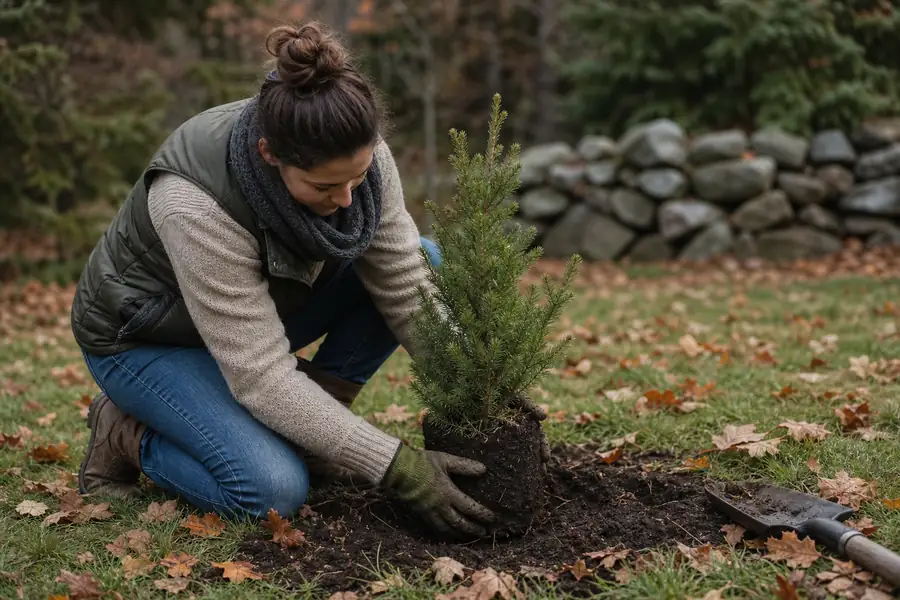
Get roots in the ground about six weeks before your ground typically freezes. That window gives roots enough time to establish before soil temperature drops below the point where growth stops.
Water deeply and consistently: about 10 gallons per inch of trunk caliper (trunk diameter measured six inches above the ground) each week until the ground freezes, then stop. Mulch 2 to 4 inches deep around the base, keeping it off the trunk itself, to hold soil warmth longer into the season. Skip fertilizer at planting time; it pushes tender new growth right when the tree should be settling roots, not adding top growth. Dig the hole as wide as the root ball and no deeper, backfill with the native soil you removed, and water thoroughly right after planting to settle air pockets around the roots.
One honest caveat: in USDA zones 3 and 4, the fall window is short. If your ground freezes hard by early November, spring is the safer call for anything marginal, since a tree with only a few weeks of root growth before a hard freeze doesn't have much of a head start anyway.
Fall vs. spring planting comparison
| Species | Fall or spring | USDA zones | Reason |
|---|---|---|---|
| Red maple | Fall | 3-9 | Fast rooter, builds roots quickly in cool soil |
| Hybrid elm | Fall | 4-9 | Vigorous root growth, tolerates disturbance well |
| Crabapple | Fall | 4-8 | Establishes fast, low transplant stress |
| Spruce | Fall | 3-7 | Anchors before winter wind if planted early fall |
| Magnolia | Spring | 4-9 | Fleshy roots need a full season to rebuild |
| Dogwood | Spring | 5-9 | Slow rooter, prone to winter dieback if planted late |
| River birch | Spring | 3-9 | Shallow, slow-establishing root system |
| Flowering cherry | Spring | 5-8 | Sensitive to root disturbance heading into cold |
Arbor Buddy matches every tree to your ZIP code's growing zone before it ships, so you're not stuck guessing whether a fall order will actually make it through winter. Every order also ships under Arbor Buddy's 1-Year Alive & Thrive Guarantee, so if a tree doesn't survive its first year, it gets replaced, simple as that.
FAQs
Is fall really better than spring for planting trees?
For most species, yes. Cool air and warm soil let roots grow without the stress of also pushing new leaves, which is why fast rooters like maples and elms do better planted in fall. A short list of slow-rooting species, including magnolia, dogwood, and birch, still does better planted in spring.
How late in fall can I plant a tree?
Aim to get roots in the ground about six weeks before your soil typically freezes. That gives enough time for root growth before the ground locks up, which matters more than hitting an exact calendar date.
Do evergreens work for fall planting?
Yes, if planted early in fall rather than late. Getting spruce, pine, or arborvitae in the ground early gives roots time to anchor before winter wind starts pulling moisture from their needles.
Which trees dislike being planted in fall?
Magnolia, dogwood, birch, and flowering cherry types generally establish better in spring. Their slow or fleshy root systems don't rebuild fast enough in fall to handle a full winter with a partial root system.
Do I need to water a newly planted tree in winter?
Water regularly until the ground freezes, then stop until spring. Once soil is frozen, roots aren't taking up water anyway, so watering a frozen root zone doesn't help the tree.