Quick answer: To buy trees online without wasting money, match the species to your USDA hardiness zone, pick the right stock type and size for your yard, order one to three months before your planting window, and inspect the tree closely the moment it arrives.
Get those four things right and a mail-order tree performs just like one bought locally, only better matched to your climate. Skip any one of them and you're gambling with a live plant that already survived a truck ride.
Step 1: Match the Tree to Your USDA Hardiness Zone
USDA hardiness zones split the country into 13 bands, each about 10 degrees Fahrenheit apart, based on average winter lows. A tree rated for zones 5 to 9 usually survives one zone colder but often dies two zones colder, so never buy for a zone warmer than yours.
Look up your zone by ZIP code before you shop. Arbor Buddy's zone lookup flags which catalog trees actually suit your exact ZIP.
Microclimates matter too: a sheltered wall or a low frost pocket can shift your real-world zone about half a zone warmer or colder. If you're unsure what fits, the Plant Finder quiz builds a shortlist from your ZIP and yard conditions.
Step 2: Pick a Stock Type
Bare root trees ship dormant with no soil on the roots, usually late fall through early spring. Plant within about 48 hours or heel them into loose soil or mulch.
Container-grown trees are the most forgiving choice for a first order. They arrive potted, roots intact, and can go in the ground spring through fall.
Balled-and-burlapped trees handle the biggest sizes. A 2-inch-caliper root ball wrapped in burlap often weighs 200 to 400 pounds, so plan for help moving it.
| Stock Type | Ships | Best Planting Window | Handling |
|---|---|---|---|
| Bare root | Dormant, soil-free | Late fall to early spring | Light, plant fast |
| Container-grown | In pot, roots intact | Spring through fall | Easy, most forgiving |
| Balled-and-burlapped | Root ball wrapped in burlap | Dormant to early growing season | Heavy, needs help |
Step 3: Decode Tree Sizes and Caliper
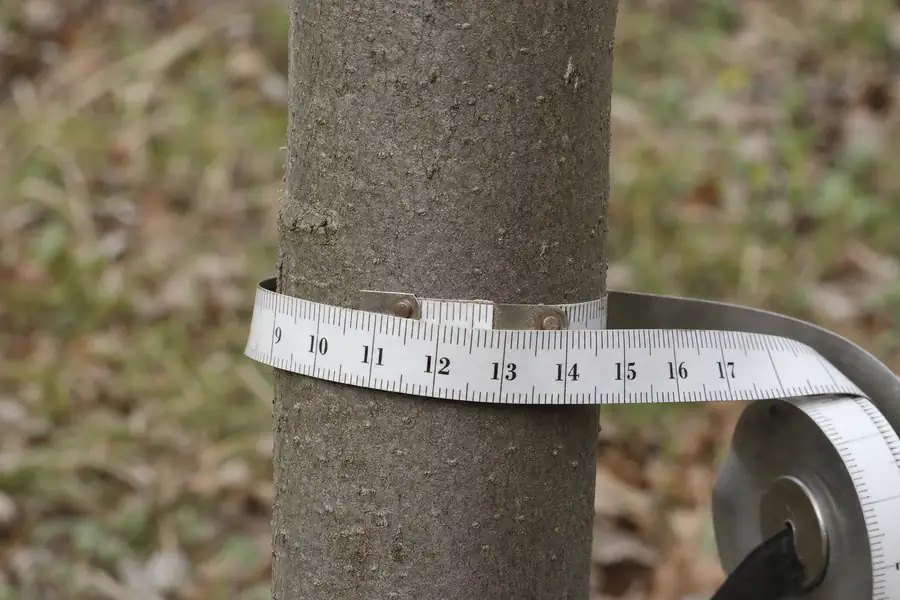
Trunk caliper, not height, is the real size measure for a young tree: trunk diameter measured 6 inches above the soil line. A "1-inch caliper" trunk feels about like a broom handle.
A trade gallon pot holds roughly 0.7 true gallons, so a #3 pot isn't three actual gallons of soil. Typical mail-order trees run 4 to 6 feet in a #3 to #7 pot.
Landscape-grade stock, what Arbor Buddy ships most, usually runs 1.5 to 3 inches caliper and 8 to 14 feet tall. Bigger isn't automatically better: smaller-caliper trees often establish faster, so weigh price against instant size when you shop landscape-grade trees.
Step 4: Vet the Seller Before You Buy Trees Online
A trustworthy online nursery gates checkout by zone and lists sizes in inches and gallons, not vague words like "large." A site that lets you order a zone 4 tree while shipping to zone 9 is a red flag.
Warranty length matters: 30 days is common and mostly covers shipping damage. A full year, like Arbor Buddy's 1-Year Alive & Thrive Guarantee, signals the seller expects the tree to actually establish, not just survive the ride.
Check the stated ship window and freight policy before ordering. Vague answers on either one are a reason to look elsewhere.
Step 5: Time Your Order
Order one to three months ahead of your planting window. Winter is the time to order for spring planting; mid-summer is the time to order for fall, since popular cultivars sell out weeks early.
Good nurseries hold your shipment until it's safe to plant in your zone, even if you check out early, so ordering ahead costs nothing but buys you first pick of stock.
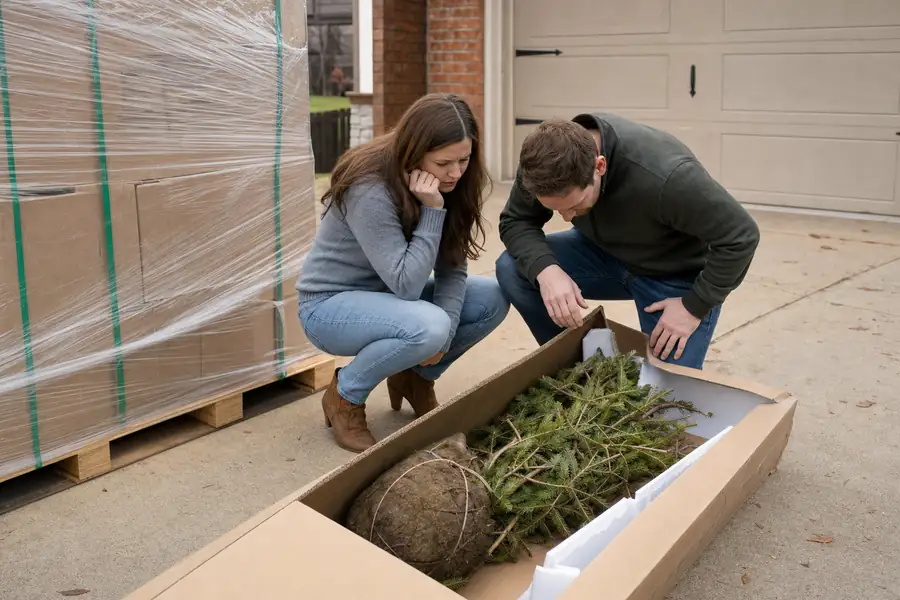
Step 6: Handle Delivery Day
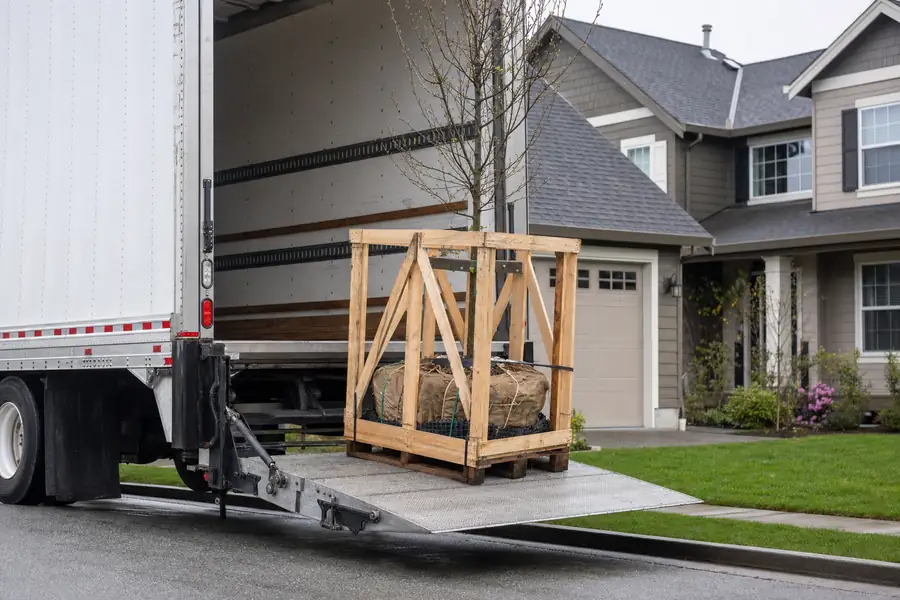
Small trees ship as boxed parcels up to about 8 feet through standard carriers. Larger container and balled-and-burlapped trees travel by liftgate freight and deliver curbside only, no carry to your door.
Inspect before signing: check for cracked soil, broken branches, or a dry root mass, and note damage on the delivery receipt with photos before the driver leaves.
Arbor Buddy details box sizes and freight limits on its shipping page so delivery day holds no surprises.
Step 7: The First 48 Hours and Year One
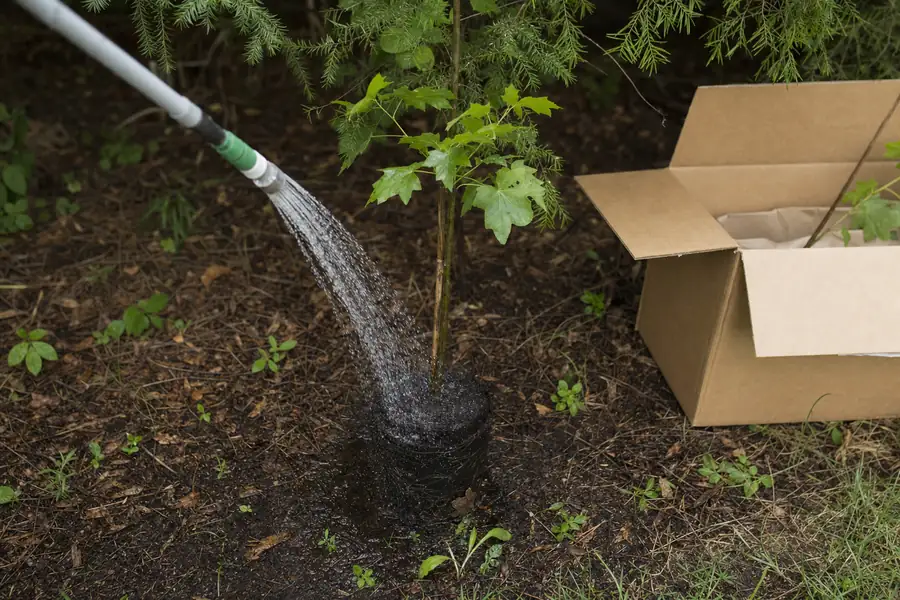
Unbox the tree the same day it arrives, water the root ball, and hold it in shade out of wind until you can plant, ideally within a few days.
Some leaf drop or a tired look after days in transit is normal. University extension research on transplant establishment shows healthy roots recover within the first growing season with consistent watering.
After planting, water at roughly 10 gallons per inch of trunk caliper weekly during the growing season, adjusting for rain. That number matters more than any fertilizer schedule for year one.
When Not to Buy Trees Online
Skip online ordering if you want to hand-pick a specimen for its exact shape, you need a tree above roughly 3-inch caliper installed with heavy equipment, or you need instant privacy screening on a tight budget, where smaller stock planted closer together beats a few oversized trees at a premium.
FAQs
Is it safe to buy trees online?
Yes, from nurseries that gate checkout by USDA hardiness zone and back their stock with a written warranty. Trees shipped this way arrive in the same condition as trees trucked to a local garden center.
What's the best tree size to order?
A 1 to 2 inch caliper tree usually balances price and establishment speed. Smaller-caliper trees settle into a new root zone faster and often catch up in height within a few seasons.
How far ahead should I order a tree?
Order one to three months before you plan to plant. That gives you first pick of popular species and still lands delivery inside the right planting window for your zone.
What do I do if my tree arrives damaged?
Photograph the damage right away, note it on the delivery receipt before the driver leaves, and contact the seller that same day. Nurseries with real warranties move fast on documented shipping damage.
How long is a typical tree warranty?
Thirty days is standard across the industry and mainly covers shipping damage. A full year, like Arbor Buddy's guarantee, signals the seller expects the tree to establish successfully in your yard.