Quick answer: Set the balled-and-burlapped root ball in a hole 2 to 3 times the ball's width and no deeper than the ball itself. Cut all trunk twine, then remove burlap and wire from at least the top third of the ball before backfilling. A root ball at 2-inch caliper commonly weighs 200 to 400 pounds, so move it by rolling the ball itself, never by lifting or dragging the trunk.
Balled-and-burlapped, or B&B, describes a tree dug from a field nursery with its roots intact inside a soil ball, wrapped in fabric and often caged in a wire basket for shipping. If your tree arrived in a pot instead, the steps for settling roots and setting depth differ slightly for container stock. What follows covers the parts specific to a heavy, wire-and-burlap-wrapped ball.
How to Plant a Balled-and-Burlapped Tree: Respect the Root Ball Weight First
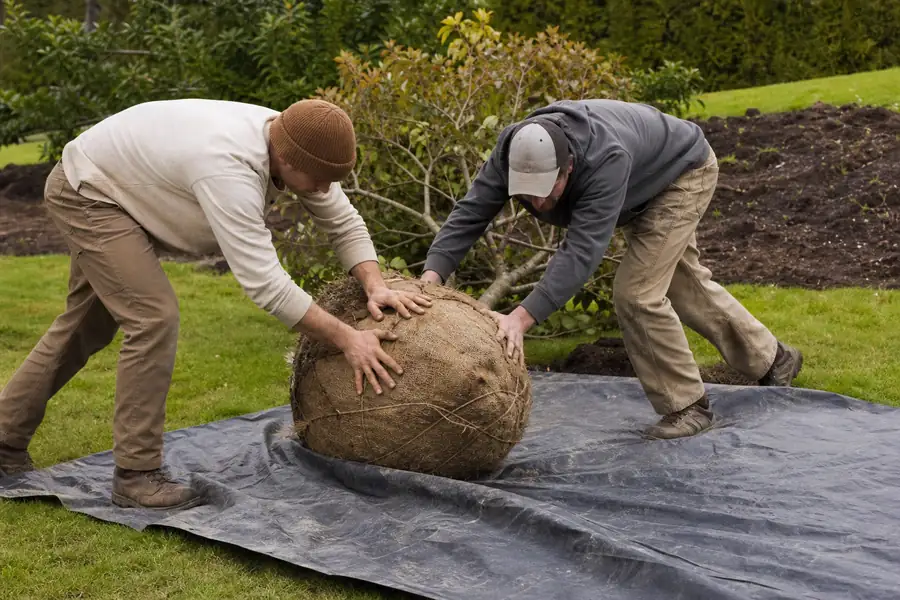
A balled-and-burlapped root ball at 2-inch caliper commonly weighs 200 to 400 pounds, and that weight is almost all wet clay and soil, not tree. Underestimating it is how backs get hurt and root balls get cracked.
Move the tree by rolling the ball, not by pulling the trunk. A tarp under the ball lets two or three people slide it short distances, and a ball cart or hand truck rated for the load makes longer moves manageable. Lifting or dragging by the trunk shears roots away from the ball and can snap the trunk near the base, so keep hands and straps on the ball itself.
Many landscape-grade shade trees ship at this size or larger, so plan for help before delivery day rather than after.
Dig the Hole: Width, Depth, and Sloped Sides
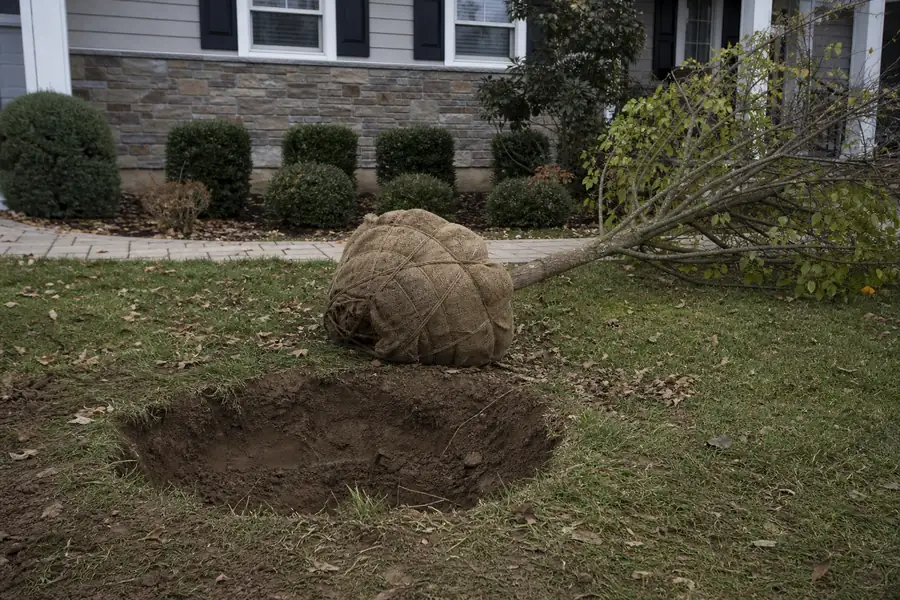
Dig the planting hole 2 to 3 times as wide as the root ball, with sides that slope outward rather than straight down. Wide, sloped sides give roots loosened soil to grow into as they spread beyond the original ball.
Depth is where most B&B trees get planted too deep. The hole should be as deep as the ball is tall, or 1 to 2 inches shallower. Measure the ball's height before you dig, then lay a shovel handle across the hole to check that the top of the ball will sit slightly above the surrounding grade once it's set.
Set the Ball Intact, Then Check the Root Flare
Lower the wrapped root ball into the hole using the ball itself, keeping the wire basket and burlap in place until the tree is positioned and standing straight. Once it's set, scrape the loose soil off the very top of the ball to find the root flare, the point where the trunk widens into the top roots.
Field-dug trees frequently arrive with the flare buried 2 to 4 inches under extra soil piled on top during digging. The flare needs to finish 1 to 2 inches above final grade, not below it. A buried flare traps moisture against the bark and invites rot and girdling roots for years, so this single detail decides more tree survival outcomes than almost anything else you'll do at planting.
If the ball sits too low once you've found the flare, lift it out and add soil under it. Don't just plant deeper and hope; fix the depth before you cut anything.
Cut the Twine and Wire in the Hole: The Top-Third Rule
Remove all trunk twine first, no exceptions. Twine left tied around the trunk or lower branches cuts into the bark as the tree grows and can girdle it within 1 to 2 years, killing the tree slowly from the top down.
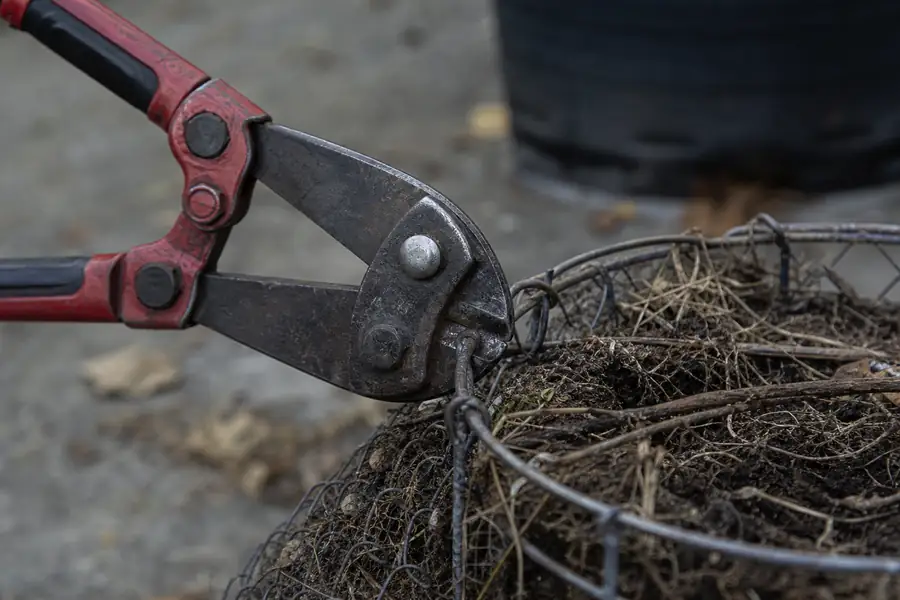
For the wire basket and burlap, take everything off the top third of the ball at minimum, and the top half if you can do it without disturbing the ball's shape. Use bolt cutters to snip the top rings of the wire basket right there in the hole, folding the cut wire down and out rather than trying to pull the whole cage free.
This is the point where the burlap-and-wire debate usually gets settled wrong. Stripping an entire wire basket off a large root ball can shatter it, tearing roots loose in the process, which is exactly why the top-third rule is the standard rather than full removal. Leave the lower wire and any natural burlap under the ball; it holds the root mass together and breaks down in the soil over time.
Synthetic burlap and plastic twine are the exception. They never rot, so they come off entirely, top to bottom, wherever you can reach them without breaking the ball apart. If you can't tell natural from synthetic burlap by feel (natural tears easily and feels like coarse cloth; synthetic is slick and stretches), treat it as synthetic and remove as much as you safely can.
Backfill in Lifts and Water Deeply
Backfill with the native soil you dug out, added in 2 to 3 lifts rather than all at once. Water each lift before adding the next; this settles soil around the roots and closes air pockets that would otherwise dry roots out.
Build a 3-inch berm of soil in a ring around the outer edge of the hole to form a watering basin. Give the tree 10 to 15 gallons of water at planting, then plan on roughly 10 gallons per inch of trunk caliper each week through the first growing season.
Mulch and Staking for the First Year
Spread 2 to 4 inches of mulch over the backfilled area, keeping it pulled back 3 to 6 inches from the trunk so it never touches the bark. Mulch piled against the trunk holds moisture that invites rot, the opposite of what you're trying to do.
Most B&B trees need a stake through their first year, especially in wind. Field digging removes a large share of the root system, so the canopy is bigger than the roots left to anchor it. Use two stakes on opposite sides of the trunk with loose, wide straps, not wire or rope that can cut bark, and take the stakes out within a year once new roots have taken hold.
Arbor Buddy rates every tree to the USDA hardiness zones it actually survives in, matched by ZIP code before it ships, and every order carries the 1-Year Alive & Thrive Guarantee. If a zone-matched tree still doesn't make it, Arbor Buddy replaces it. You can find large trees rated for your zone before you even think about digging a hole.
FAQs
Do I need to remove the wire basket?
Remove the top third of the wire basket at minimum, cutting it off in the hole with bolt cutters once the tree is set and the flare is checked. Taking off more, up to the top half, is fine if it doesn't disturb the ball's shape. Stripping the entire basket off a large, heavy ball risks cracking it apart and tearing roots loose, so full removal isn't the standard.
Can I leave the burlap on?
Natural burlap below the top third of the ball can stay in place; it breaks down in the soil over time and won't harm the roots. Synthetic burlap never rots, so it should come off entirely wherever you can reach it without damaging the ball.
How heavy is a balled-and-burlapped root ball?
A root ball at 2-inch caliper commonly weighs 200 to 400 pounds, mostly from the wet soil packed around the roots. Larger caliper trees can weigh considerably more, so check the approximate weight before delivery and plan your help and equipment accordingly.
Why does a B&B tree seem slow to grow after planting?
Digging a tree from the field for balled-and-burlapped shipping removes a large portion of its original root system, so the tree spends its first year or more rebuilding roots before it pushes much new top growth. A rough rule of thumb is about a year of establishment for every inch of trunk caliper.
Do I need help planting a balled-and-burlapped tree?
Above roughly 200 pounds, yes, plan on at least two people. Moving a heavy root ball alone by lifting the trunk is how trees get cracked balls and torn roots, and how people get hurt, so line up help or a ball cart before the tree arrives.