

Quick answer: Small trees ship boxed through parcel carriers like UPS or FedEx. Large, landscape-grade trees are strapped upright to a pallet or crate and travel by LTL freight (less-than-truckload shipping, where your pallet shares a trailer with other freight), with a liftgate lowering the pallet down to your curb.
That's the short version. The longer version matters if you've never had a tree show up this way before, because freight delivery works differently than a package on your porch. Knowing what to expect on delivery day keeps a healthy tree healthy and keeps you from signing away a damage claim by accident.
How Nurseries Prep a Tree for Shipping
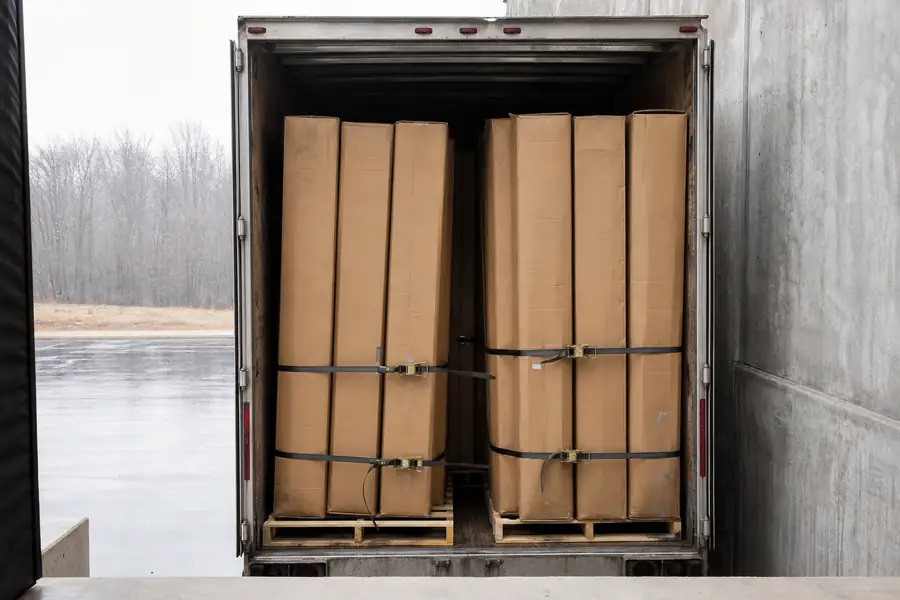
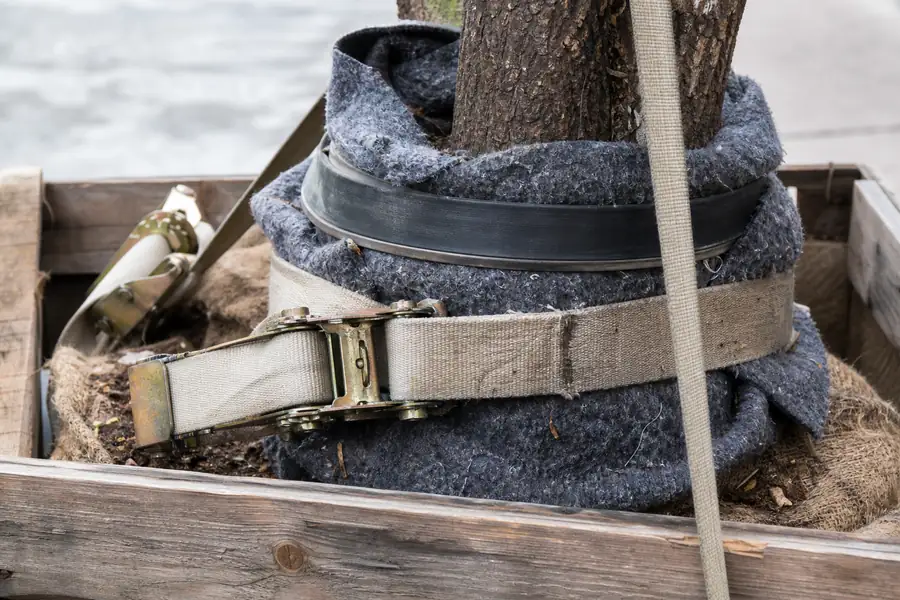
A tree ready for freight gets watered, wrapped, and braced before it ever leaves the nursery. The trunk gets padded to prevent bark rubs, the canopy is sleeved in mesh netting to hold branches in against the trunk, and the pot or root ball is wrapped and often bagged to keep soil in place during transit.
Once wrapped, the tree is strapped upright to a pallet or built into a wooden crate, depending on size. Most nurseries, including Arbor Buddy, ship early in the week on purpose. That way a tree never sits idle in a freight terminal over a weekend, which is when heat and dehydration do the most damage.
How Are Trees Shipped: Parcel or Freight Delivery
The size of the tree decides how it ships. Boxed trees up to roughly 8 feet tall can ride standard parcel carriers, since they fit in a manageable box and weigh little enough for a single driver to handle.
Taller or heavier trees, the kind sold as landscape-grade shade trees or established evergreens, book LTL freight instead. Freight shipping adds one extra step a parcel package never needs: a scheduled delivery appointment. The carrier calls ahead to set a window, rather than just dropping a box on your steps.
You can see exactly how sizing and delivery windows work on Arbor Buddy's shipping page before you order.
What Transit Stress Looks Like on the Way to Your Door
Most trees spend two to seven days in transit, depending on distance from the nursery. A few dark days inside a trailer are not a problem. Trees tolerate short periods without direct light far better than people expect.
Heat and drying out are the real risks, not darkness. That's why shipping windows are timed to each region's climate rather than run year-round, and why Arbor Buddy matches trees to your growing zone through its ZIP-based zone lookup before a shipment is ever scheduled. Once your pallet is en route, the freight carrier, not the nursery, calls to book your actual delivery window.
Delivery Day, Step by Step
Freight delivery day has a set sequence. Here's what to expect:
- The carrier calls or texts to confirm your delivery appointment, usually a several-hour window.
- You clear curb space, driveway access, and a path wide enough for a pallet.
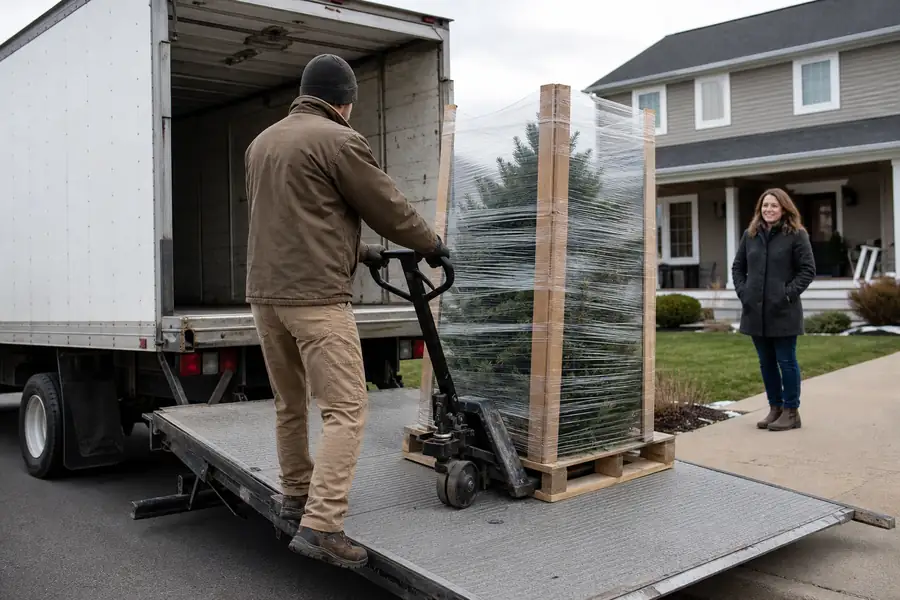
- The driver backs up to your curb and lowers the pallet using the liftgate.
- Curbside means curbside: the driver's job ends at the street, not your backyard or planting hole.
- Moving the tree from curb to yard is on you. A tree in the 100 to 400 pound range takes two people and a hand truck or ball cart, not one person alone.
Plan for help and equipment before the truck shows up, not after. If you want the fuller picture of ordering start to finish, from choosing a tree to getting it in the ground, that's a separate step-by-step conversation worth having with the nursery before checkout.
Inspect Before You Sign the Delivery Receipt
Check the tree before you sign anything, because the delivery receipt is a legal document, not a formality. Open the wrap enough to look at the central leader, main branches, and the pot or root ball wrap for cracks, crushing, or soil loss.
Photograph the tree and the packaging from a few angles while it's still on the truck. If you see damage, write it on the delivery receipt in plain language before you sign.
A clean signature with no notes tells the carrier everything arrived fine, and that waives most damage claims after the fact. Thirty seconds of inspection protects you far more than any conversation after the driver leaves.
If Something Arrives Wrong
Minor leaf loss, a little yellowing, or a few small snapped twigs are cosmetic and normal after several days in transit. Trees recover from that kind of transit stress once they're unwrapped, watered, and given a few weeks to settle in.
A snapped central leader, a crushed pot, or a cracked root ball is a different story and is claim-worthy. Contact the nursery within 24 to 48 hours with photos and your noted delivery receipt.
Arbor Buddy backs every shipment with its 1-Year Alive & Thrive Guarantee, so freight damage or a tree that fails to establish gets addressed rather than argued over. Browsing options ahead of time through the Plant Finder also helps you pick a size and species suited to easy handling on delivery day, not just to your yard.
FAQs
Do I need to be home for tree delivery?
Yes. Freight deliveries require a signature, so someone needs to be present during the scheduled window to accept the pallet and inspect it before signing.
How long can a tree stay boxed or wrapped after it arrives?
Only a few days at most, and sooner is always better. Unbox and unwrap the tree the day it lands so roots and branches can get light, air, and water again.
What if my tree arrives damaged?
Note the damage in writing on the delivery receipt before you sign, then photograph the tree and packaging from several angles. Contact the nursery within a day or two with those photos to start a claim.
Do trees ship year-round?
No. Reputable nurseries ship within zone-safe windows tied to each region's weather, avoiding extreme heat or hard freezes that would stress a tree in transit.
How big can a shipped tree actually be?
Landscape-grade trees typically ship up to about 3 inch caliper trunks and 12 to 14 feet tall, strapped upright on a pallet or built into a wooden crate for the trip.