
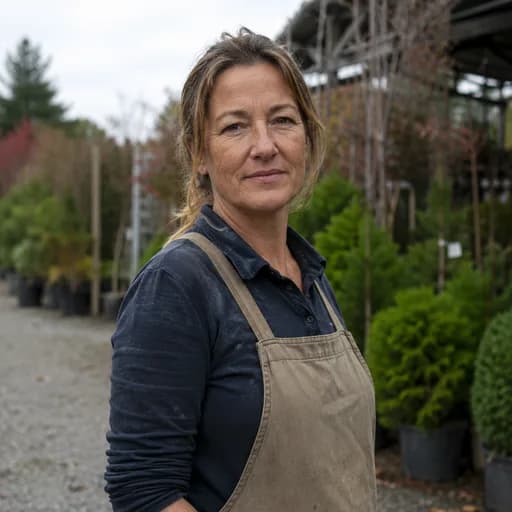
A landscape tree doesn't show up in your yard overnight. How nursery trees are grown is a multi-year production process: propagation, then a liner bed, then years in field rows or containers, with repeated root and canopy work before the tree ever leaves the growing yard. A 2-inch-caliper shade tree usually represents four to eight years of that work, and that timeline is most of what you're paying for when you order one. Understanding the process explains both the price tag and why some mail-order trees fail before they ever get established.
- A landscape tree spends roughly 2 to 8 years in production before it ships.
- Named cultivars are grafted or rooted from cuttings, not grown from seed.
- Field-grown and container-grown trees are different products, not better or worse.
- Annual pruning for a strong central leader is most of the labor behind the price.
- Culling removes a real share of every crop before it ever reaches the shop.
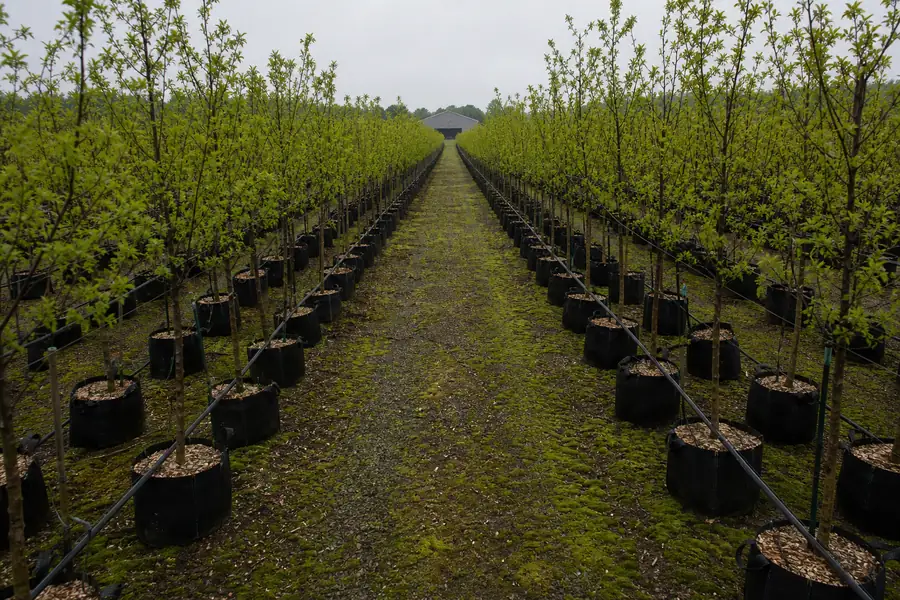
How Nursery Trees Are Grown: Year Zero, Propagation and Grafting
Every nursery tree starts one of two ways. Species trees, like a straight bur oak or a native shumard oak, usually start from seed. Seed-grown trees vary a bit tree to tree, which is normal for species that don't need to match an exact look.
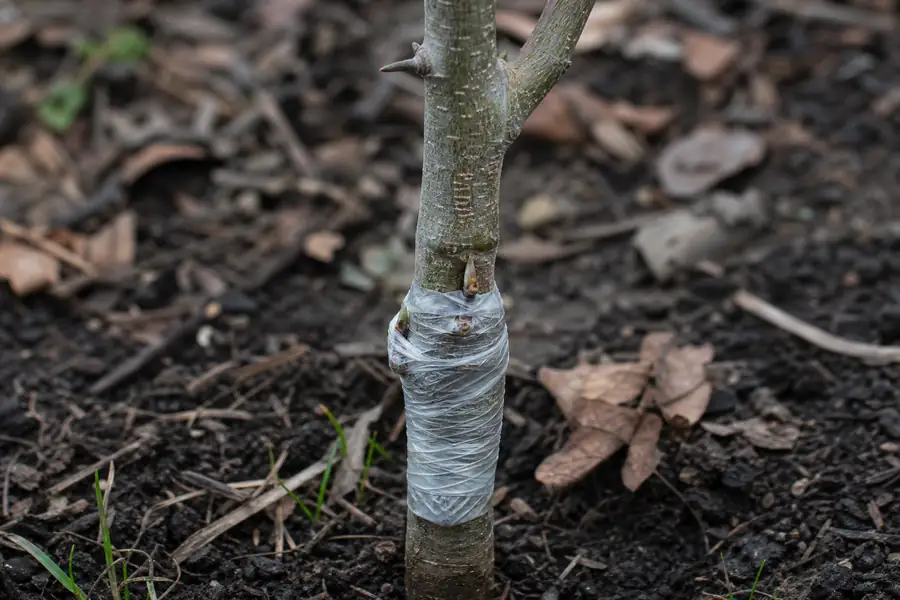
Named cultivars are different. A cultivar such as a Bloodgood Japanese maple or a Rise 'N Shine Eastern Redbud won't grow true from seed, so growers propagate it by rooting a cutting or grafting a bud or scion from the parent plant onto a separate rootstock. Grafting is why cultivar traits are predictable: the top growth is genetically identical to the parent, while the rootstock underneath is chosen for vigor, disease resistance, or soil tolerance.
Look low on the trunk of a grafted tree and you'll usually see a slight swelling or bend. That's the graft union, the point where scion and rootstock fused into one plant.
The Liner Stage
A liner is a young tree, usually one to two years old, growing close-spaced in a nursery bed or a small pot before it's big enough for field rows or a larger container. Liners get sorted hard.
A liner with a crooked stem, a weak leader, or a split trunk gets culled and never leaves the liner bed. That first cull is the biggest one a tree crop sees, and it's the reason a batch of seedlings produces only a fraction of trees worth growing to sale size. Nurseries don't advertise that number, but it's baked into the price of every tree that does make it through.
Field Rows Versus Containers
Field-grown and container-grown are two different products, not a better-versus-worse choice. Field growing plants a liner directly in mineral soil, in rows spaced for a tractor to run between. Roots spread naturally and the trunk builds caliper (trunk diameter, measured a few inches above the root ball) faster than it would in a pot. When a field-grown tree sells, it gets dug with a tree spade or by hand, wrapped in burlap, and cinched with wire: a B&B, or balled and burlapped, tree.
Container growing keeps the whole root system intact since nothing gets cut at the dig. But containers need a pot bump, moving the tree to a bigger pot, roughly every one to two years. Skip a pot bump and roots start circling the inside of the container, which can strangle the trunk years later if nobody corrects it before planting.
Both methods produce solid landscape trees. Field growing trades some root mass for faster caliper growth and lower shipping weight. Container growing trades weight and cost for a root ball that's never been cut.
Shaping the Tree You'll Buy
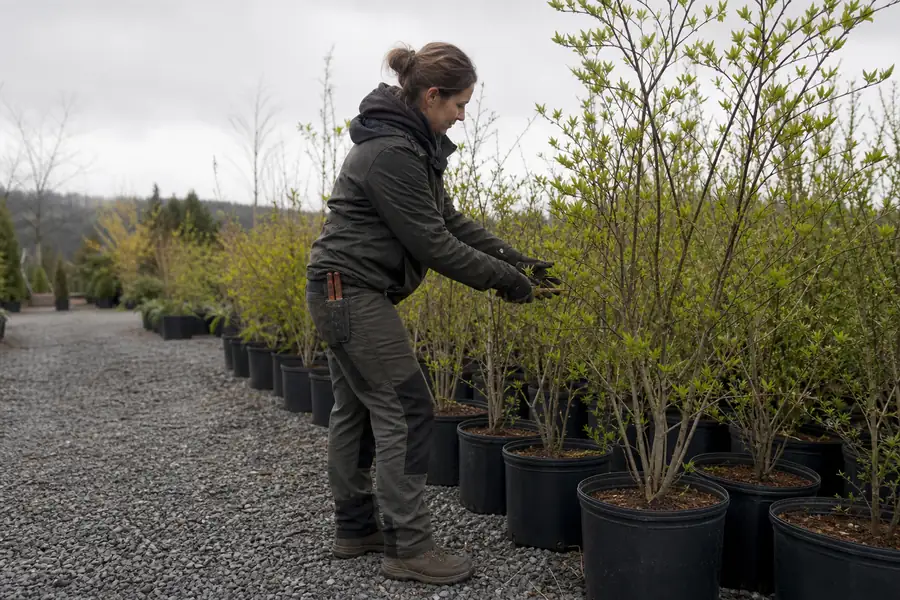
Every year in the field or in containers, a crew prunes for structure, not just growth. The goal is one central leader, the main upward-growing stem, with scaffold branches spaced evenly around the trunk, not clustered on one side or crossing each other. Get this wrong for even one season and the tree needs corrective pruning that shows for years.
A 2-inch-caliper shade tree, the size a lot of homeowners order for a yard, usually represents four to eight years of this pruning, feeding, and root work before it's ready to sell. That labor, not the sapling itself, is most of what you're paying for. It's also why a bargain seedling whip and a landscape-grade tree can carry wildly different price tags for what looks like the same species.
Digging, Grading, and Hardening Off
Reputable nurseries dig field-grown stock in the dormant season, late fall through early spring, when the tree isn't actively pushing leaves and can tolerate root loss. Some species ship bare-root, dug and shipped with no soil around the roots at all, which only works during dormancy and for species that tolerate it.
After digging, growers grade the crop, sorting for uniform caliper, height, and branch structure against nursery-standard sizing charts, so a 2-inch-caliper tree from one grower matches another. Before shipping, stock gets hardened off, acclimated gradually to the temperature and light conditions it will travel and land in, so it isn't shocked going from a shaded field straight into a truck and then your driveway.
What This Changes at Your House
How a tree was grown changes what you do the day it arrives. A B&B tree needs its burlap and wire handled at planting: the wire basket gets cut away and the burlap pulled back from the top of the root ball, not left buried, or it can girdle roots later.
A container tree needs a quick check for circling roots. If you see roots wrapped around the inside of the pot, slice them vertically in three or four spots before backfilling so they grow outward instead of choking the trunk.
Stock grown for your specific climate also arrives already acclimated to it, which is the reasoning behind zone-gated shipping: a tree rated for your USDA hardiness zone has already been growing in conditions similar to what it'll face in your yard, not shipped in from a warmer zone and hoping for the best. When you're ready to shop with that in mind, you can see the trees this process produces in the full lineup.
Arbor Buddy sources landscape-grade stock like this, then runs it through a ZIP-based zone lookup before it's offered for sale, so what you see in the shop is already matched to your winters and summers. Every tree still ships under Arbor Buddy's 1-Year Alive and Thrive Guarantee, because even a well-grown tree needs the right zone and root care to establish.
FAQs
How long does a nursery tree take to grow?
Most landscape trees spend roughly 2 to 8 years in production, depending on the size class you buy. A small liner-sized tree ships closer to the 2-year mark, while a heavy 2 to 3-inch caliper shade tree can represent 6 to 8 years of field or container growth.
Are grafted trees weaker than seed-grown trees?
No. Grafting is the standard way to reproduce named cultivars true to type, and a properly grafted tree grows just as strong as a seed-grown one. The main thing to watch is planting depth: keep the graft union above the soil line so it doesn't stay wet and rot.
Why are some mail-order trees so cheap?
Very cheap mail-order trees are usually seedling whips, thin, unbranched young trees that skip most of the years of pruning, root work, and grading described above. They can grow into good trees, but they arrive small, unshaped, and years away from providing shade or privacy.
Is field-grown better than container-grown?
Neither is better; they're different trade-offs. Field-grown trees build trunk caliper faster and ship lighter but lose some roots at the dig, while container-grown trees keep their full root system but can develop circling roots if they weren't potted up on schedule.
Do all nursery trees make it to the shop?
No. A real share of every crop gets culled along the way, mostly at the liner stage, for crooked stems, weak leaders, or poor root structure. That culling is a normal part of production, not a sign of a bad batch, and it's part of why healthy, well-formed trees cost what they do.